

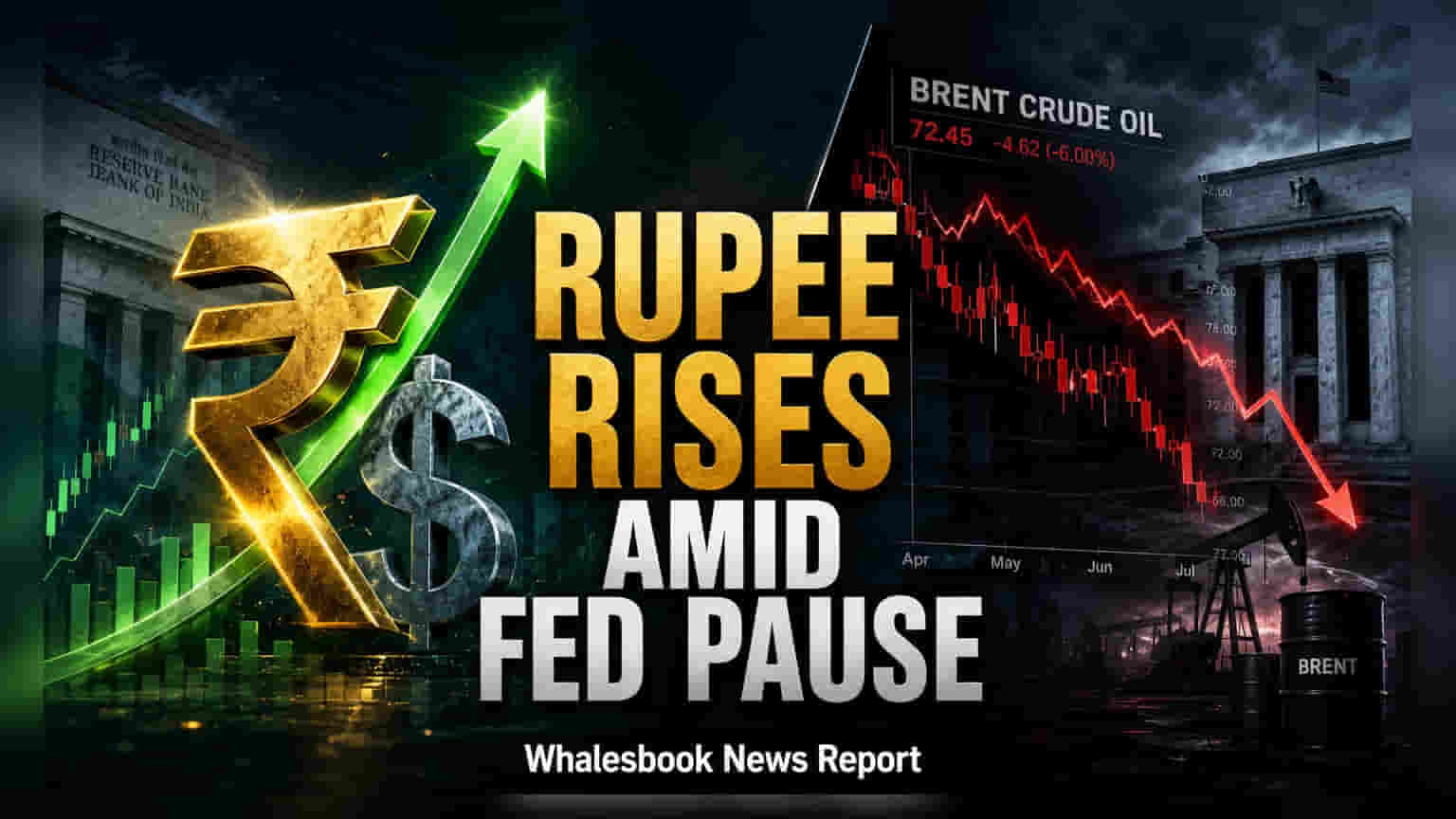
The Indian rupee rose for the fourth straight session to 95.59 against the U.S. dollar on July 30. The currency gained strength as global Brent crude prices fell and the U.S. Federal Reserve decided to keep interest rates steady. Investors should note that active intervention by the Reserve Bank of India continues to play a key role in managing currency volatility.
The Indian rupee strengthened on July 30, trading at 95.59 against the U.S. dollar. This six-paise gain marks the fourth consecutive day of upward movement for the domestic currency. The shift follows a previous close of 95.65 and comes at a time of mixed signals from global central banks.
The U.S. Federal Reserve’s decision to maintain interest rates between 3.50 percent and 3.75 percent provided temporary relief to global markets. However, the decision lacked complete consensus, with three members of the Federal Open Market Committee favoring a rate increase. This disagreement among policymakers has led traders to estimate a 57 percent chance of a rate hike during the September meeting, based on data from the CME Group's FedWatch tool.
A decline in energy costs offered further relief to the Indian currency. Brent crude oil, which saw an 8 percent price spike in the previous session, retreated by approximately 1 percent to trade at $89 per barrel. Since India is a major importer of crude oil, lower prices typically reduce the demand for foreign currency to pay for imports, which can help stabilize the rupee.
RBI Intervention and Market Outlook
Domestically, the Reserve Bank of India continues to play a stabilizing role through its market operations. Market participants observed that the central bank has been actively selling dollars since last week. This strategy is designed to prevent sharp fluctuations in the rupee's exchange rate. By providing a floor for the currency, the RBI aims to contain imported inflation and manage volatility stemming from global geopolitical tensions.
Geopolitical risks remain a key factor for investors to monitor. Ongoing conflicts involving missile and drone exchanges in the Middle East, with reports of tensions potentially widening toward Egypt, continue to create uncertainty in global markets. While the rupee has demonstrated resilience and outperformed several other Asian currencies recently, its movement remains tied to how these global conflicts evolve and how the RBI manages its dollar reserves to maintain stability.
Investors will likely look for further updates on the Fed's stance in coming weeks, as well as the path of crude oil prices. The next major monitorable will be the Reserve Bank of India's continued stance on market liquidity and any further updates on its intervention strategy to shield the rupee from significant external shocks.