 Whalesbook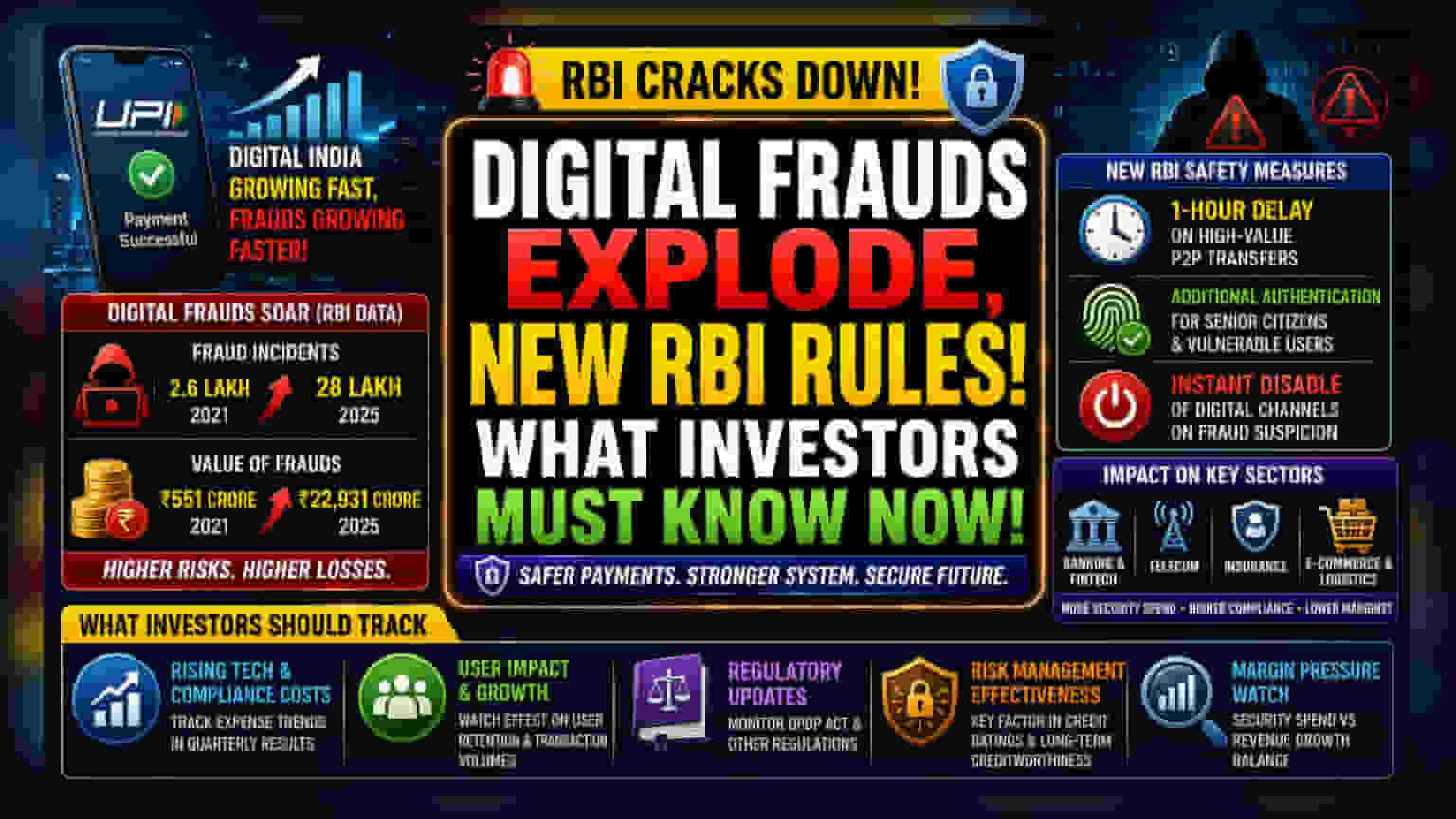
India’s rapid digital growth faces a new challenge as digital fraud cases surged to 28 lakh in 2025, with significant financial losses reported. The Reserve Bank of India is responding with tighter security norms, including payment delays and new authentication layers. For investors, this shift indicates rising technology and compliance costs for banks, fintech, and telecom companies, which may impact profit margins. We explore the business implications of this regulatory shift.
What Happened
India has seen a massive expansion in its digital economy, driven by millions of monthly UPI transactions and a rapidly growing internet user base. However, this progress is now being tested by a sharp rise in digital fraud. Data from the Reserve Bank of India (RBI) indicates that reported digital fraud incidents jumped from roughly 2.6 lakh in 2021 to 28 lakh by 2025. The financial impact has also grown significantly, with the total value of these fraudulent transactions rising from ₹551 crore to ₹22,931 crore over the same period. To combat this, the regulator is introducing new safety measures, including a one-hour delay for high-value peer-to-peer transfers, new authentication layers for vulnerable groups, and a system to instantly disable digital payment channels if a fraud is suspected.
The Cost of Security
For investors, the most important takeaway from this trend is the shift in business priorities. Companies in the banking, fintech, and digital services space are now forced to spend significantly more on cybersecurity and compliance. In the past, the focus was primarily on growth, user acquisition, and frictionless experience. Now, the priority has shifted toward security. This means higher operating expenses for technology upgrades, AI-based fraud detection systems, and dedicated compliance teams. For smaller fintech players, these costs could put pressure on profit margins. Larger banks and established companies with deeper pockets may be better equipped to absorb these costs, but the overall cost of doing business is rising for the entire sector.
Impact on Key Sectors
The rise in digital fraud is not just a banking issue; it affects several sectors. In telecommunications, there is increasing regulatory pressure to tackle spam and fraudulent messaging, which requires companies to invest in caller authentication technologies. For the insurance sector, fraud involves both digital payment threats and the rising risk of fraudulent claims, which can directly hurt profitability ratios. In the logistics and e-commerce space, fraud often manifests as delivery-related scams, impacting the efficiency of the supply chain. Each of these sectors is now under pressure to balance a smooth customer experience with mandatory, sometimes slower, security checks.
The Balancing Act
The core challenge for digital companies is balancing security with convenience. Features like a one-hour delay for payments or additional authentication layers could introduce 'friction' into the digital experience. If a payment app becomes too difficult or slow to use, companies risk losing customers to competitors or seeing a drop in transaction volume. Investors should observe how these companies manage this trade-off. Companies that can implement high-security measures without frustrating their users will likely hold a competitive advantage in the long run.
What Investors Should Track
Moving forward, investors should pay attention to a few key monitorables in company reports and analyst updates. First, watch for any commentary on rising technology and compliance spending in quarterly results. If expenses are rising faster than revenue, it may signal margin pressure. Second, look for management insights on how security measures are affecting user retention or transaction volumes. Third, track regulatory updates regarding the Digital Personal Data Protection Act, as new laws will continue to shape how companies manage data and liability. Finally, monitor the credit rating reports of fintech and banking companies, as the effectiveness of their risk management systems will become a key factor in long-term creditworthiness.

