

New minimum wage laws across 15 states have increased labor costs for Indian retail and logistics firms. With some states reporting hikes of up to 60%, businesses like Delhivery and Swiggy have already shown margin pressure in recent financial results. The timing is difficult as these sectors prepare for the peak festive shopping season.
Indian retail, logistics, and e-commerce companies are navigating a difficult financial period following significant increases in minimum wages across 15 states. These regulatory adjustments, which have been implemented since May 2026, are forcing companies to absorb higher operational expenses at a time when they are trying to manage festive inventory and logistics networks. The impact is most severe in states with high industrial activity where the revised wage floors are substantially higher than previous levels.
Impact on Regional Costs
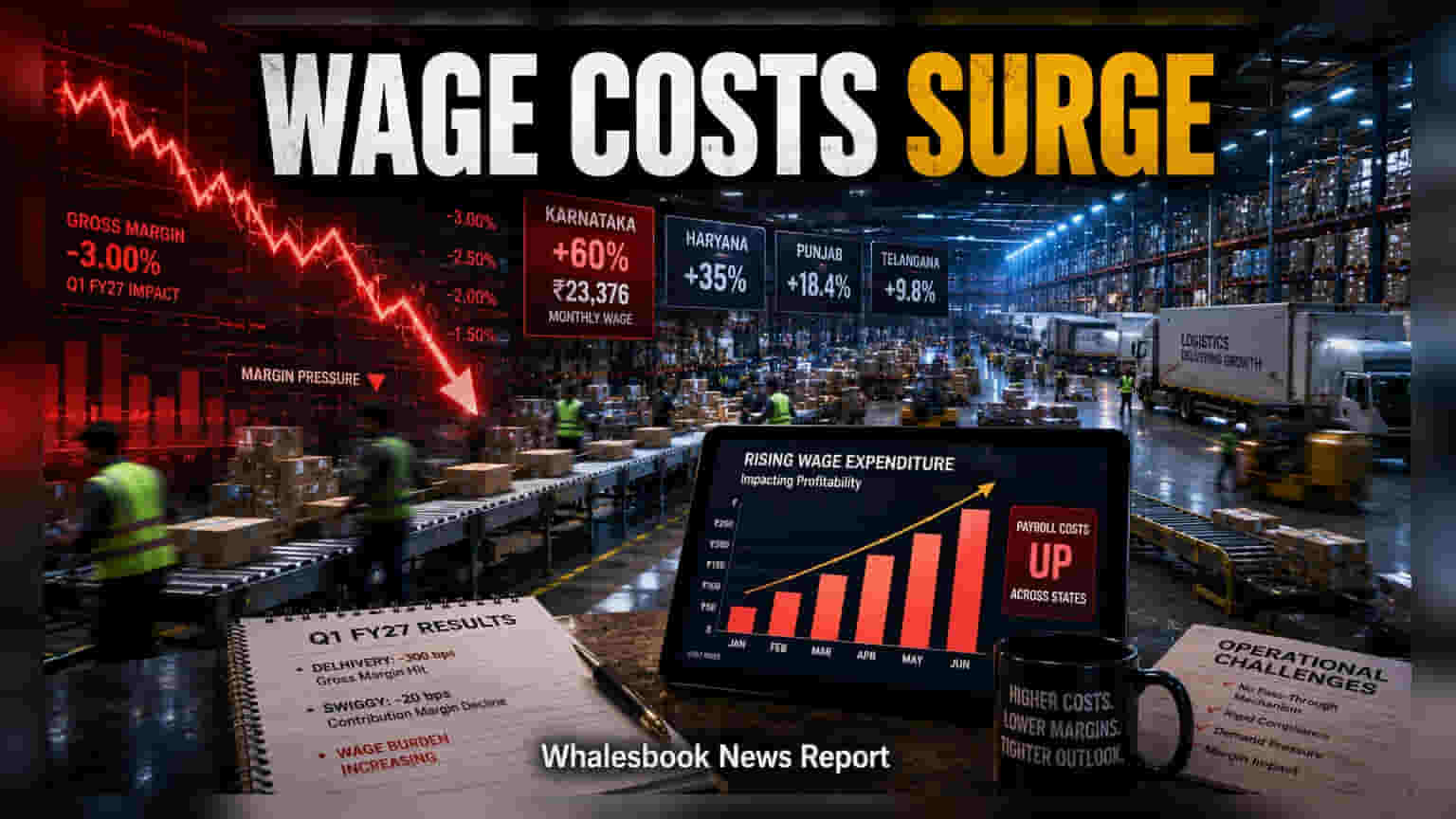
The wage revisions vary by state, creating an uneven cost burden for companies with large, national operations. Karnataka implemented a sharp 60% increase, which raised the monthly wage for unskilled workers in Bengaluru to approximately ₹23,376. Other major industrial hubs have also seen substantial changes, with Haryana mandating a 35% increase, Punjab raising wages by 18.4%, and Telangana seeing an upward adjustment of 9.8%. For firms with thousands of employees in warehouses and last-mile delivery roles, these hikes translate into a direct and immediate increase in monthly payroll expenses.
Financial Results in Q1 FY27
Publicly listed firms have begun to report the impact of these changes in their recent financial performance. For the June quarter of the 2027 fiscal year, Delhivery reported a 300 basis point hit to its gross margins, specifically highlighting the wage burden at its facilities in Haryana and Karnataka. Similarly, Swiggy recorded a 20 basis point sequential decline in contribution margins, citing higher picking and packing costs within its warehouses and dark stores. These figures indicate that the higher costs are already affecting the core profitability of these service-oriented businesses.
Challenges in Cost Recovery
A primary concern for investors and management teams is the lack of pass-through mechanisms. Unlike fuel or electricity costs, which often have contractual clauses allowing companies to pass expenses to clients, minimum wage increases are generally rigid. This makes it difficult for logistics and retail companies to immediately raise prices to cover the higher wage bills without risking demand or losing market share to competitors.
Industry bodies in states like Karnataka have sought legal intervention, but the absence of an interim stay has required companies to comply with the new norms to avoid penalties. As a result, firms are currently focusing on internal measures, such as reviewing operational efficiencies and re-evaluating client contracts, to mitigate the pressure.
What to Monitor Next
Investors are now looking at how these companies manage costs as they approach the festive season, which is typically a high-volume period for both retail and logistics. The key indicator will be whether companies can successfully implement price hikes for their services or improve automation to offset the labor cost increases. Additionally, any further updates on the national floor wage notifications or outcomes from legal challenges filed by employer associations will remain critical updates for the sector in the coming months.