 Whalesbook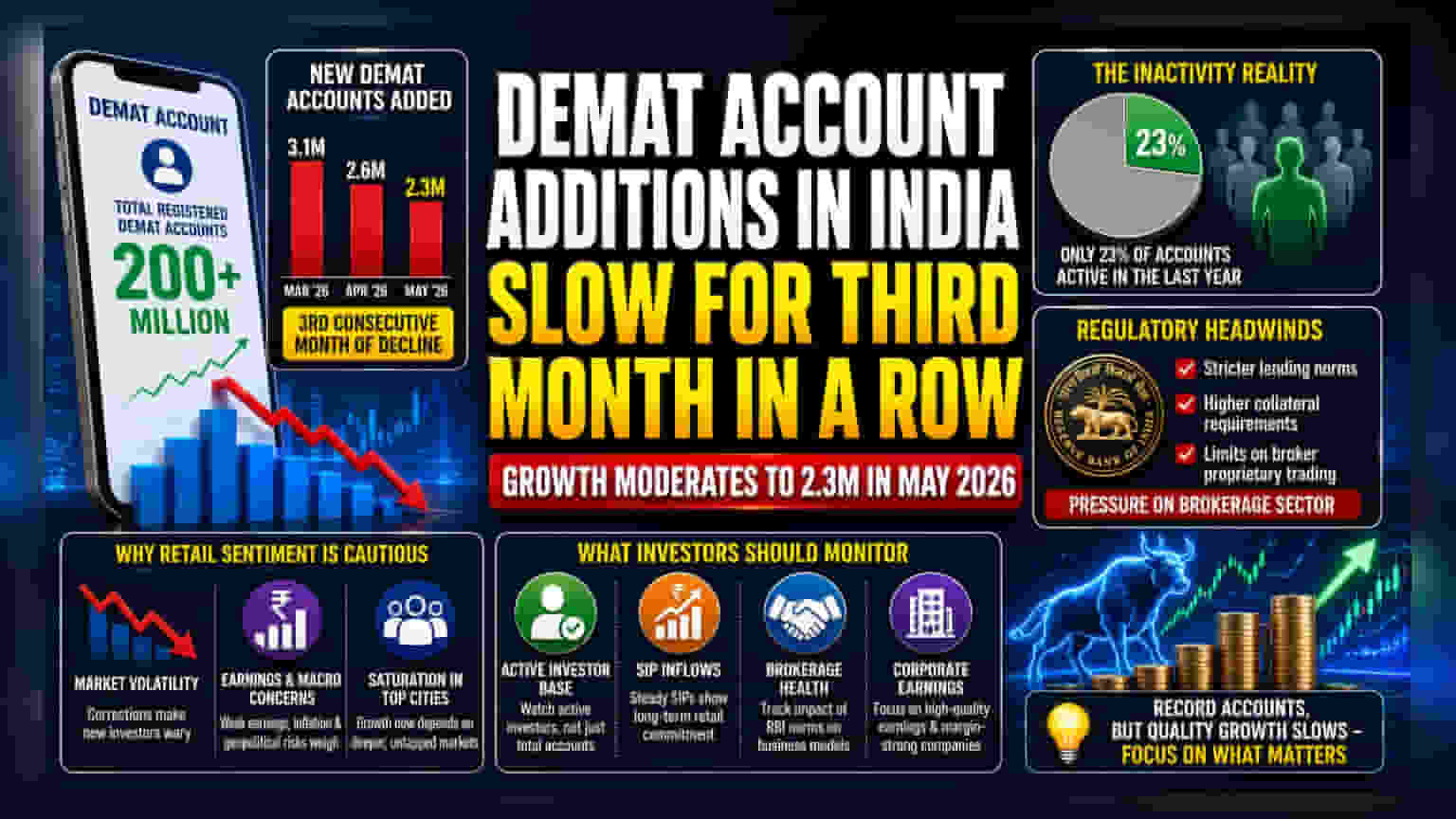


What Happened
India’s pace of new demat account additions has moderated for the third consecutive month, reaching approximately 2.3 million in May 2026. This figure sits below the 2025 monthly average of 2.5 million, reflecting a shift in momentum for retail investor onboarding. While the total number of registered demat accounts in India has crossed the 200-million mark, the rate of fresh registrations has noticeably cooled.
The Inactivity Reality Check
For investors, it is important to distinguish between the sheer volume of registered accounts and actual market participation. Data indicates that a significant portion of the rapidly expanding demat account base remains inactive. Industry analysis suggests that only about 23% of total accounts have seen at least one transaction in the past year.
Many accounts were opened during the peak of the recent bull market, often driven by the desire to participate in Initial Public Offerings (IPOs). Once the initial excitement fades or if listing gains become harder to secure, these accounts often become dormant. This creates a scenario where the "total account" number continues to hit record highs, while the number of genuinely active traders and long-term investors grows at a much slower, more measured pace.
Regulatory Headwinds for the Brokerage Sector
The slowing pace of account additions comes at a time when brokerage firms are facing additional pressure from regulators. Recent updates from the Reserve Bank of India (RBI) regarding stricter lending norms for proprietary trading activities and capital market intermediaries have caused concern in the sector.
These new norms, which require higher collateral and limit bank funding for broker proprietary trading, have sparked volatility in brokerage and exchange-related stocks. Because brokerages rely on steady trading volumes and new account growth to sustain revenue, any combined impact of lower new user additions and stricter regulatory requirements is closely watched by the market.
Why Retail Sentiment Is Cautious
Several factors have contributed to this cooling retail sentiment over the last few months:
- Market Volatility: After years of strong, one-sided gains, recent market corrections and wider fluctuations have made newer, less experienced investors more cautious.
- Earnings and Macro Concerns: Concerns regarding corporate earnings growth, coupled with geopolitical uncertainties and inflation, have pressured investor confidence.
- Saturation in Top Cities: A large portion of financially active individuals in major urban centers already possesses a demat account. Further growth now relies on expanding into deeper, semi-urban, and rural pockets, which takes more time and education.
What Investors Should Monitor
Investors looking at the broader market health should watch several key metrics beyond just "new account additions":
- Active Investor Base: Track the number of "active" investors—those who trade or hold portfolios regularly—rather than just the total number of registered demat accounts.
- SIP Inflows: Systematic Investment Plan (SIP) contributions remain a vital indicator of retail commitment. Even if new demat account openings slow, consistent SIP inflows show that existing investors are staying the course for the long term.
- Brokerage Health: Keep an eye on the impact of new regulatory norms on brokerage business models, particularly how they manage funding and collateral requirements in the coming quarters.
- Corporate Earnings: As retail investors shift focus toward high-margin, fundamentally strong companies, the performance of these specific stocks will likely influence sentiment more than broad market indices.