

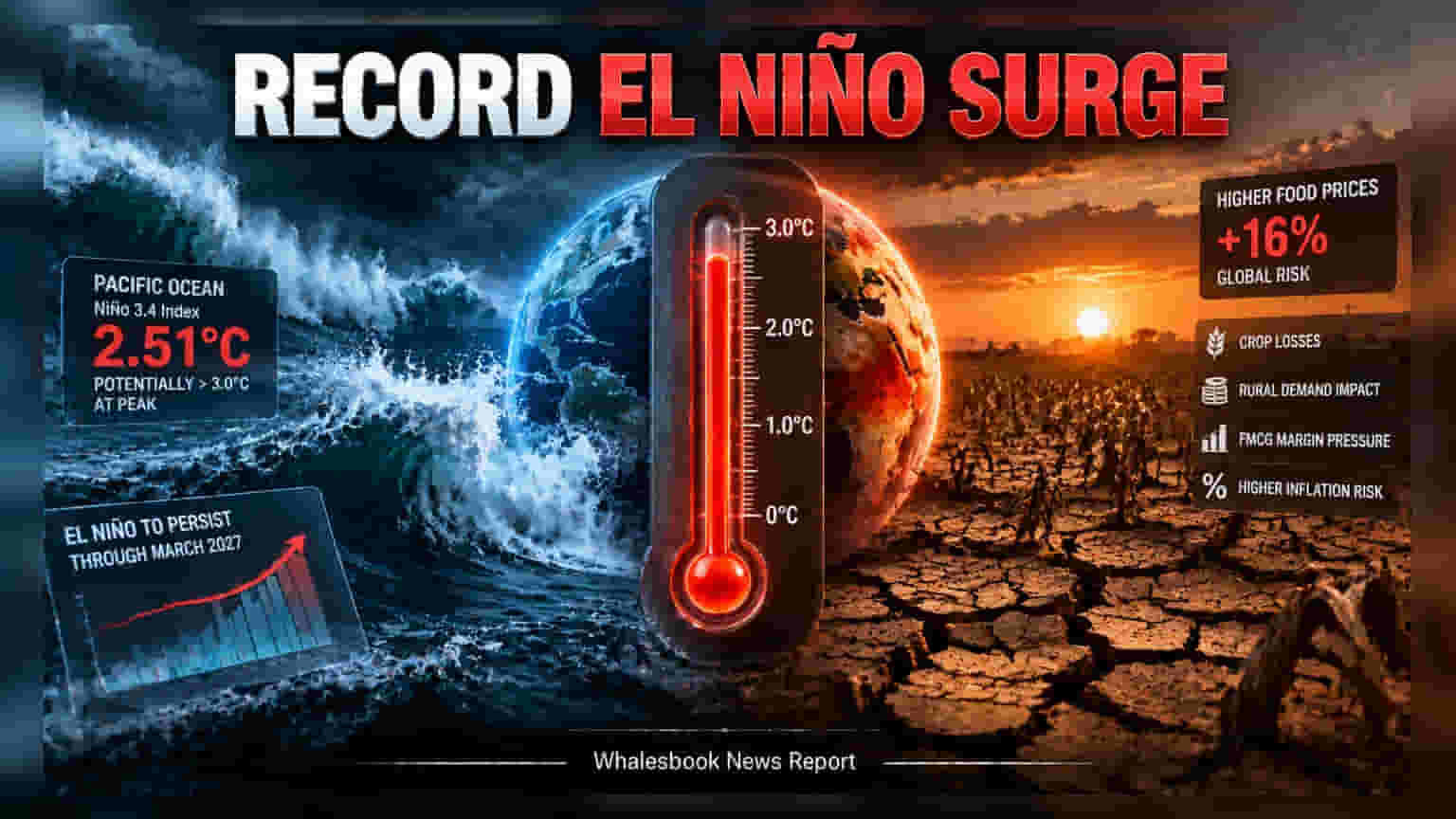
An intense El Niño event has driven the Niño 3.4 index to 2.51°C, with forecasts predicting it will persist until March 2027. This climate shift risks disrupting monsoon patterns and agricultural output, with analysts warning of a potential 16% surge in global food prices. For investors, this raises concerns about food inflation, rural demand, and interest rate policies, which could impact corporate margins across consumer and agricultural sectors.
A powerful El Niño climate event is unfolding, reaching levels that suggest it will likely become the strongest on record. As of mid-September 2026, the Niño 3.4 index—a primary measure used to track Pacific Ocean temperatures—has hit 2.51°C. Meteorological models from the Australian Bureau of Meteorology indicate this event will persist through March 2027, with temperatures potentially exceeding 3.0°C during its peak. In India, this shift poses a material risk to monsoon stability and agricultural production, which has significant implications for the broader economy and corporate performance.
Impact on Food Inflation and FMCG Margins
The primary concern for markets is the potential for supply-side disruption in agriculture. Projections from global financial analysts suggest that this El Niño cycle could trigger a 16% increase in global food prices. For the Indian market, sustained high food prices create two main challenges for companies. First, FMCG companies may face pressure on profit margins if they cannot pass on rising raw material costs—such as grains, edible oils, and sugar—to consumers. Second, persistent food inflation often keeps the overall Consumer Price Index high, which may limit the Reserve Bank of India’s ability to reduce interest rates, keeping the cost of borrowing elevated for businesses.
Risks to Rural Demand and Agricultural Inputs
The Indian economy relies heavily on the monsoon for rural prosperity. A weak or erratic rainfall pattern, often linked to El Niño, typically impacts the kharif and rabi crop harvests. When crop yields decline, rural income takes a direct hit. This creates a ripple effect, often leading to slower sales volume growth for consumer-facing sectors, such as two-wheelers, tractors, and non-essential FMCG products, which are sensitive to rural spending power.
Additionally, companies in the agricultural input sector, including fertilizer and seed manufacturers, face demand uncertainty. If farmers anticipate poor harvest conditions due to drought or heat stress, they may reduce their spending on fertilizers and high-quality seeds. While the Indian Ocean Dipole index is currently at +0.65°C—potentially offering some buffer—it has not yet developed into a strong positive event that could fully offset the dry conditions typically associated with El Niño.
Next Monitorables for Investors
Investors should track high-frequency data related to rainfall distribution and soil moisture levels in key farming states during the coming months. Furthermore, quarterly management commentary from consumer goods companies regarding input cost pressure and rural volume growth will be critical. Any shift in the Reserve Bank of India’s inflation outlook or monetary policy stance in response to food price volatility will also serve as a key indicator of how the broader market might react to this climate-driven risk.