 Whalesbook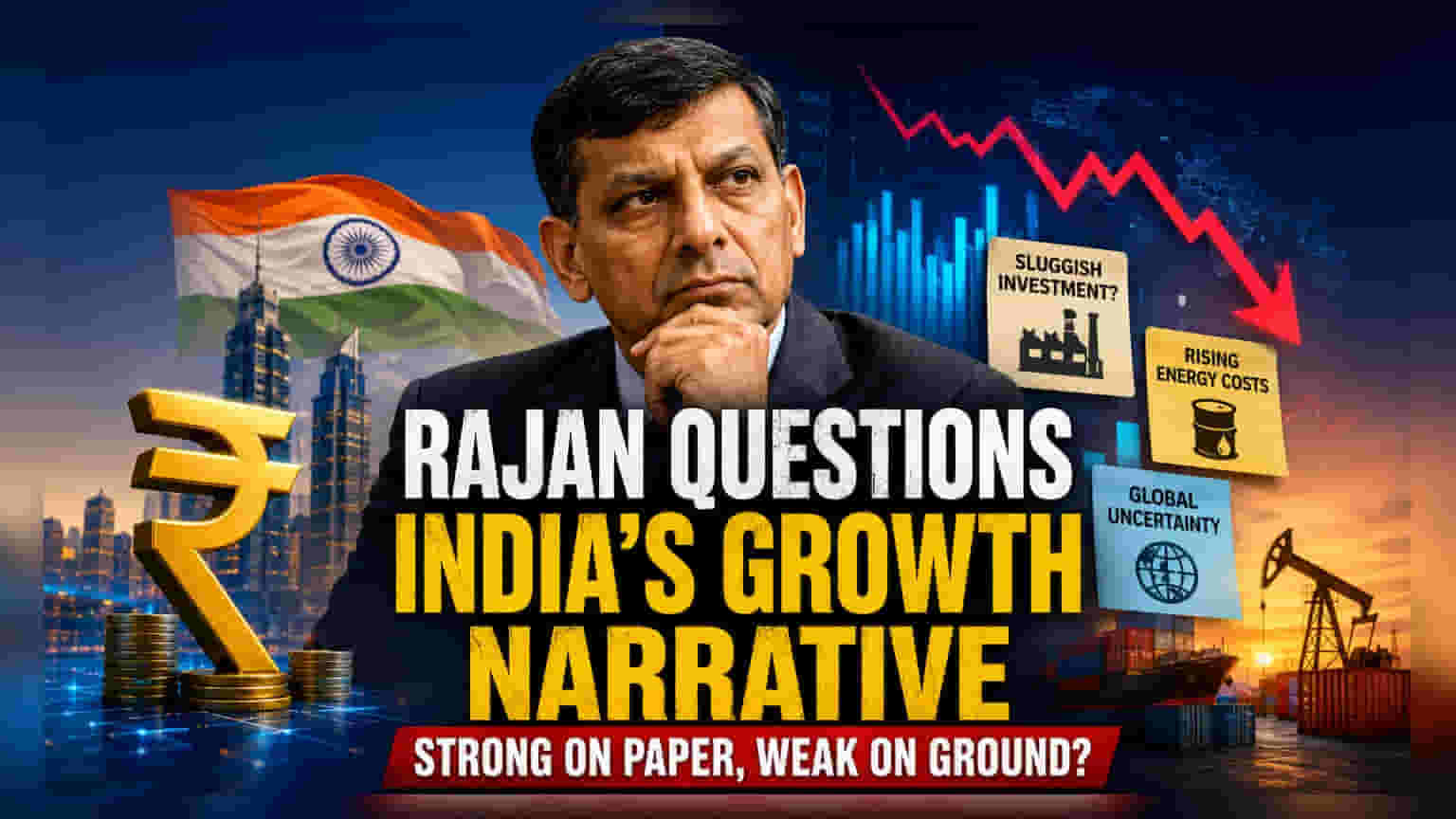


Former RBI Governor Raghuram Rajan has expressed skepticism about India's official GDP growth figures, highlighting a disconnect between reported expansion and corporate investment trends. While official data shows strong growth, Rajan warns of risks from weak private investment and global energy volatility. Investors should monitor whether these macro concerns align with corporate earnings and capital expenditure.
What Happened
Former Reserve Bank of India (RBI) Governor Raghuram Rajan has raised questions about the strength of India's current economic growth narrative. In recent comments, he noted that official GDP figures, which showed an expansion of 7.7% in FY26, are difficult to reconcile with what he describes as sluggish corporate investment and slowing foreign capital inflows. He stated that the lack of private corporate investment—a trend he observed as a puzzle for over a decade—remains a concern, leading him to question if the economy's growth is as strong as reported.
The Investment Puzzle
For investors, the central point of this debate is the gap between headline economic numbers and on-the-ground business activity. While official data indicates that sectors like manufacturing and services have been key drivers of growth, Rajan's skepticism focuses on the reluctance of the private sector to commit to long-term capital spending. Investors often look at capital expenditure (capex) as a sign of business confidence. When companies choose not to expand capacity or build new factories, it can signal uncertainty about future demand or profitability. This view is contrasted by recent official statistics which reported that India’s GDP growth hit 7.7% in FY26, supported by robust government spending and domestic demand.
Macro Risks and Global Pressures
Beyond the investment debate, the former central banker highlighted the vulnerability of the economy to external shocks, particularly from rising energy prices. India imports a large portion of its crude oil requirements, making the domestic economy sensitive to global price spikes caused by geopolitical conflicts. Rising fuel costs can lead to higher logistics and input prices, which may pressure profit margins for manufacturers and reduce disposable income for households. While some analysts argue that India's domestic consumption cushion and resilient services sector can absorb these shocks, the sensitivity of the fiscal deficit to energy imports remains a key area that market participants monitor closely.
Balancing Perspectives
Market analysts and economists remain divided on these points. Some argue that the economy is entering this period from a position of relative strength, citing resilient consumer spending and tax collections. Others, including international rating agencies and think tanks, have noted that while the overall trajectory is positive, global uncertainties—such as trade shifts and energy supply disruptions—may cause growth to moderate in the coming fiscal year. The debate highlights the importance for investors to look beyond top-line GDP numbers and evaluate the health of specific industries and the broader investment climate.
What Investors Should Track
Investors may want to focus on a few key indicators to understand the situation better. First, private sector capital expenditure data will be important; if companies begin to increase their spending on new projects, it could signal growing confidence. Second, corporate earnings and management commentary on demand and margins can provide a clearer picture of how businesses are handling cost pressures. Finally, tracking data on Foreign Direct Investment (FDI) inflows and the government's fiscal management will offer insights into how the country is navigating global macroeconomic challenges. Monitoring these factors can help in forming a more grounded view of the economic environment.