

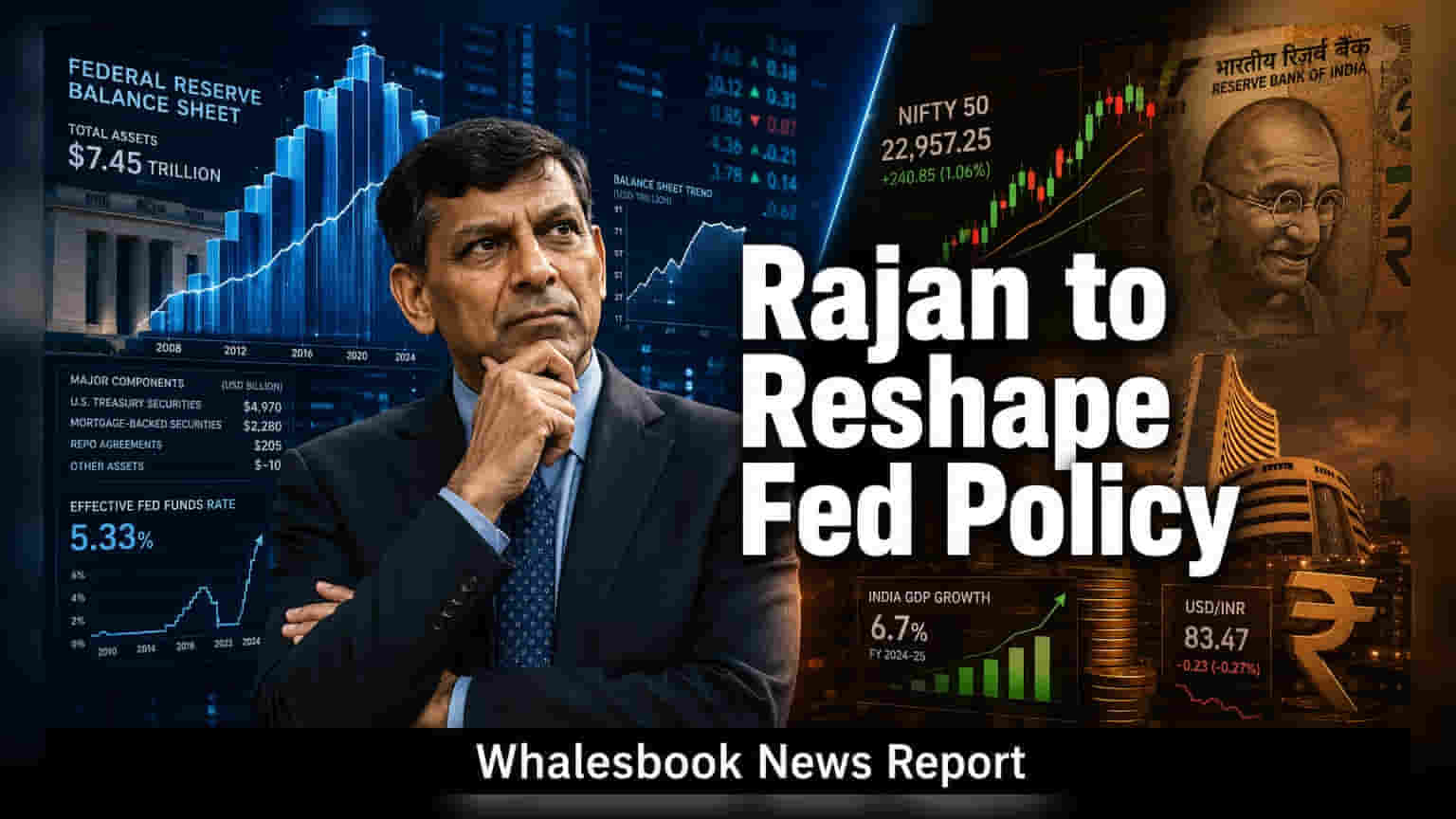
Former RBI Governor Raghuram Rajan has been appointed to co-lead a US Federal Reserve task force evaluating its USD 6.7 trillion balance sheet. This development signals a potential shift in global monetary policy that could influence liquidity and capital flows into emerging markets like India.
The US Federal Reserve has named former Reserve Bank of India Governor Raghuram Rajan to co-lead a task force tasked with reviewing its massive USD 6.7 trillion balance sheet. This group, formed under the direction of Fed Chair Jerome Powell, is set to analyze the central bank's current financial footprint. The appointment comes at a time when global markets are evaluating how major central banks might transition away from the extended period of easy money policies that followed recent global economic challenges.
Impact on Global Liquidity and Capital Flows
The primary focus of this task force is to examine the long-term strategy for the Fed's balance sheet, which expanded significantly during periods of aggressive monetary stimulus. For Indian investors and policymakers, this is a significant development because US monetary policy directly influences global financial conditions. If the task force recommends a reduction in the balance sheet, it could lead to tighter liquidity in international markets. Historically, when global liquidity tightens, emerging markets like India often experience increased volatility in foreign institutional investment flows.
Balancing Economic Stability and Market Pressure
While the prospect of a smaller Fed balance sheet might cause short-term fluctuations in capital flows, it could also contribute to a more stable and predictable long-term economic environment. The era of excessive monetary stimulus often distorted asset prices and risk premiums across global markets. By moving toward a more normalized balance sheet, the Fed may aim to reduce these distortions. However, the risk for investors lies in the pace of this transition. A sudden or aggressive shift in policy could pressure equity and bond markets in emerging economies, while a gradual approach may allow markets to adjust without significant stress.
Monitoring Future Policy Updates
Investors will now watch for the findings and recommendations produced by this task force. The specific timeline for any potential policy changes and the Fed's communication regarding these findings will be critical. Market participants will likely track how these discussions influence US interest rate expectations and the overall strength of the dollar, as both factors are essential for assessing the impact on the Indian rupee and domestic market liquidity.