 Whalesbook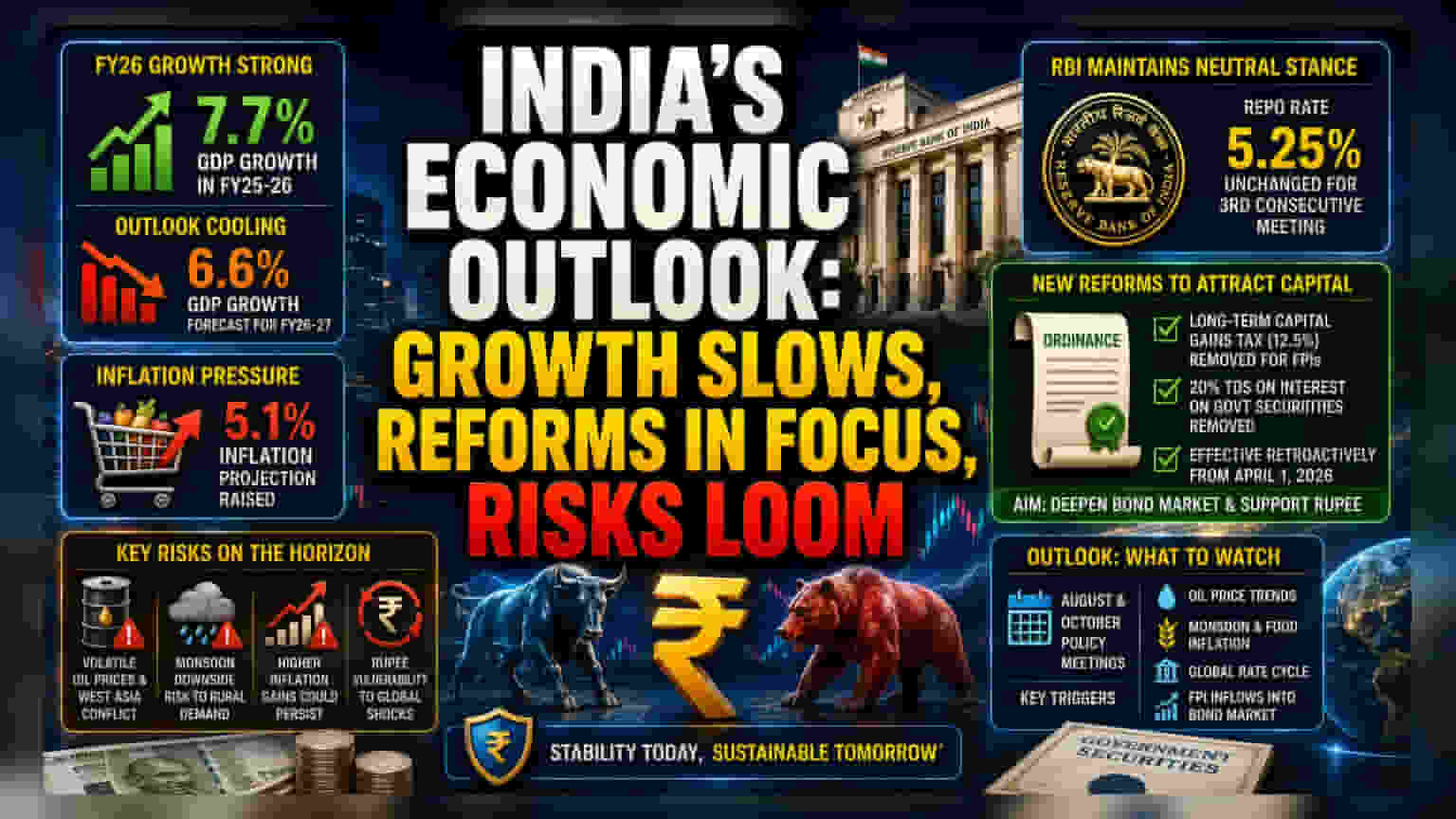


The Valuation of Resilience
While the headline economic expansion of 7.7% for the 2025-26 fiscal year underscores a period of significant industrial momentum, the forward-looking sentiment from the central bank suggests a clear cooling phase. The downward revision of the FY27 GDP forecast to 6.6% serves as a sobering recognition of the risks posed by volatile energy markets and regional instability in West Asia. By maintaining the benchmark repo rate at 5.25% for the third consecutive session, the Monetary Policy Committee has opted for a neutral stance, prioritizing macroeconomic stability over aggressive intervention, despite mounting inflation projections of 5.1%.
The Capital Inflow Strategy
To counteract potential capital flight and support the rupee, the government has moved to aggressively sharpen its tax competitiveness. The newly promulgated ordinance, effective retroactively from April 1, 2026, removes the long-term capital gains tax—previously 12.5%—and the 20% withholding tax on interest for foreign portfolio investors in government securities. By eliminating these friction points, authorities are signaling a desire to deepen the domestic bond market. This is a critical pivot; attracting patient, long-term capital from pension funds and sovereign wealth funds is essential to offset the persistent net outflows observed in the equity segment during the first half of the year.
The Forensic Bear Case
Despite the government's optimism, underlying risks remain pronounced. The central bank's inflation projection hike to 5.1% reflects the transmission of global supply-side shocks into the domestic price index, particularly through energy and industrial inputs. Unlike previous cycles where domestic demand could absorb global volatility, current monsoon forecasts carry downside risks that could further dampen rural consumption. Furthermore, the reliance on retrospective ordinances to fix investor sentiment highlights a degree of regulatory volatility. While the exemption for the Bank for International Settlements and FPIs is a tactical win, the structural reality remains that the Indian currency is sensitive to the Strait of Hormuz conflict. Any escalation that further impairs energy supply chains would likely force the RBI to abandon its neutral stance, potentially triggering a hawkish rate cycle that would weigh heavily on domestic credit growth.
The Outlook
Moving into the latter half of 2026, the economy will be defined by its ability to balance fiscal discipline with the exigencies of an uncertain global macro environment. Analysts are watching the August and October policy meetings closely; the transition from a 'wait-and-watch' approach to active monetary tightening remains a live possibility should monsoon-related inflation or oil price spikes intensify. The success of these latest reform measures will be measured by the stability of the rupee and the depth of new foreign participation in the sovereign debt market.