 Whalesbook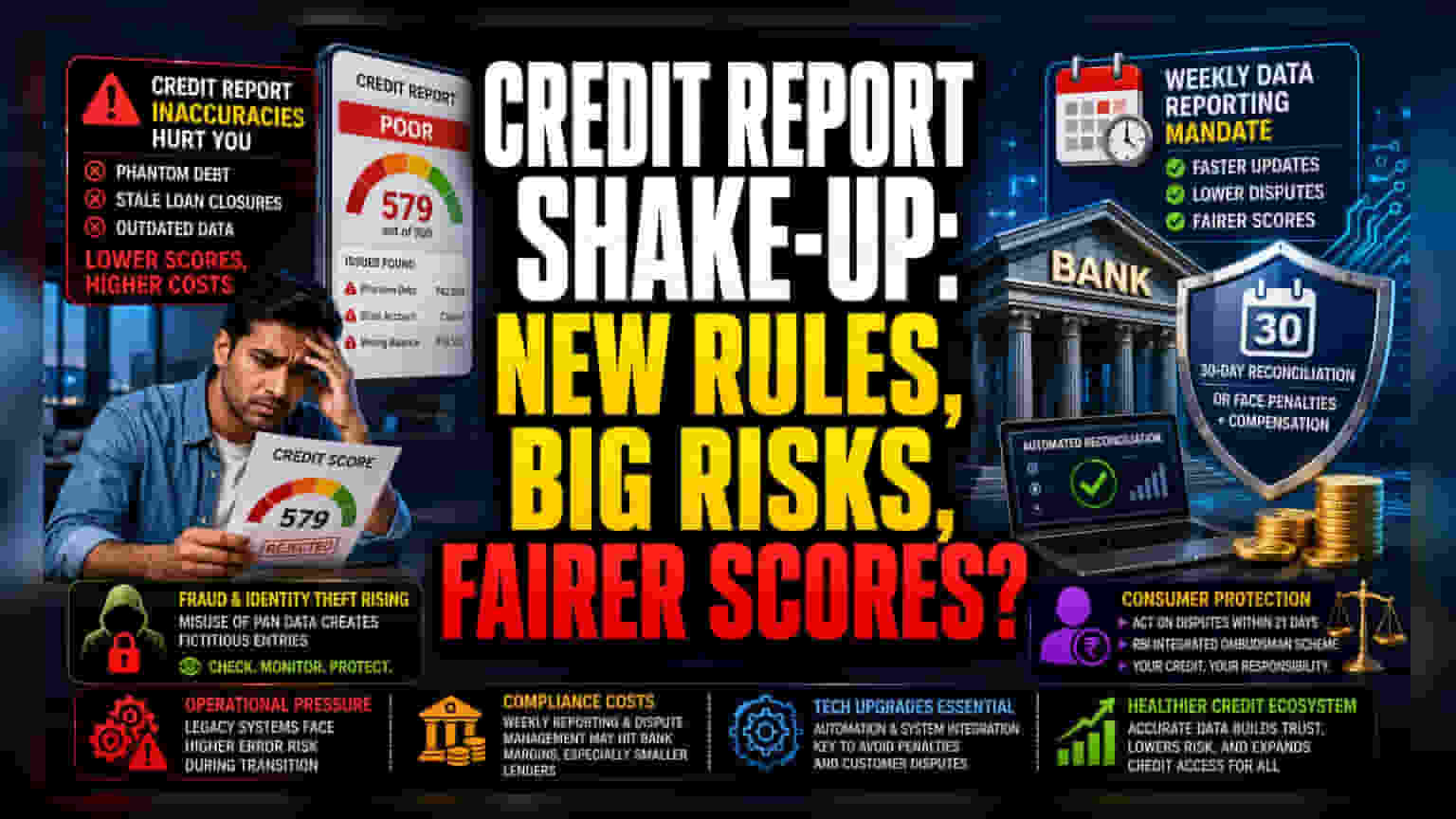


Systemic Inaccuracies and Market Friction
The integrity of the Indian credit ecosystem has faced mounting pressure as legacy reporting failures result in inflated risk profiles for otherwise creditworthy individuals. These discrepancies, characterized by phantom debt and stagnant loan closures, create a significant friction point in the lending lifecycle. When credit bureaus process outdated or erroneous data, the resulting impact on borrower eligibility becomes a hidden tax on the retail credit market, often forcing applicants into higher interest rate tiers due to artificially damaged scores.
Operational Pressure on Financial Institutions
Transitioning to a weekly data reporting mandate from the previous bi-weekly standard shifts a substantial operational burden onto domestic banks and non-banking financial companies. This accelerated timeline is designed to minimize the latency between loan closure and credit profile updates. Institutions that fail to reconcile internal accounting with external credit reporting databases within the prescribed 30-day window now face not only potential regulatory penalties but also the looming threat of mandatory financial compensation to affected consumers. This creates a clear incentive for lenders to invest in robust automated reconciliation software to avoid the costs associated with manual dispute mediation.
Forensic Analysis of the Bear Case
While the regulatory push for accuracy protects the consumer, the banking sector faces meaningful downside risks. For smaller institutions with legacy IT infrastructure, the shift toward weekly reporting mandates may lead to a surge in technical errors during the transition period. If automated systems fail to sync correctly, the volume of legitimate disputes could overwhelm existing grievance cells, leading to a bottleneck in credit processing. Furthermore, the provision for daily compensation to consumers creates a new liability line for banks. Investors should monitor whether these compliance costs disproportionately impact the net interest margins of smaller regional banks that rely on volume-driven retail lending rather than more profitable corporate segments.
Structural Risks and Fraud Mitigation
The rise of fictitious entries in credit reports points to a broader, more insidious threat: sophisticated identity theft utilizing compromised PAN data. The regulatory requirement for lenders to act within 21 days is a defensive maneuver, yet the speed of digital fraud often outpaces institutional response times. While the RBI Integrated Ombudsman Scheme provides an escalation path, the primary responsibility remains with the consumer to proactively monitor credit footprints. The effectiveness of these new rules will ultimately depend on whether credit bureaus and lenders can harmonize their data silos or if the rapid-fire weekly reporting cycle simply exacerbates existing database integration failures.