 Whalesbook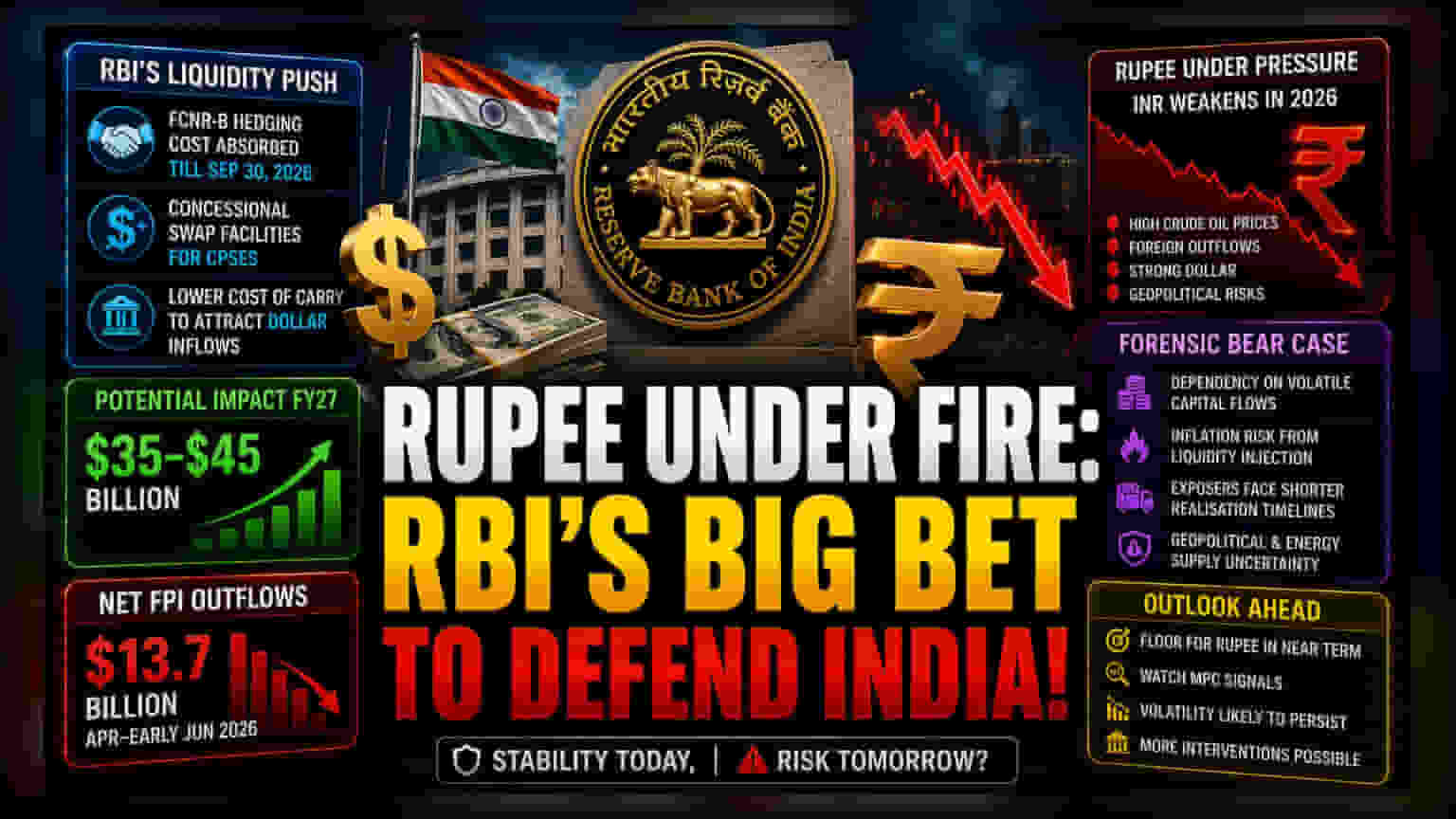


The Valuation Gap and Regulatory Pivot
The Indian rupee has faced relentless downward pressure throughout 2026, driven by elevated crude oil prices and significant foreign portfolio outflows. The Reserve Bank of India’s (RBI) decision to absorb hedging costs for foreign currency non-resident bank (FCNR-B) deposits until September 30 represents a direct subsidy to banks, intended to lower the friction for offshore dollar repatriation. This initiative, combined with concessional swap facilities for central public sector enterprises (CPSEs), signals a transition from passive market observation to active balance-of-payments management. By lowering the cost of carry for dollar-denominated borrowing, the central bank is attempting to manufacture synthetic inflows to offset the structural deficit.
The Analytical Deep Dive: Structural vs. Cyclical
Comparing the current intervention to historical episodes, the scale of this liquidity injection is substantial. Unlike traditional open-market operations, these measures specifically target the external sector. Economists estimate the potential impact at $35 billion to $45 billion for FY27—a necessary infusion given that net FPI outflows reached $13.7 billion between April and early June 2026. However, the efficacy of these tools relies heavily on the 'carry' remaining attractive to non-resident Indians and institutional participants. If global volatility—exacerbated by ongoing conflicts in West Asia—keeps risk appetite subdued, the cost of these subsidies may outweigh the net benefit to foreign reserves. Unlike peer emerging markets that have allowed currency depreciation to act as a natural shock absorber, India is actively fighting the trend, which raises the long-term risk of moral hazard among corporate borrowers who may delay hedging their own exposures.
The Forensic Bear Case: Structural Weaknesses
The reliance on artificial incentives masks a deepening vulnerability: India’s persistent dependency on volatile capital flows to fund its current account deficit. The current strategy faces two major pitfalls. First, by injecting rupee liquidity via swap facilities, the central bank risks stoking domestic inflationary pressures if these flows are not sterilized effectively. Second, the shortening of export realization timelines from 15 months to 9 months, while intended to force dollar homecoming, may place undue strain on exporters facing global supply chain disruptions. Furthermore, management of these reserves is no longer just about volume but velocity; if the underlying geopolitical risks to energy supply remain unresolved, these liquidity buffers may provide only a fleeting defense against a structurally stronger dollar.
The Future Outlook
Brokerage consensus suggests that while these measures effectively provide a floor for the rupee in the near term, they do not resolve the primary supply-side constraints. Markets are now pivoting to watch the central bank’s upcoming MPC communication for signals on rate normalization. Unless global energy prices retreat or domestic macroeconomic indicators show sustained resilience, the rupee is expected to trade with a bias toward volatility, necessitating further, potentially more drastic, regulatory interventions before the fiscal year concludes.