 Whalesbook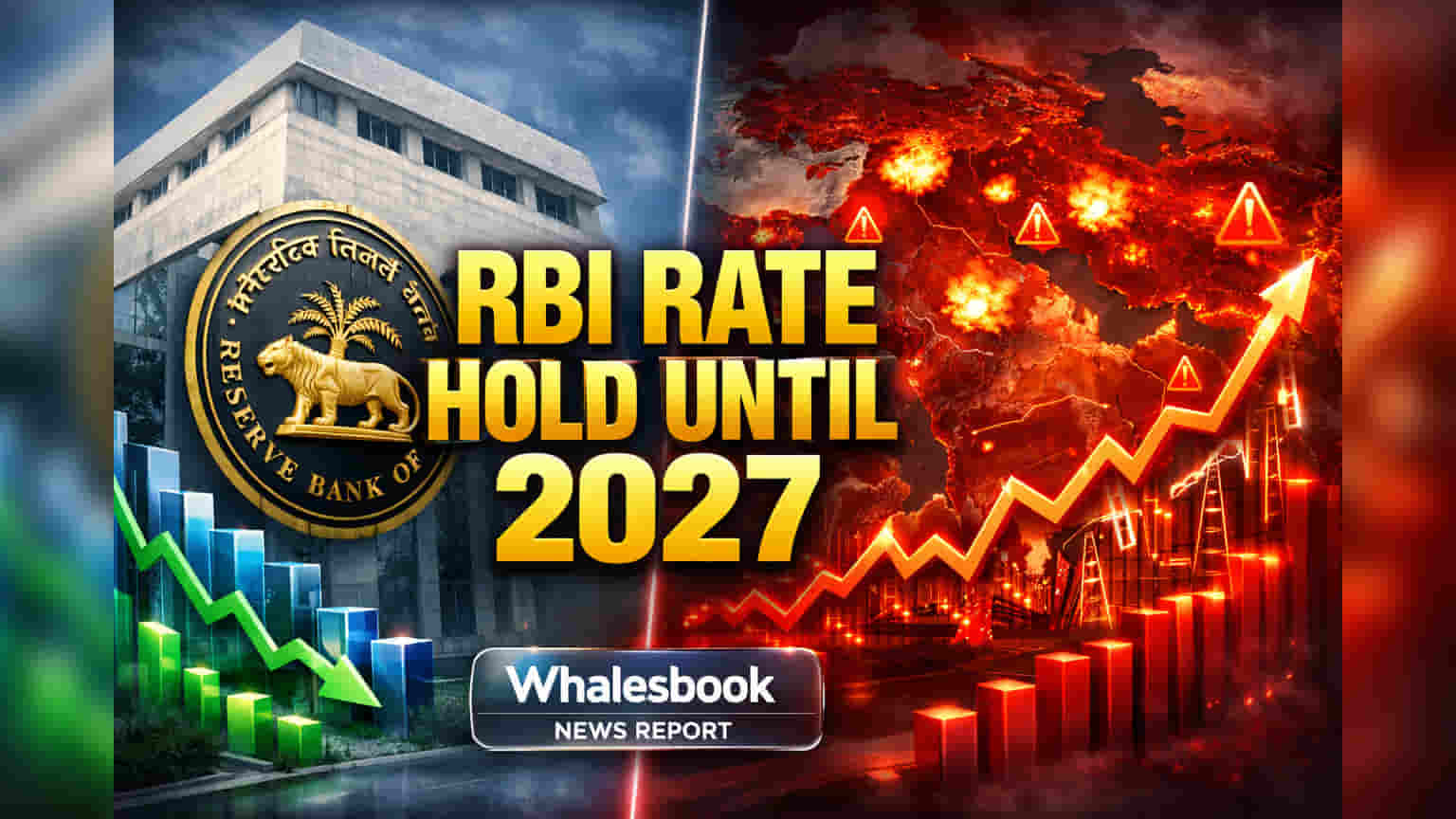
RBI Policy Pause Amid Global Turmoil
The Reserve Bank of India (RBI) is expected to keep its benchmark repo rate at 5.25% through at least mid-2027. This consensus, based on a Reuters poll of economists, shows a strategic pause to manage the impact of rising global conflicts. Disruptions to key shipping routes and the resulting jump in oil prices above $100 per barrel threaten India's energy security, as it imports about 85% of its crude.
This prolonged pause lets the central bank assess these external pressures on India's inflation and economic stability. Dhiraj Nim of ANZ noted that while inflation is currently low, global shocks mean policy rates are likely to rise rather than fall.
Risks to India's Economic Stability
While inflation has stayed below the RBI's 4% target for a year, and economic growth forecasts for FY27 are around a strong 7.1%, this stability is fragile. S&P Global Ratings forecasts inflation to reach 4.3% in FY27, with Crisil projecting 5.1%.
A sustained $10 per barrel increase in crude oil prices could widen India's current account deficit by 0.35% of GDP and reduce growth by 0.15-0.20%. India's rupee is already weak, trading near record lows around 94 per dollar after falling over 10% in the past year. Goldman Sachs forecasts the rupee could drop to 95 against the dollar within a year, possibly making the RBI rethink its policy.
The government faces fiscal pressure from energy subsidies, which could increase significantly if oil prices remain elevated.
Key Risks: Imported Inflation and Rupee Weakness
The central bank faces complex trade-offs. Global shocks mainly affect supply, suggesting caution on aggressive rate hikes. However, ongoing pressure on the rupee and the risk of inflation spreading through the economy cannot be ignored.
Historically, oil price spikes have correlated with rupee devaluation and significant economic strain. Unlike major central banks like the US Federal Reserve (which anticipates some rate cuts in 2026) or the ECB (holding steady), the RBI faces a unique vulnerability due to its import dependence.
If oil prices stay high, potentially over $130 per barrel, the RBI might need to raise rates, contradicting the expectation of a hold until mid-2027. The risk of 'low growth and high inflation' is the main threat to India's economy in fiscal 2026-27, according to most economists.
Outlook: Uncertainty Remains
While economists generally expect policy to remain stable for a long time, the ongoing geopolitical situation, affecting energy prices, India's rupee, and inflation, creates significant risks of prices rising more than expected.
The RBI will likely remain vigilant, prioritizing currency stability and managing imported inflation pressures. However, how long the RBI can maintain its current low rate policy depends heavily on de-escalation in the Middle East and falling global crude prices – factors beyond its control.
If these conditions continue, the market could see a policy change sooner than the expected mid-2027.