 Whalesbook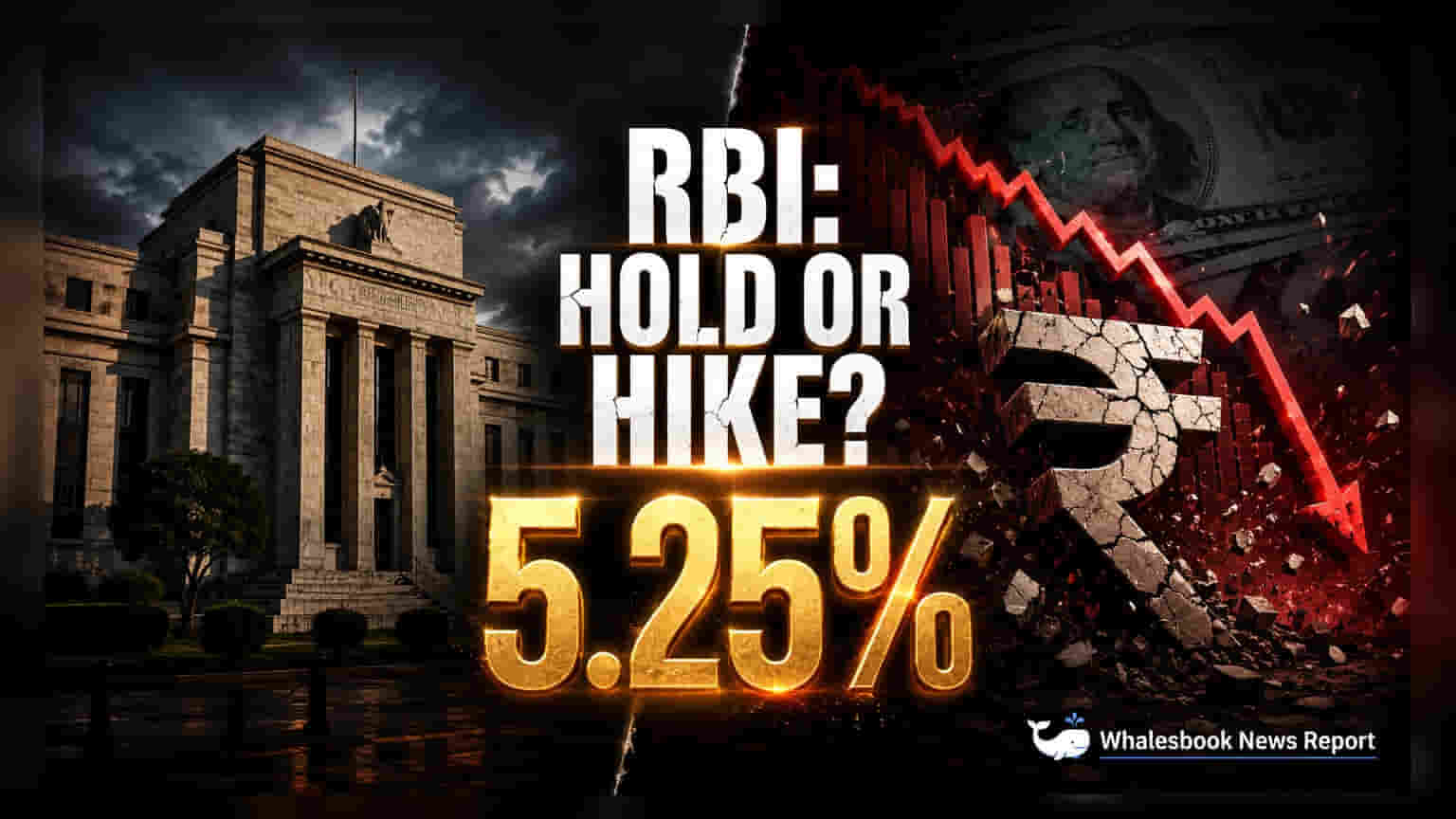


The Policy Rate Dilemma
The upcoming Monetary Policy Committee meeting arrives at a precarious moment for India’s central bank. As global geopolitical tensions—particularly the conflict in West Asia—disrupt energy supply chains, the Reserve Bank of India is being pushed to choose between protecting the depreciating rupee and shielding a resilient domestic economy. While retail inflation for April clocked in at 3.48%, remaining within the central bank's tolerance band, the recent jump in wholesale price inflation to 8.30% signals mounting upstream cost pressures that could eventually bleed into the broader economy.
Strategic Liquidity Management
Maintaining the status quo at 5.25% appears to be the consensus expectation among market participants. Rather than resorting to aggressive rate hikes—which risk stifling the 6.9% GDP growth projected for FY27—the central bank is likely to favor targeted interventions. By employing instruments such as liquidity adjustments or potential 'operation twist' maneuvers to stabilize the yield curve, the RBI can address volatility in the foreign exchange market without triggering a premature contraction in credit availability.
Growth Amidst Global Headwinds
The central bank’s recent annual report highlights a paradox: while growth remains robust due to strong domestic demand and government-led capital expenditure, the external environment is increasingly hostile. Rising crude oil prices and the prospect of a sub-par monsoon present credible downside risks to the growth trajectory. Unlike peer nations that have already pivoted to tightening cycles in response to local currency weakness, the RBI is betting that its current policy corridor provides enough flexibility to absorb these shocks without derailing the national recovery.
The Forensic Bear Case: Risks to the Status Quo
A risk-averse view suggests that the central bank’s 'wait-and-watch' approach may eventually be overtaken by events. If the rupee continues to slide toward triple-digit levels against the dollar, the cost of imported inflation could become too severe to ignore. Furthermore, the banking sector faces margin compression risks; even with stable repo rates, deposit mobilization remains expensive. If the RBI maintains a neutral stance for too long while global interest rates remain elevated, it may find itself forced into an off-cycle rate hike, a move that would likely rattle equity markets and increase volatility for commercial borrowers.