 Whalesbook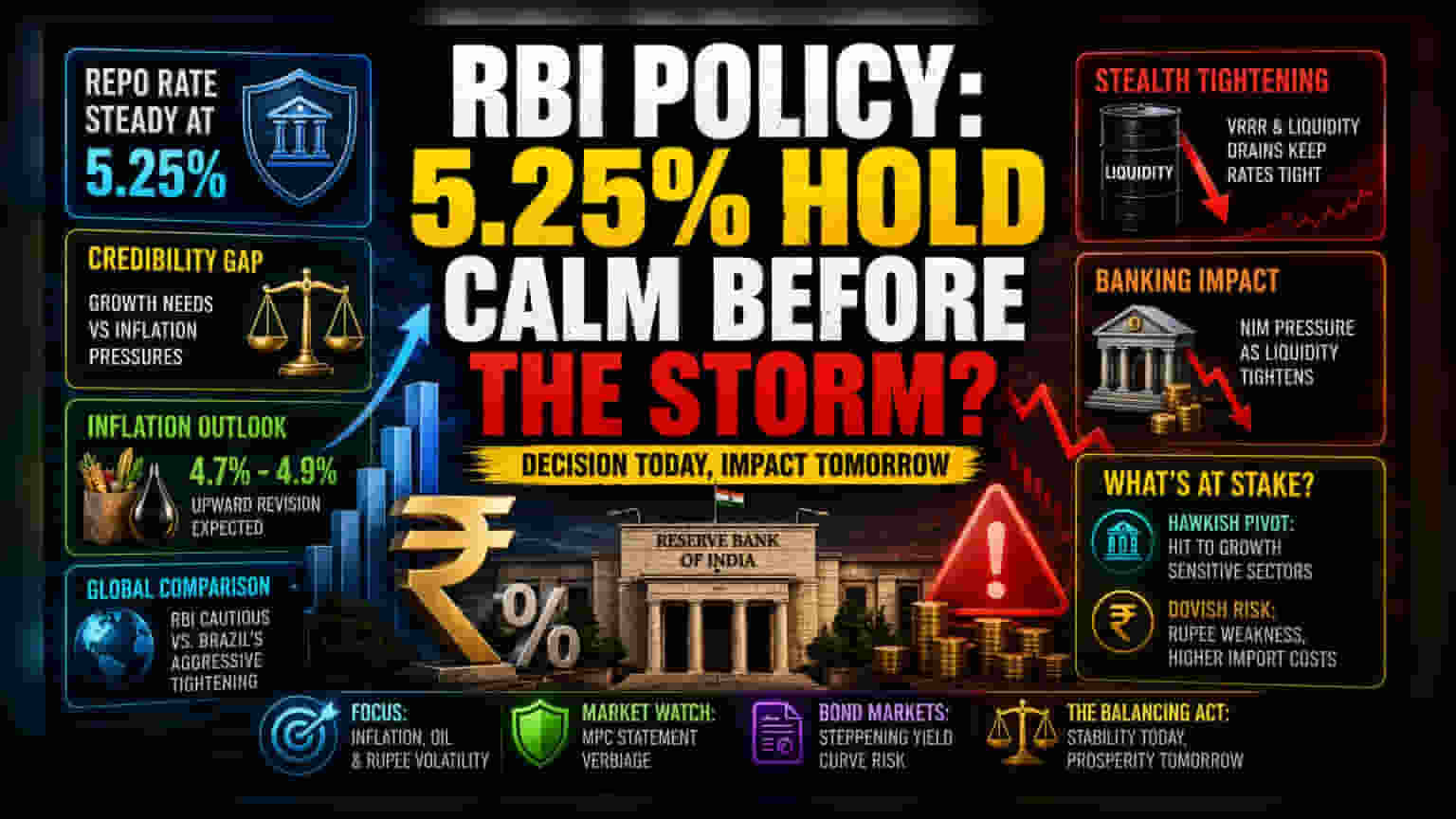


The Credibility Gap
Maintaining the repo rate at 5.25% serves as a strategic placeholder while the central bank navigates the widening chasm between domestic growth requirements and external inflationary pressures. Market participants are looking beyond the headline rate to the specific verbiage used by the Monetary Policy Committee regarding the 'withdrawal of accommodation.' Any softening of this language would signal a victory for growth-focused investors, yet it risks destabilizing a rupee already struggling against persistent global volatility.
Inflationary Headwinds and Policy Calculus
While the current focus is on the 5.25% steady state, the underlying reality involves a sharp divergence in inflation expectations. With most analysts anticipating an upward revision to the inflation outlook to 4.7%–4.9%, the margin for error has vanished. Global oil prices continue to act as an exogenous tax on the Indian economy, complicating the RBI's ability to maintain a neutral bias. Compared to peers in the Emerging Market space, such as the Central Bank of Brazil, which has been more aggressive in preemptive tightening, the RBI remains cautious. This divergence is causing yield curve steepening, as bond traders demand higher premiums to account for the risk that the central bank remains behind the curve on sticky food and energy prices.
Structural Risks and Monetary Tightening
Investors should remain vigilant regarding the potential for 'stealth tightening.' Even if the repo rate remains unchanged, the RBI may employ liquidity management tools like the Variable Rate Reverse Repo (VRRR) auctions to drain systemic excess without altering the headline policy rate. This methodology allows the central bank to manage short-term interbank rates effectively while avoiding the market panic that often accompanies an official hike. The risk for the banking sector is profound, as any unexpected liquidity contraction would put immediate pressure on Net Interest Margins (NIMs) for commercial lenders who have already seen credit growth begin to normalize from record highs.
The Future Policy Trajectory
Forward guidance remains the primary instrument of influence for the MPC. If the central bank opts for a hawkish pivot, expect immediate repricing in rate-sensitive sectors such as real estate and automotive finance. Conversely, a commitment to growth at the expense of currency stability could invite further downward pressure on the rupee, increasing import costs and creating a vicious cycle of imported inflation. The path forward necessitates a delicate balancing act that prioritizes long-term financial stability over short-term market euphoria.