

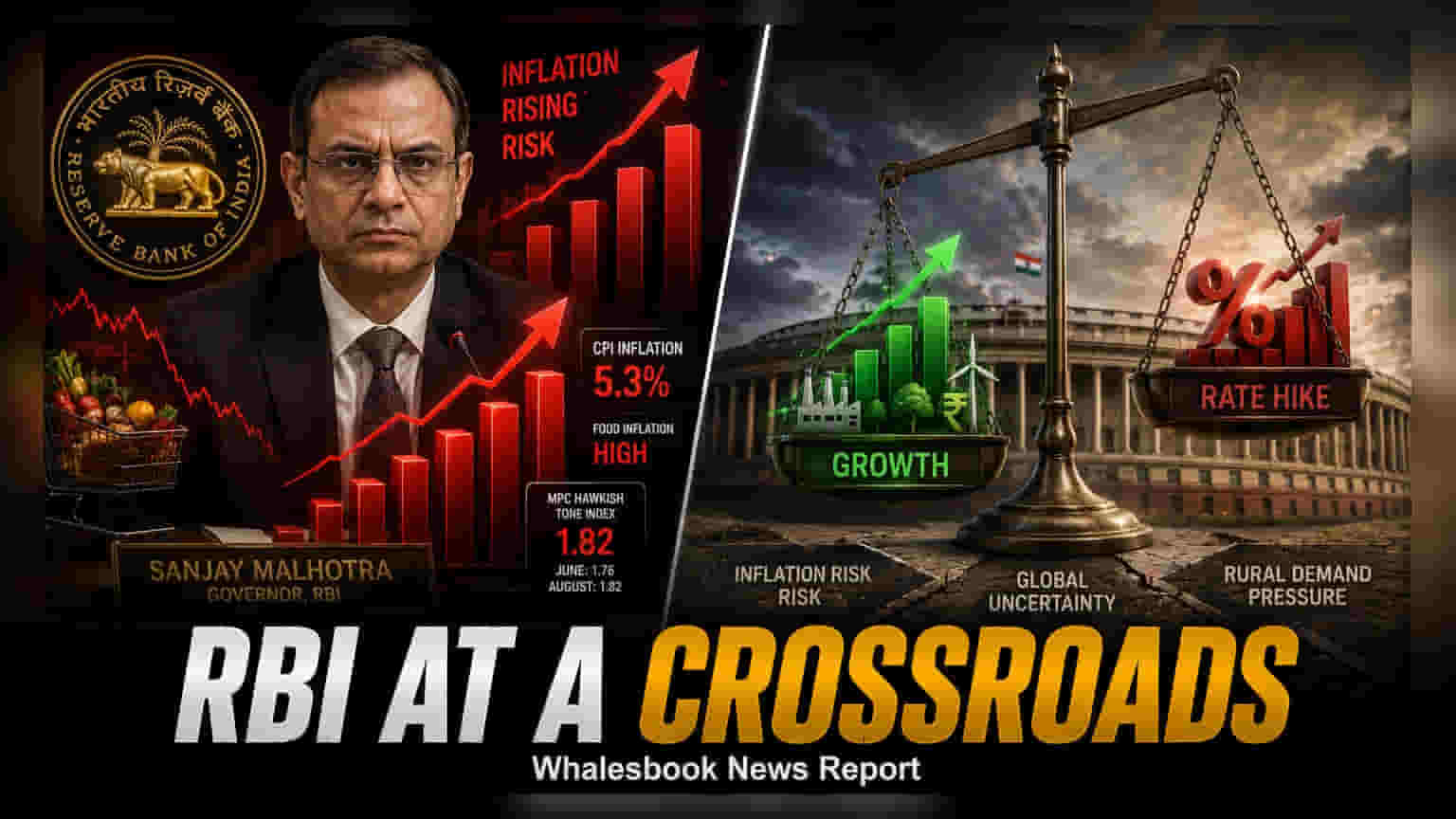
The Reserve Bank of India (RBI) is facing a policy divide as recent MPC minutes reveal a tougher stance on inflation, while Governor Sanjay Malhotra maintains a patient, data-dependent approach. This conflict has created uncertainty for investors regarding the timing of future interest rate changes, especially with risks from monsoon-related food inflation and global economic shifts.
The Reserve Bank of India (RBI) is currently navigating a distinct difference in opinion between the central bank’s leadership and its policy-setting committee. While the RBI maintained the repo rate at 5.25% during its August 2026 meeting, the latest minutes from the Monetary Policy Committee (MPC) suggest a rise in 'hawkish' sentiment—a preference for tighter monetary policy to combat inflation.
This gap between the MPC’s internal warnings and the cautious, growth-focused stance of Governor Sanjay Malhotra is generating uncertainty in the financial markets. According to a recent report by SBI Research, the 'macro tone' of the MPC minutes has grown more hawkish, with its index rising to 1.82 in August from 1.76 in June. This indicates that while the official policy currently remains stable, individual committee members are increasingly concerned about the persistence of inflation.
Inflation Risks and Monsoon Pressure
The core of this debate lies in how the RBI should handle rising prices. The hawkish members of the committee are wary that inflation, particularly in food and fuel, could stay elevated and force the central bank to act sooner rather than later. Conversely, the Governor’s approach has prioritized ensuring that high interest rates do not prematurely choke off economic growth.
Domestic factors are adding further pressure to this balancing act. A significant monsoon rainfall deficit in several states has sparked fears of lower agricultural output, which could drive up food prices. Skymet has lowered its monsoon forecast for the year, heightening concerns about a potential drought. For investors, this is a critical monitorable, as higher food inflation typically limits the RBI’s ability to keep rates low.
Global Factors and Market Uncertainty
Global dynamics are also playing a part in the RBI's calculations. While the U.S. economy has shown resilience, persistent geopolitical tensions and fluctuating crude oil prices continue to pose risks. The U.S. Treasury’s planned bond buyback program is expected to impact long-term yields, adding another layer of complexity for global markets and, by extension, domestic policy decisions.
For investors, this lack of consensus creates a challenging environment. When central bank communication appears split, it becomes difficult to predict whether the next move will be a rate hike or a continued pause. This uncertainty can lead to increased volatility in bond yields and stock market sentiment. The next few months will be crucial as the market watches how the RBI reconciles these conflicting internal views with incoming data on inflation and rural demand. Investors should track the upcoming policy meetings and any official comments on inflation trends to better understand the potential trajectory of interest rates.