 Whalesbook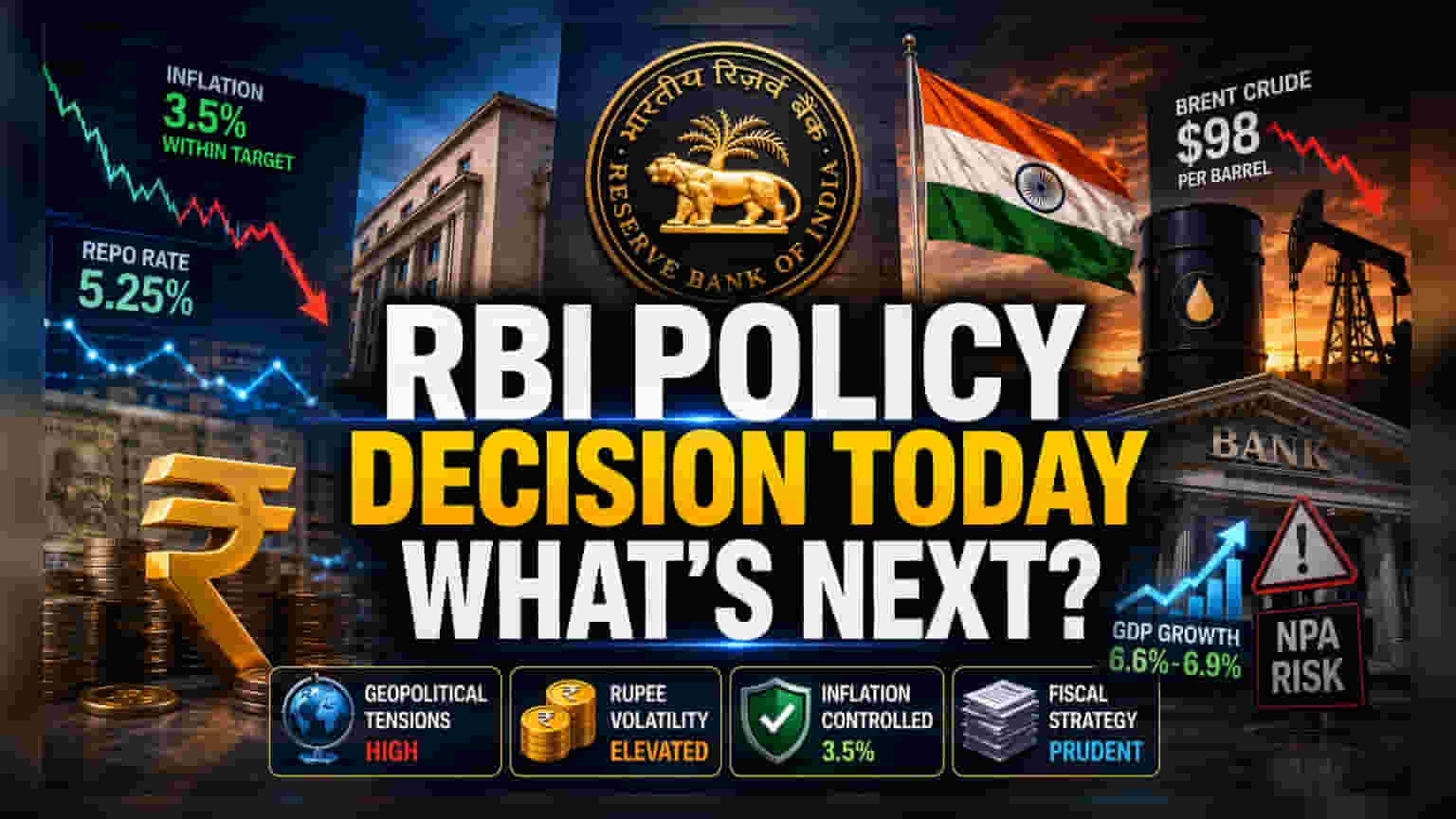


The Policy Standoff
The Reserve Bank of India’s Monetary Policy Committee enters its final day of deliberations today, with the consensus among economists overwhelmingly pointing toward a status quo on the benchmark repurchase rate at 5.25%. This expected decision arrives as the central bank navigates the complex interplay between persistent geopolitical tensions in West Asia and a domestic economy that, while resilient, remains sensitive to energy costs. While the central bank is mandated to target inflation, current Consumer Price Index readings—hovering near 3.5%—remain within the comfortable tolerance band, allowing Governor Sanjay Malhotra the flexibility to avoid aggressive tightening.
Currency Dynamics and Fiscal Strategy
Recent volatility in the Indian rupee, which touched record lows near 96.96 against the U.S. dollar, has spurred intense speculation regarding potential intervention. However, the narrative has shifted slightly in recent days as Brent crude prices retreated toward $98 per barrel. This easing of commodity prices acts as a natural stabilizer for India’s current account, reducing the urgency for the RBI to 'weaponize' interest rates to defend the currency. Rather than employing blunt rate hikes, the government is reportedly exploring targeted fiscal incentives to attract foreign bond inflows, a strategic pivot designed to bolster reserves without sacrificing growth momentum.
The Growth Versus Stability Trade-off
Market participants are parsing the upcoming statement for clues on the long-term stance, especially as India projects fiscal year growth near 6.6% to 6.9%. While the IMF remains optimistic about India’s status as a fast-growing major economy, the threat of potential U.S. tariff adjustments and external supply chain shocks keeps the RBI in a defensive posture. Unlike previous crisis periods, the current strategy emphasizes high-frequency data and prudent liquidity management over emergency rate adjustments. Financial institutions like IndusInd Bank are currently operating in an environment where deposit growth and credit demand have stabilized, yet earnings remain under pressure from sectoral headwinds and high provision requirements.
The Forensic Bear Case: Structural Risks
Investors should remain cautious regarding the underlying structural vulnerabilities that persist regardless of the impending policy outcome. The primary risk factor is the continued reliance on foreign capital to finance fiscal gaps; any sudden reversal in global sentiment could trigger renewed currency weakness. Furthermore, domestic banks face a dual threat: the pressure to maintain net interest margins against rising deposit costs and the long-term challenge of non-performing assets. With entities like IndusInd Bank already reporting significant annual profit contractions, the broader banking sector remains sensitive to any shift in liquidity conditions. Furthermore, the reliance on reserve deployment to mask currency depreciation is a finite strategy, and the RBI’s capacity to manage a prolonged energy shock remains a central concern for long-term institutional stability.