

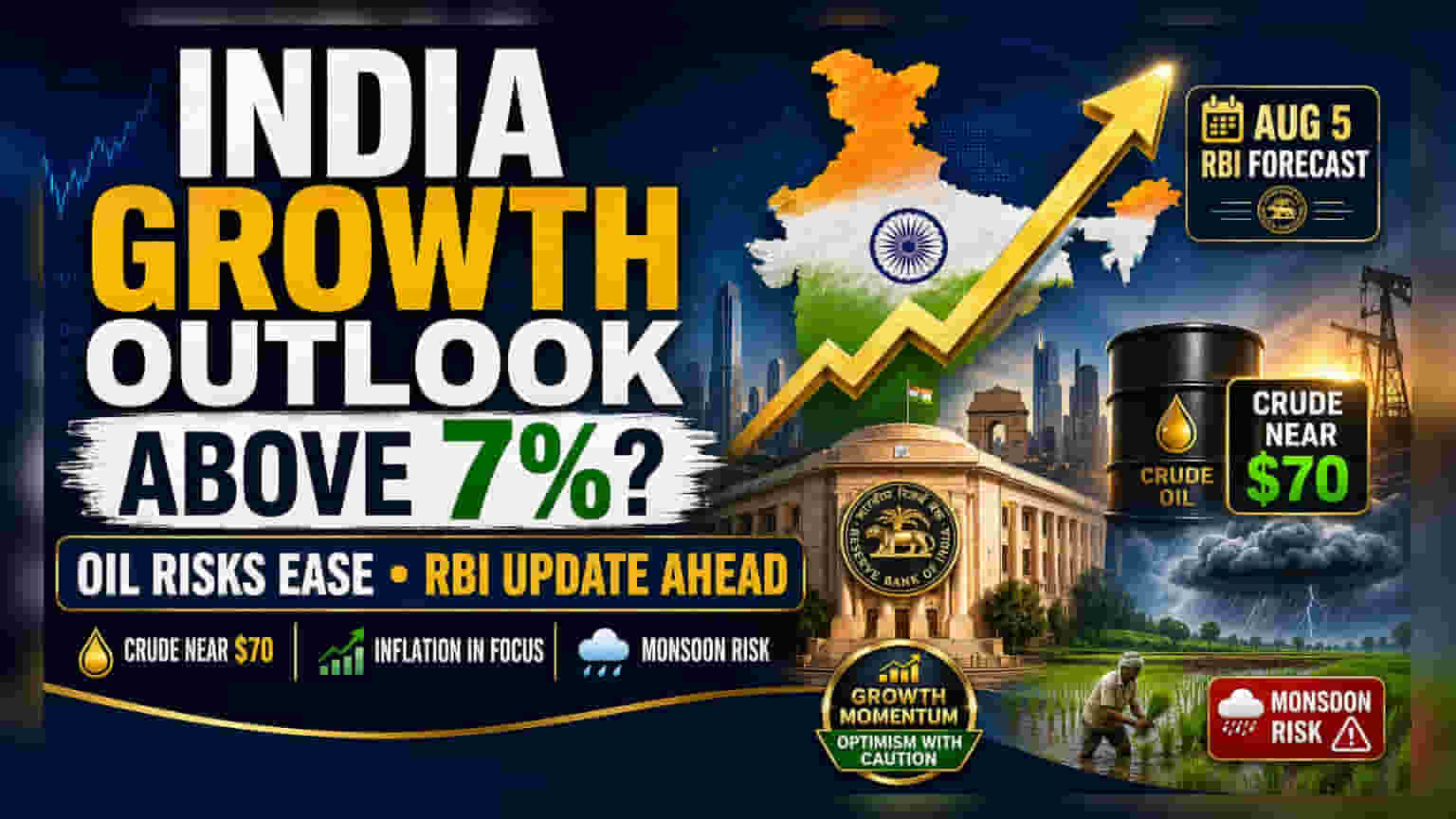
Nagesh Kumar, an external member of the Reserve Bank of India's monetary policy committee, projects India's GDP growth could surpass 7% this fiscal year. This improved outlook is tied to stabilizing global oil prices and eased geopolitical tensions in West Asia. The central bank is expected to review its economic forecasts in August.
What Happened
India’s economic growth outlook has received a boost, with projections suggesting the economy could grow by more than 7% in the current fiscal year. Nagesh Kumar, an external member of the Reserve Bank of India’s (RBI) monetary policy committee, stated that recent easing of geopolitical tensions in West Asia has reduced risks to energy supplies. This, in turn, is expected to help India maintain a growth trajectory that aligns with its long-term potential. This assessment marks a shift from previous estimates, where the RBI had lowered its growth forecast to 6.6% for the year ending March 2027 due to rising global uncertainties.
The Oil Price Connection
India’s economy is heavily dependent on imported energy, with approximately 90% of its oil needs met through imports. When global oil prices rise, it increases the cost for the country, which can lead to higher inflation and reduced purchasing power for consumers. Kumar pointed out that if global oil prices stay near $70 per barrel, it provides much-needed stability. This price point helps lower the risk of imported inflation, which is a type of inflation caused by rising costs of raw materials rather than excessive buying by consumers. By reducing this 'cost-push' pressure, the economy has more room to focus on growth.
Inflation and Monetary Policy
The RBI is scheduled to release updated economic forecasts on August 5. There is optimism that inflation projections could be revised downwards from the current estimate of 5.1%, potentially moving closer to the central bank’s 4% target. Governor Sanjay Malhotra has previously indicated a cautious stance on interest rates, with no immediate plans for hikes, given the ongoing uncertainty. While some global financial institutions still expect rate increases, Kumar noted that the recent rise in prices was largely due to supply-side issues in the oil market, which are beginning to correct themselves, rather than a fundamental overheating of the domestic economy.
The Monsoon Risk
While the outlook on growth and oil is positive, agriculture remains a critical factor for the broader economy and rural demand. India faced a rainfall deficit of 43% as of June 22. While Kumar expressed confidence that improved reservoir levels and modern farming practices might limit the damage, the progress of the monsoon remains a point of concern for policymakers. A poor monsoon season can impact crop output and rural income, which acts as a drag on overall consumption.
What Investors Should Track
Investors and market participants should look for the RBI’s updated forecasts during the upcoming policy review on August 5. Key monitorables include the central bank's stance on inflation targets, any changes to the GDP growth projection, and commentary on the monsoon’s impact. Additionally, movements in global crude oil prices will continue to be a vital indicator for India's economic stability and potential inflationary pressure.