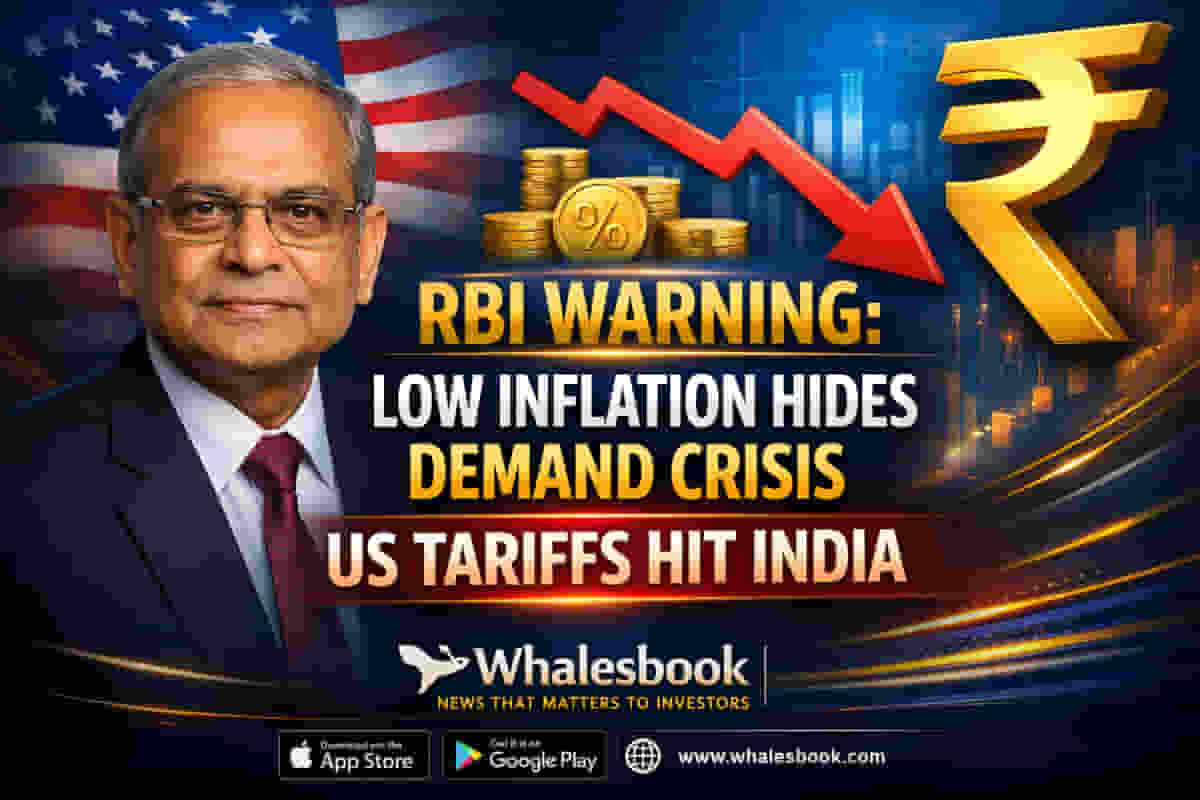
Reserve Bank of India Monetary Policy Committee member Nagesh Kumar expressed deep concern that India's ultra-low inflation, falling below the RBI's target band, indicates a worrying demand deficit rather than economic health. While this creates policy space for potential rate cuts, Kumar highlighted that the low inflation is unhealthy for a developing nation. He also pointed out that escalating US tariffs are hurting key labor-intensive Indian export sectors like textiles and processed foods, impacting business sentiment and jobs, prompting consideration of growth stimulus measures.
The Lede
Nagesh Kumar, an external member of the Reserve Bank of India's Monetary Policy Committee (MPC), has expressed significant concern over India's persistently low inflation rate, suggesting it indicates a worrying demand deficit rather than economic health. In a recent interview with Moneycontrol, Kumar stated that while the current inflation scenario provides room for monetary policy adjustments, the rate has fallen below the comfort level, breaching the lower bound of the flexible inflation targeting framework.
This situation, he noted, is unhealthy for a developing economy like India and points to a lack of robust demand. Furthermore, Kumar highlighted the detrimental impact of geopolitical factors, specifically mentioning the high tariffs imposed by the United States under the Trump administration. These tariffs are beginning to hurt key labor-intensive Indian export sectors, thereby dampening business sentiment and potentially affecting employment. The MPC is now contemplating measures to support growth through demand stimulus.
The Core Issue: Uncomfortably Low Inflation
India's retail inflation, measured by the Consumer Price Index (CPI), has been trending lower for months, with recent prints falling below the Reserve Bank of India's lower tolerance band of 2-6 percent. Data indicated CPI inflation stood at a mere 0.7 percent in November, 0.3 percent in October, and 1.44 percent in September. These figures were largely influenced by easing food prices and statistical base effects.
Kumar elaborated that this scenario, averaging 1.8 percent for the year so far, is not just comfortably low but has entered territory considered uncomfortable for a developing economy. He stressed that consistently low inflation can be a symptom of insufficient aggregate demand, which could hinder long-term economic growth and development goals.
Financial Implications and Policy Space
The benign inflation environment, coupled with anchored inflationary expectations, offers the Reserve Bank of India significant policy room. This space can be utilized to pivot towards supporting economic growth. Kumar suggested that the MPC found a case for growth stimulus to maintain momentum in the second half of the current year.
However, the effectiveness of such a stimulus, he cautioned, would rely on coordinated actions between fiscal and monetary policies. The current situation presents a delicate balancing act for policymakers, who must address the low inflation and demand concerns without jeopardizing price stability or fostering unsustainable growth.
Impact of US Tariffs on Indian Exports
Beyond domestic economic indicators, Kumar pointed to external pressures. He specifically cited the "high Trump tariffs" imposed on India and potential delays in resolving these trade disputes as factors negatively affecting business sentiment. These tariffs are disproportionately impacting India's labor-intensive export industries.
Sectors such as textiles and garments, leather goods, gems and jewellery, and processed food products like shrimp, which have a significant exposure to the US market, are feeling the brunt. These sectors are also dominated by Micro, Small, and Medium Enterprises (MSMEs) and are crucial for employment, accounting for a substantial portion of jobs in the manufacturing sector.
Economic Activity and Business Sentiment
Kumar referenced trends published after the second quarter (Q2), which suggested that economic activity might have peaked in Q2. This observation tempered the celebration of a potential "goldilocks moment" – a period of high growth with low inflation.
Industrial Outlook Surveys conducted by the Reserve Bank of India further corroborate this moderation, indicating a slowdown in business assessments and expectations. The confluence of weak domestic demand signals and external trade pressures creates a challenging environment for businesses and the broader economy.
Future Outlook
The Reserve Bank of India and the government face the critical task of stimulating demand while navigating external trade challenges. Coordinated fiscal and monetary policies are essential for any growth stimulus to be effective.
Policymakers will need to carefully monitor inflation dynamics, demand indicators, and the evolving geopolitical trade landscape to chart a course that supports sustainable growth and employment.
Impact
This news has a significant impact on the Indian economy and its stock market. Low inflation and potential demand deficits can influence interest rate decisions, affecting corporate borrowing costs and investment. The mention of US tariffs directly impacts export-oriented sectors, potentially leading to reduced profitability and stock price volatility for companies in textiles, gems and jewellery, and food processing.
Investor sentiment could be affected, prompting a reassessment of growth prospects and sector-specific risks. The call for policy stimulus suggests a proactive approach by the RBI. Impact Rating: 8/10
Difficult Terms Explained
Consumer Price Index (CPI): A measure that examines the weighted average of a basket of consumer goods and services, such as transportation and food, to assess the price changes over time. It is used to measure inflation.
Monetary Policy Committee (MPC): A committee constituted by the Reserve Bank of India to determine the policy interest rate required to maintain inflation within the targeted level while considering the objective of growth.
Flexible Inflation Targeting Regime: A monetary policy framework where the central bank's primary objective is to control inflation within a specified target band, while also considering other economic objectives like growth.
Headline Inflation: The overall inflation rate, including all items in the consumer price index, without excluding any volatile components like food and energy.
Base Effects: The impact of the comparison period on current inflation rates. For example, if inflation was very low in the previous period, current inflation might appear higher even if prices have only risen moderately. Conversely, if inflation was high previously, current inflation might appear lower.
Goldilocks Moment: A term used to describe an economic condition that is neither too hot nor too cold – characterized by strong economic growth coupled with low inflation.
Industrial Outlook Surveys: Surveys conducted by central banks or economic institutions to gauge the current business conditions and future expectations of industries regarding production, orders, employment, and investment.
Geopolitical Uncertainties: Risks arising from political events, international relations, and conflicts between countries that can affect economic stability and market performance.
Trump Tariffs: Trade tariffs imposed by the U.S. administration under President Donald Trump on various imported goods, aimed at protecting domestic industries and addressing trade imbalances.
MSMEs: Micro, Small, and Medium Enterprises. Small and medium-sized businesses that play a crucial role in employment and economic development.
Disclaimer:This content
is for educational and informational purposes only and does not constitute investment, financial, or
trading advice, nor a recommendation to buy or sell any securities. Readers should consult a
SEBI-registered advisor before making investment decisions, as markets involve risk and past performance
does not guarantee future results. The publisher and authors accept no liability for any losses. Some
content may be AI-generated and may contain errors; accuracy and completeness are not guaranteed. Views
expressed do not reflect the publication’s editorial stance.
 Whalesbook