

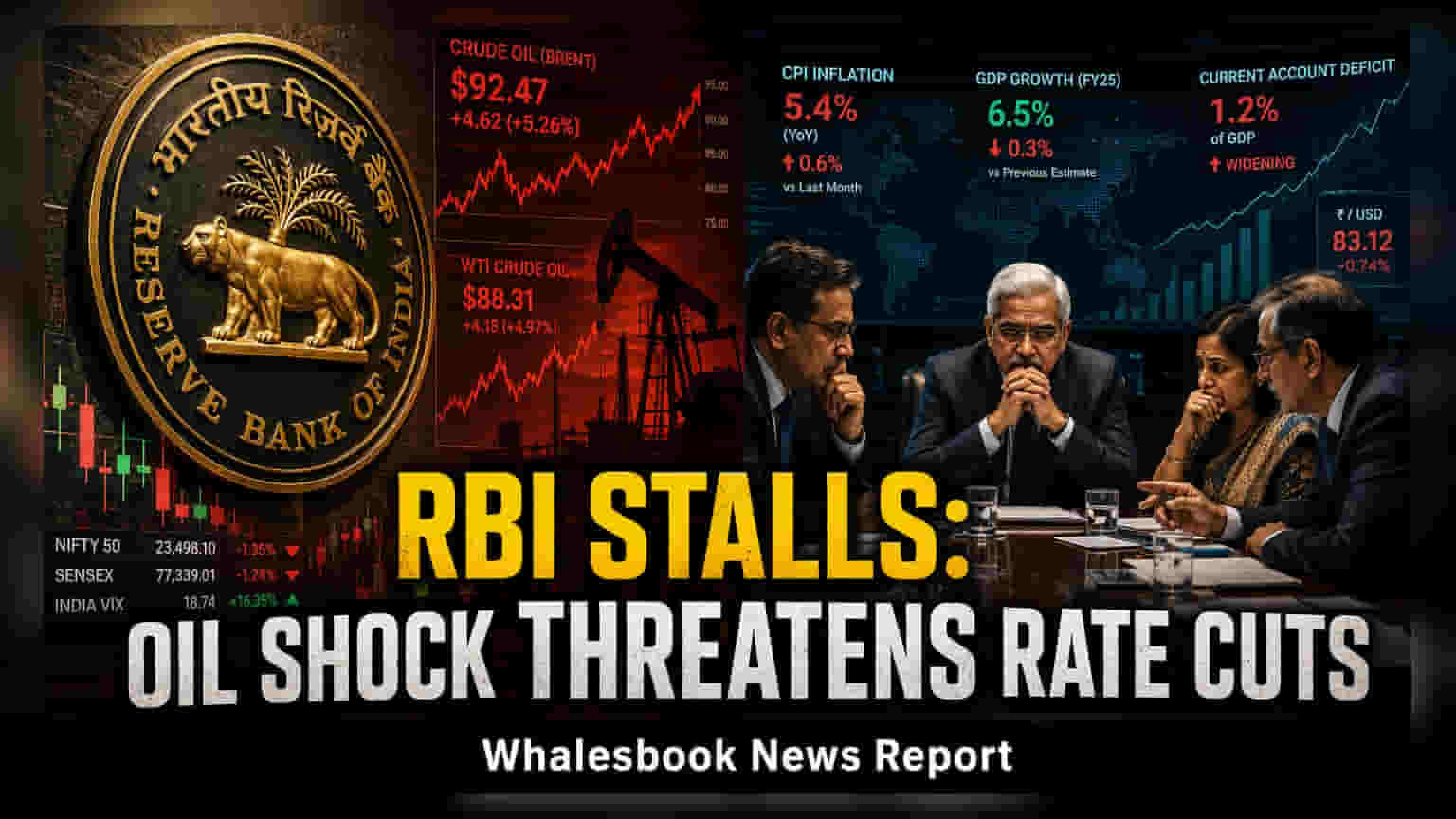
The Reserve Bank of India has kept the key repo rate steady at 5.25% in its August policy meeting, opting to maintain a neutral stance. The central bank raised its GDP growth forecast to 6.7% for the current fiscal year while slightly lowering the inflation expectation to 5.0%. This decision brings stability to financial markets, though policymakers continue to monitor risks from food prices and global oil volatility.
The Reserve Bank of India (RBI) has decided to keep the repo rate unchanged at 5.25% in its latest policy review. The repo rate is the interest rate at which the central bank lends money to commercial banks, and this decision serves as a key benchmark for loan and deposit rates across the country. By holding the rate steady, the Monetary Policy Committee (MPC) opted for a neutral stance, signaling a cautious but balanced approach to the current economic environment.
Growth Outlook Remains Resilient
The central bank’s decision was accompanied by an optimistic outlook on economic growth. The RBI raised its real GDP growth forecast for the fiscal year 2027 to 6.7%, up from the previous estimate of 6.6%. This upward revision reflects confidence in the underlying strength of the Indian economy despite fluctuating global conditions. The financial markets responded positively to this stability, with benchmark indices, including the Nifty 50 and the S&P BSE Sensex, ending the session higher following the announcement.
Inflation and Global Risks
While the growth picture looks positive, the central bank remains watchful regarding inflation. The RBI slightly lowered its consumer price inflation (CPI) projection for the year to 5.0% from 5.1%. This move follows the June headline inflation reading of 4.38%, which marked the first time in 17 months that inflation crossed the 4% target.
Policymakers highlighted that inflation has been driven largely by volatile food and fuel costs rather than a broad increase in systemic demand. A major area of concern remains the potential impact of climate patterns, such as El Niño, on food production and prices. Additionally, the RBI continues to monitor global geopolitical tensions, which can cause sharp swings in crude oil prices.
For investors and businesses, the neutral stance indicates that the central bank is not in a hurry to cut rates until it sees more consistent data on price stability. The focus in the coming months will be on how global oil prices behave and whether food supply remains stable, which will be the primary factors guiding future policy adjustments.