

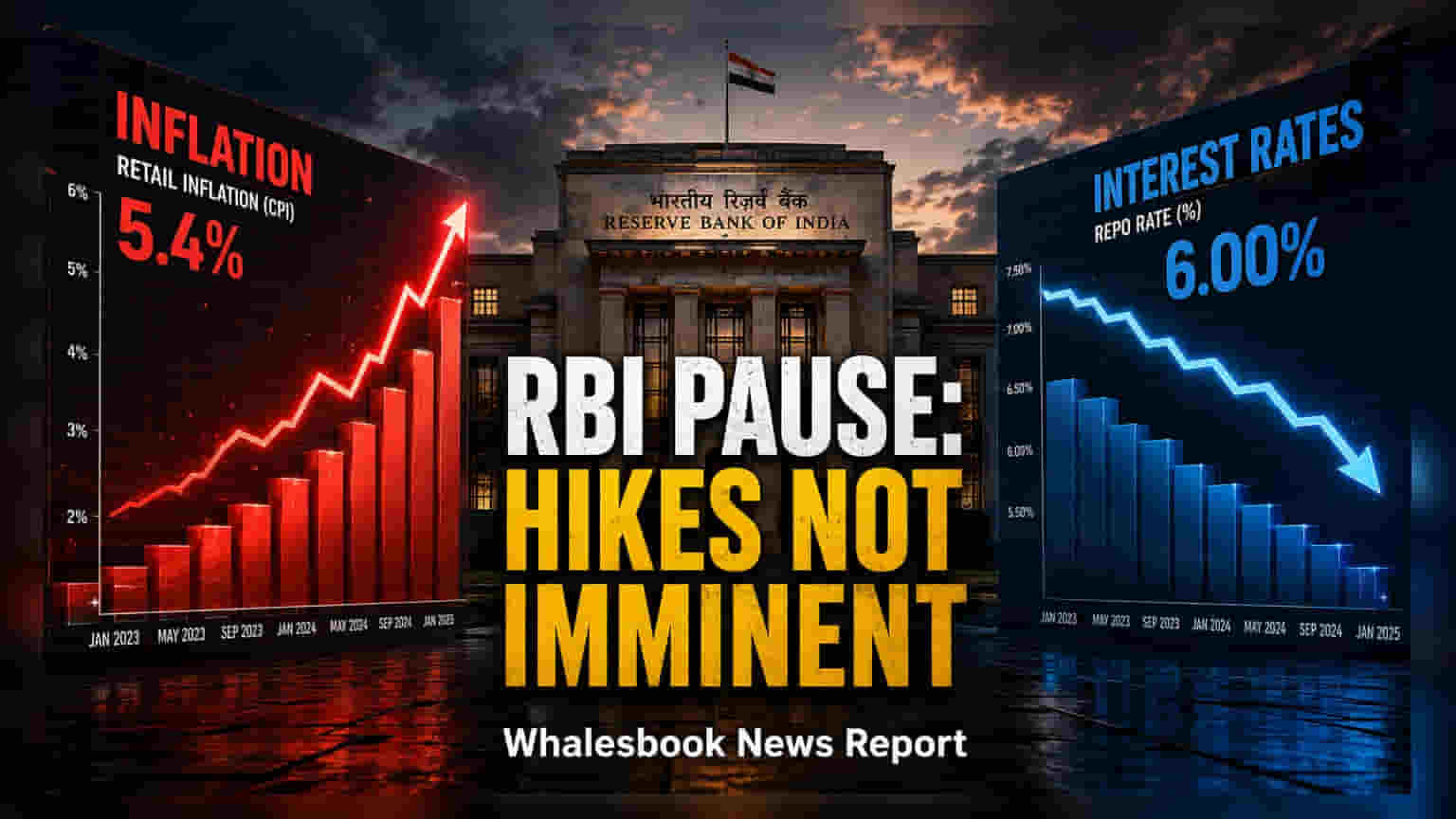
The Reserve Bank of India has maintained the repo rate at 5.25% in its August 2026 meeting, shifting its policy stance to neutral. With inflation projections trimmed to 5.0% and growth targets raised to 6.7%, the central bank is signaling stability for now. While this provides a breather for borrowers, investors should track risks from volatile crude oil prices and uneven monsoon rainfall.
The Reserve Bank of India’s (RBI) Monetary Policy Committee (MPC) has kept the repo rate unchanged at 5.25% in its latest August 2026 meeting. More significantly, the central bank has shifted its official policy stance to neutral, moving away from previous hawkish settings. This decision provides a clear signal to the market that the central bank is not in a hurry to raise borrowing costs, provided economic data remains stable.
The central bank’s decision was supported by a balanced outlook on the economy. For the current fiscal year, the RBI has marginally increased its real GDP growth projection to 6.7% from 6.6%. This adjustment reflects confidence in resilient domestic demand, including consistent urban consumption and investment trends. Simultaneously, the inflation outlook has improved, with the projected Consumer Price Index (CPI) inflation for the fiscal year lowered to 5.0% from 5.1%.
This "Goldilocks" scenario—where growth estimates are rising while inflation forecasts are being trimmed—has been welcomed by analysts. Aditi Nayar, Chief Economist at ICRA, noted that the move toward a neutral stance is effectively a "dovish pause." This suggests that immediate rate hikes are not on the horizon. The neutral stance implies that the RBI will act based on incoming data rather than following a pre-planned path of tightening, offering more flexibility to react to global or local changes.
However, the central bank’s commentary makes it clear that the battle against inflation is not over. The MPC highlighted that while core inflation—prices excluding volatile food and fuel—remains subdued, risks to headline inflation persist. Specifically, the variability in monsoon rainfall is a key concern for agricultural output and, consequently, food prices. Any significant supply-side shock could disrupt the current disinflationary trend.
From a global perspective, the RBI is also monitoring geopolitical tensions, particularly in West Asia, which pose a risk to crude oil prices. A sharp or sustained spike in energy costs would naturally put upward pressure on domestic inflation, potentially forcing the central bank to reconsider its stance in the coming quarters.
For investors, the neutral stance is generally viewed as a positive development for credit-sensitive sectors, such as banking, real estate, and automobiles, as it lowers the immediate fear of rising loan costs. The key monitorable for the next few months will be how these risks—monsoon patterns and energy prices—evolve. If inflation trends significantly higher than the current 5.0% projection, the path to lower interest rates may become longer and more complex.