

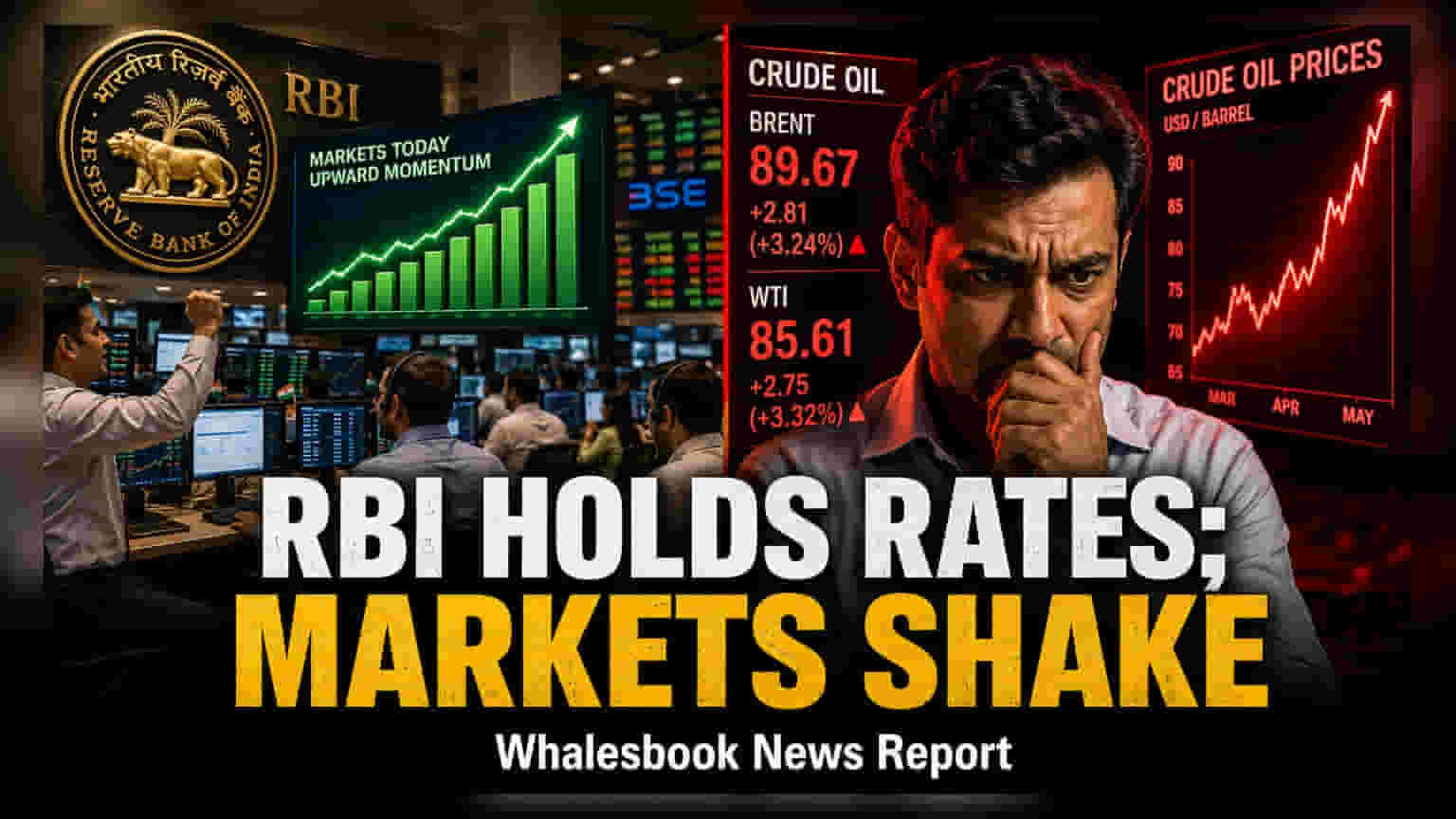
The Reserve Bank of India maintained the repo rate at 5.25% in a neutral policy move. While the central bank upgraded the GDP growth forecast to 6.7%, markets remained volatile due to global geopolitical tensions and the newly implemented closing auction mechanism for F&O stocks.
The Reserve Bank of India (RBI) kept the repo rate unchanged at 5.25% on Wednesday, maintaining a neutral policy stance. This decision, announced by the Monetary Policy Committee, was in line with expectations and helped benchmark equity indices close in the positive territory. The BSE Sensex rose 152.05 points to settle at 78,581.00, while the NSE Nifty50 edged up 9.75 points to 24,624.65.
In its latest review, the central bank provided an optimistic outlook for the domestic economy. The RBI raised its GDP growth projection for the financial year 2027 to 6.7%, up from the previous estimate of 6.6%. Additionally, the central bank lowered its CPI inflation forecast to 5%, down from 5.1%. This combination of higher growth expectations and lower inflation estimates indicates the RBI’s confidence in the economy's resilience despite global challenges.
Impact of New Closing Auction Rules
Market participants experienced unusual price movements toward the end of the trading session. This volatility has been linked to the newly implemented Closing Auction Session (CAS) for stocks in the Futures and Options (F&O) segment, which began on August 3, 2026. The new system changes how closing prices are determined for these stocks. Because this process is still being adjusted to by market participants, it has contributed to wider fluctuations in the benchmark indices during the final minutes of trade.
Sectoral Performance and Macro Risks
While the broader market was range-bound, specific sectors showed clear differences in performance. The Nifty Auto index climbed 1.27% and the Nifty Metal index gained 1.72%, benefiting from the improved domestic growth outlook and steady demand. Conversely, IT and media stocks faced selling pressure, with the Nifty Media index declining by 1.58% and Nifty IT slipping 0.16%.
Investors remained cautious regarding macro headwinds. Heightened geopolitical tensions in West Asia have put upward pressure on crude oil prices, with Brent crude trading around $80 per barrel. Higher fuel costs typically pose a risk to inflation and the country's import bill, which may limit the potential for significant market gains. Additionally, while the RBI’s current policy is stable, future actions will depend on how inflation and global supply chains evolve in the coming months.
Investors may continue to monitor how the market adjusts to the new closing auction rules, as well as any developments in global oil prices that could influence inflation expectations. The next key monitorable will be corporate performance data and how sector-specific demand holds up against the backdrop of changing interest rate expectations.