

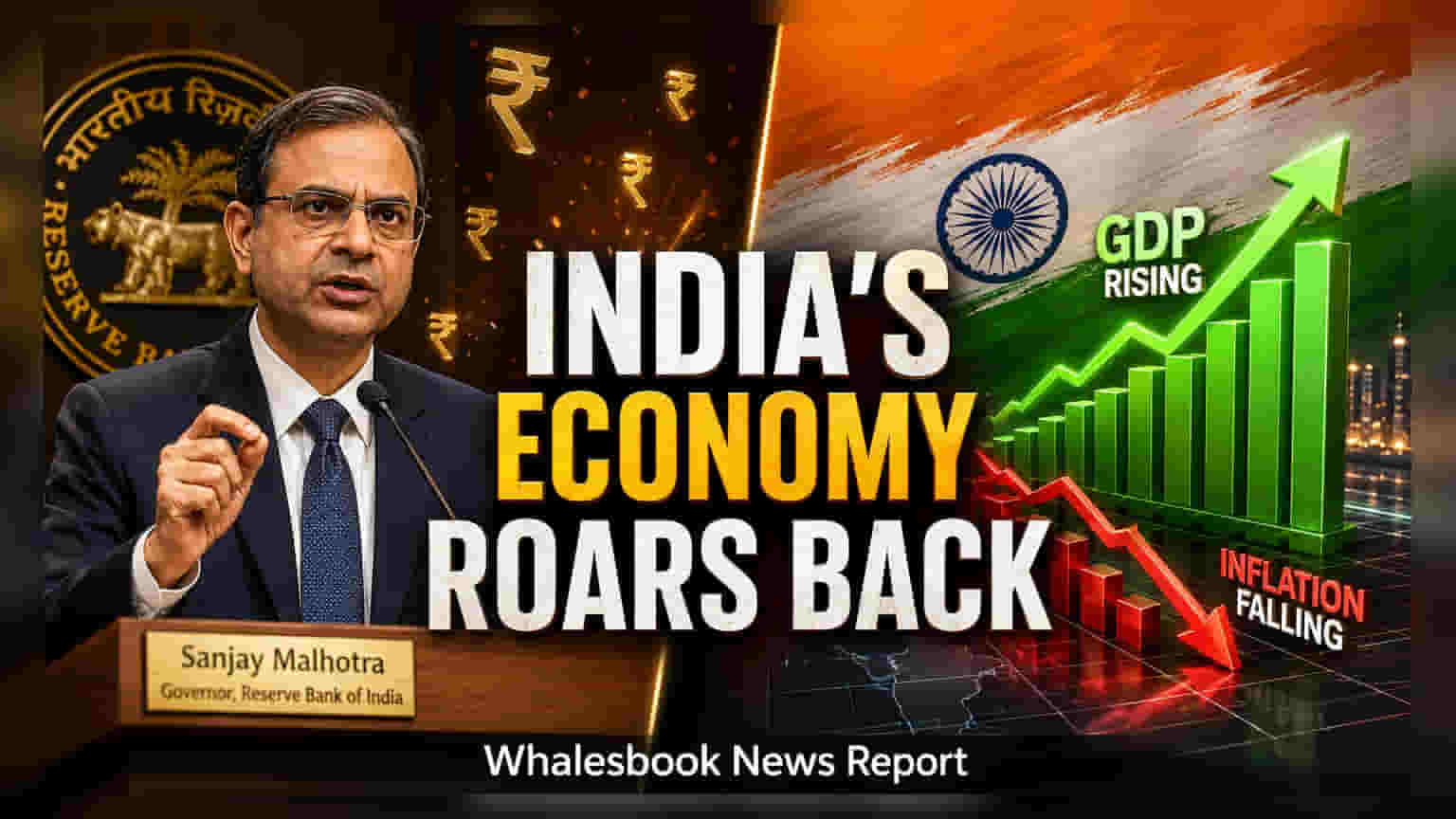
The Reserve Bank of India has maintained the repo rate at 5.25% with a neutral stance in its August 2026 meeting. The central bank raised its FY27 GDP growth forecast to 6.7% while lowering inflation projections to 5%. Governor Sanjay Malhotra noted that while India's macroeconomic fundamentals are strong, the bank is carefully monitoring risks from geopolitical conflicts and climate-related factors.
The Reserve Bank of India’s Monetary Policy Committee has decided to keep the repo rate unchanged at 5.25%. In its August 2026 meeting, the central bank maintained a neutral policy stance, focusing on balancing economic growth with managing inflation. The repo rate is the interest rate at which the central bank lends money to commercial banks, and keeping it steady suggests the RBI is comfortable with the current interest rate environment.
Governor Sanjay Malhotra highlighted that the country’s macroeconomic fundamentals remain strong. Reflecting this confidence, the RBI has raised its real GDP growth forecast for the 2026-27 financial year to 6.7%. At the same time, the bank has lowered its inflation projection, with the Consumer Price Index expected to hover around 5%. These revisions suggest that the central bank sees a positive outlook for economic activity while maintaining a watchful eye on price stability.
Despite the optimistic growth outlook, the Governor pointed to global and domestic challenges that could impact the economy. He identified geopolitical tensions, particularly the conflict in West Asia, as a major risk factor that could disrupt trade and affect energy prices. Additionally, the potential impact of climate-related events, such as El Niño, remains a concern, as these could affect agricultural output and food prices. Trade policy volatility and the potential for shifts in international financial markets are also factors that the central bank is monitoring closely.
The central bank also discussed India's external position, which continues to show resilience. The country is seeing healthy inflows from Foreign Direct Investment, while exports of services remain strong. Foreign portfolio investments have also shown a positive turnaround. Regarding the Indian rupee, Governor Malhotra reiterated the RBI's position of allowing market forces to determine its value. The central bank aims to intervene only when there is excessive volatility to ensure a smooth and orderly movement in currency markets.
Looking ahead, the RBI remains data-dependent. Its primary objective is to keep headline inflation in line with its medium-term targets. As liquidity is expected to remain in surplus in the short term, the market will likely watch how the central bank manages these flows. For investors and businesses, the upcoming trends in global energy prices, monsoon-related agricultural impact, and the central bank's future policy commentary will be important factors to track.