

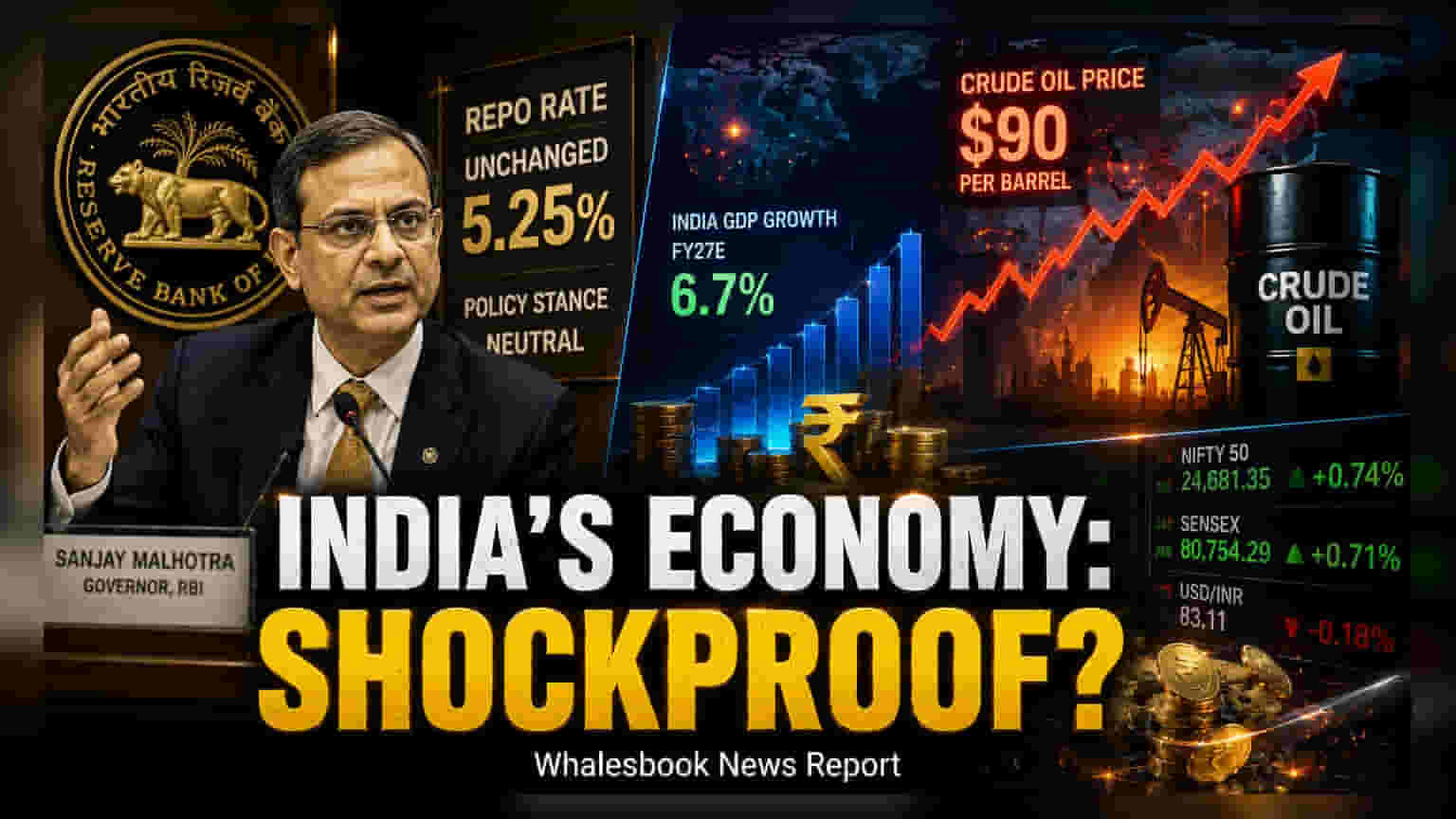
The Reserve Bank of India maintained the repo rate at 5.25% on August 5, 2026, sticking to a neutral policy stance. The central bank raised its FY27 GDP growth forecast to 6.7% and lowered inflation projections, citing strong domestic consumption. However, risks from volatile global energy prices and uncertain monsoon patterns remain on the horizon.
The Reserve Bank of India (RBI) decided to keep the repo rate unchanged at 5.25% during its Monetary Policy Committee meeting on August 5, 2026. This decision was paired with a neutral policy stance, suggesting that the central bank is prepared to remain flexible based on upcoming economic data. For borrowers, this means that current interest rates on home, auto, and personal loans are likely to remain stable in the near term, providing some relief as the festive season approaches.
Driving this confidence is a resilient domestic economy. The RBI has revised its GDP growth projection for FY27 upward to 6.7%, reflecting optimism about the country’s industrial and services sectors. This view is supported by high-frequency data, including robust GST collections and strong credit growth. SBI Research has also projected an impressive 8% GDP growth for the first quarter of FY27, attributing the strength to sustained consumer spending and improved service activity. Major companies, including Mahindra & Mahindra and Hindustan Unilever, have reported steady demand, reinforcing the narrative that consumption remains healthy across urban and rural segments.
On the inflation front, the central bank has lowered its CPI inflation forecast to 5.0%. This adjustment suggests that the RBI sees price pressures moderating, though it remains cautious about food and fuel volatility. The overall economic narrative is one of steady recovery, with the central bank Governor, Sanjay Malhotra, emphasizing that India’s external sector and corporate finances provide a strong buffer against global headwinds.
Despite the positive outlook, the central bank is not ignoring potential risks. The path ahead is not entirely clear, primarily due to global uncertainties. Renewed geopolitical tensions in West Asia continue to keep energy prices volatile, with oil prices hovering near the $90-a-barrel mark. Since India imports a significant portion of its crude oil, high energy costs can increase domestic inflation and impact the current account balance. Furthermore, the agricultural sector faces risks from erratic monsoon patterns and El Niño conditions, which could influence rural demand and food prices.
Investors and businesses should track how these global factors, alongside potential interest rate decisions by the U.S. Federal Reserve, influence the RBI’s future policy flexibility. As the economy heads into the critical festive months, the key monitorable will be whether domestic consumption continues to grow without relying excessively on debt, and how the central bank navigates supply-side pressures on food and fuel.