 Whalesbook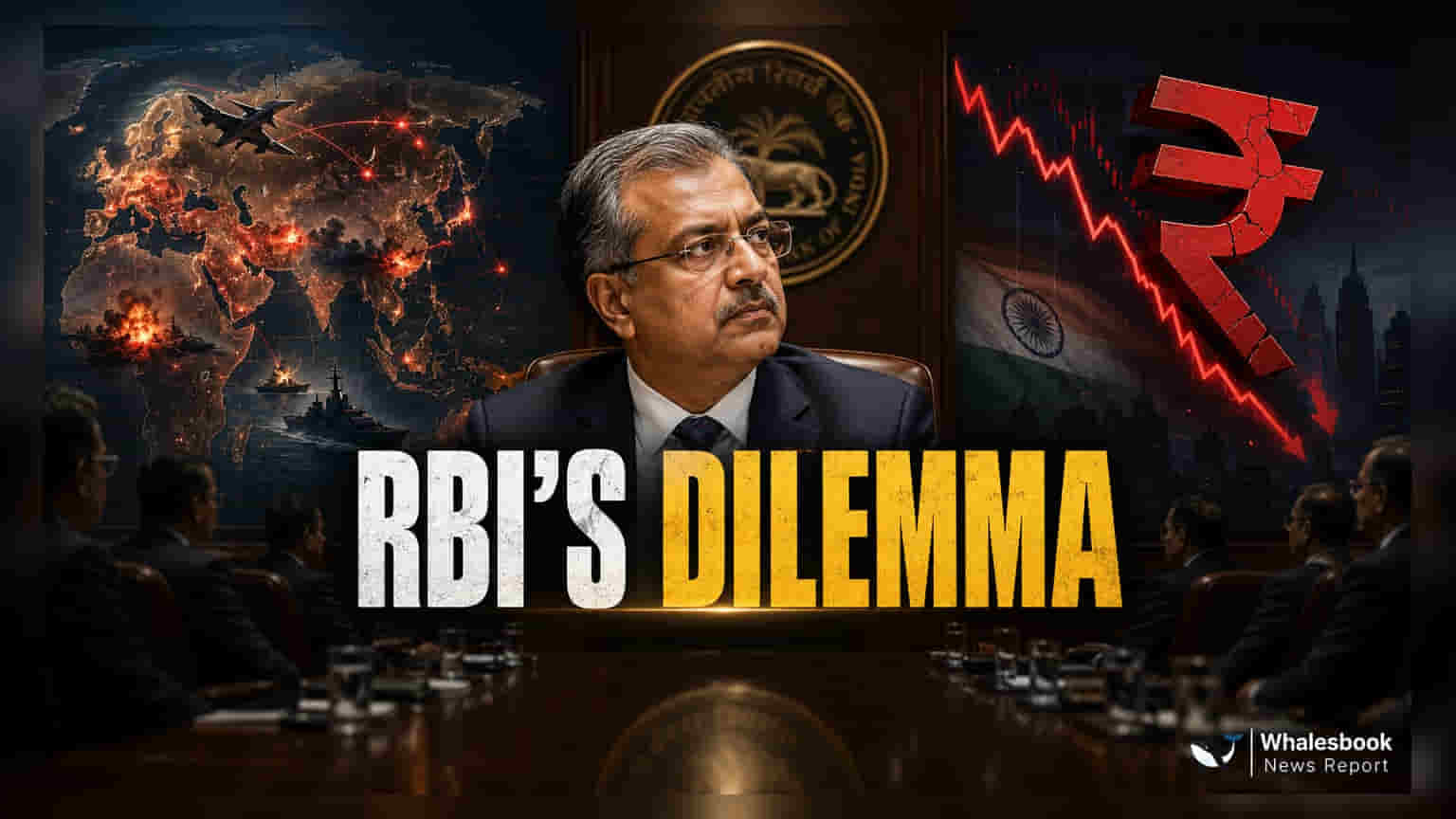


The Shift in Policy Calculus
Market expectations for the upcoming Reserve Bank of India Monetary Policy Committee meeting are anchored in a narrow corridor of stability for benchmark rates. However, the true narrative lies in the recalibration of growth and inflation trajectories. The central bank is operating in an environment significantly more hostile than in early 2026, primarily due to the convergence of persistent geopolitical supply-chain disruptions and a localized currency depreciation that has reached decadal lows.
The Erosion of Macro-Stability
Internal models suggest that the primary challenge for the committee is not the nominal interest rate, but the real interest rate differential against global benchmarks. The depreciation of the rupee has introduced a structural challenge to domestic cost-push inflation. While capital inflows have remained somewhat resilient, the cost of imported raw materials—particularly linked to energy sectors—is bleeding into the broader manufacturing index. Unlike the previous cycle where the RBI maintained a clear narrative on economic expansion, this meeting will likely emphasize a defensive posture to prevent currency-induced inflation from unanchoring expectations.
Analysts are monitoring the language around liquidity management closely. Should the central bank prioritize exchange rate stability over credit growth, firms with high reliance on imported components face an immediate margin squeeze in the coming fiscal quarters. The current volatility in the rupee is not merely a trading phenomenon but a reflection of a widening trade deficit compounded by rising import costs.
The Structural Weakness: Monsoon and Food Inflation
Beyond currency and global conflict, the agricultural outlook presents a localized threat to the RBI’s mandate. Initial reports regarding a delayed or sub-par monsoon have created significant upside risks to food prices, which typically account for the highest weightage in the consumer price index. A failure to manage these expectations could force the central bank into a de facto tightening cycle, even if the repo rate remains technically unchanged. The historical correlation between monsoon disruptions and sustained food price inflation indicates that the committee must account for a volatile H2 FY27 in its revised outlook, regardless of any potential recovery in industrial production figures.
The Forensic Risk Perspective
Institutional investors remain skeptical of the central bank’s ability to curb currency volatility through reserve deployment alone. With foreign exchange reserves at approximately $680 billion, the RBI holds significant firepower, yet market history proves that active intervention often acts as a temporary dampener rather than a long-term solution. The risk of exhausting reserves prematurely, without addressing the underlying fiscal deficit or the widening trade gap, represents a core structural weakness. Furthermore, any attempt to implement aggressive capital controls to stabilize the currency could inadvertently signal panic to foreign portfolio investors, potentially triggering the exact capital outflows the RBI seeks to prevent. The consensus among risk-averse analysts is that until there is a tangible reduction in geopolitical tensions or a stabilization in global energy prices, the RBI’s policy room for error remains virtually non-existent.