

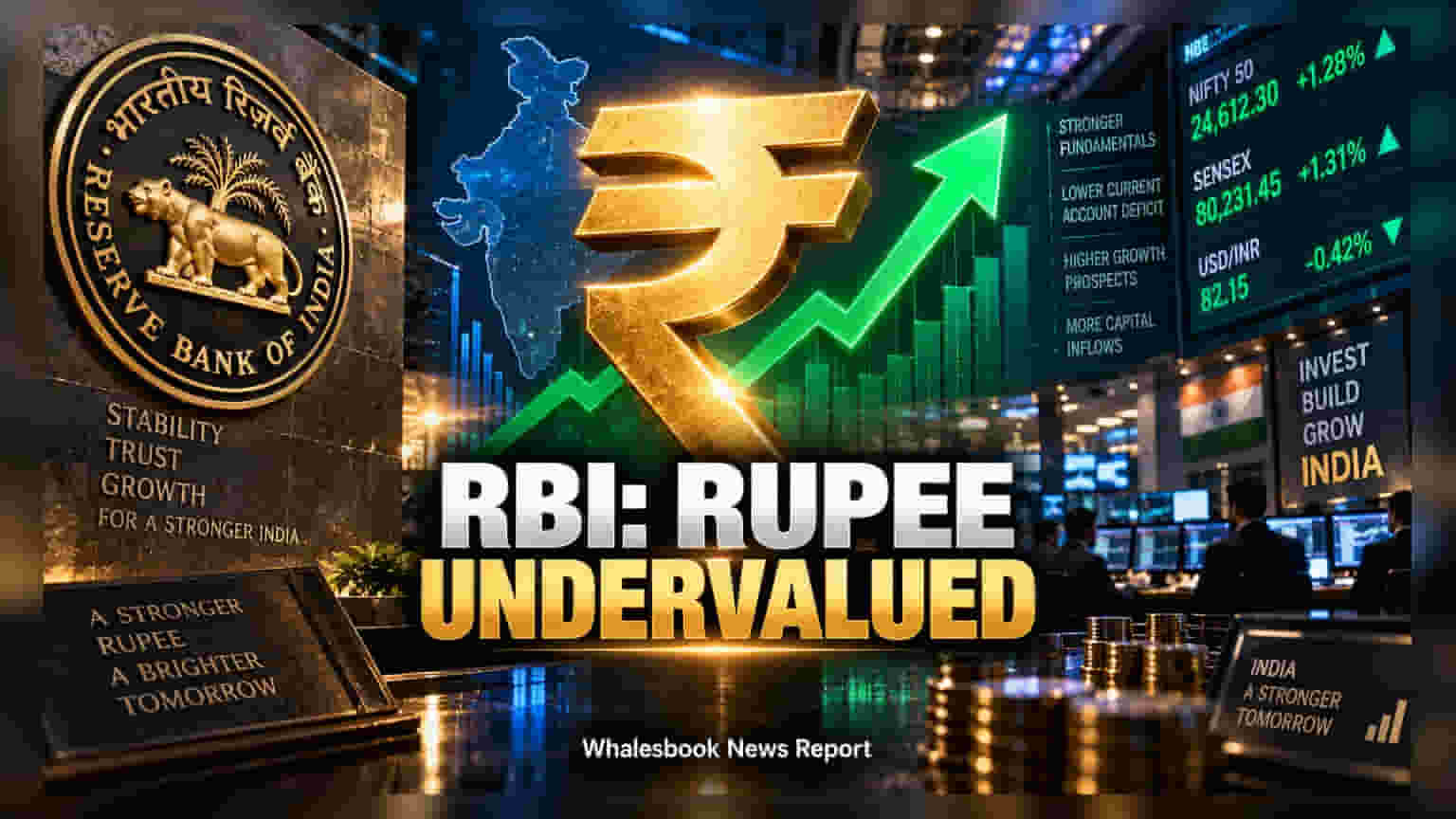
Reserve Bank of India Deputy Governor Poonam Gupta states the Indian Rupee is currently undervalued, noting that recent volatility does not match the nation's 7-8% economic growth. With the central bank expecting the trade deficit to narrow, it views the currency's recent drop as a temporary misalignment rather than a reflection of economic weakness.
Reserve Bank of India Deputy Governor Poonam Gupta has stated that the Indian Rupee is currently undervalued. This observation follows a 13.1% depreciation of the currency between March 2025 and September 2026. According to the central bank, this decline does not accurately reflect the fundamental strength of the domestic economy, which the RBI argues is being masked by short-term capital moving out of the country.
The central bank identified temporary external factors, particularly high global prices for oil and gold, as the primary drivers of this volatility. These price shocks pushed the current account deficit higher and led to a negative balance of payments of $23.6 billion in the 2025-26 fiscal year. For investors, understanding this context is vital because currency valuation directly influences corporate profitability. When the rupee is undervalued, it can increase the cost of imports for sectors dependent on raw materials like oil marketing, paint, and chemicals. Conversely, a potential recovery in the currency could help stabilize import costs, though it may also impact the rupee-denominated earnings of export-oriented sectors like IT services and pharmaceuticals.
Looking ahead, the RBI expects structural changes to support the currency. The central bank projects that the current account deficit will shrink to below 1% of GDP, supported by the impact of new Free Trade Agreements and a shift toward alternative energy sources that reduces reliance on imported fuel. This, combined with a consistent real growth rate of 7-8%, is expected to make India more attractive to foreign capital.
Despite this optimistic view, a gap remains between the central bank's assessment and current market sentiment. The RBI has emphasized its commitment to maintaining orderly conditions in the foreign exchange market, implying it will intervene if necessary to prevent excessive volatility. However, the ultimate direction of the rupee will depend on global investor sentiment and the actual pace of capital inflows. Investors should monitor global crude oil prices and foreign portfolio investment flows, as these will be the immediate triggers that determine whether the currency sees the correction the central bank is anticipating.