 Whalesbook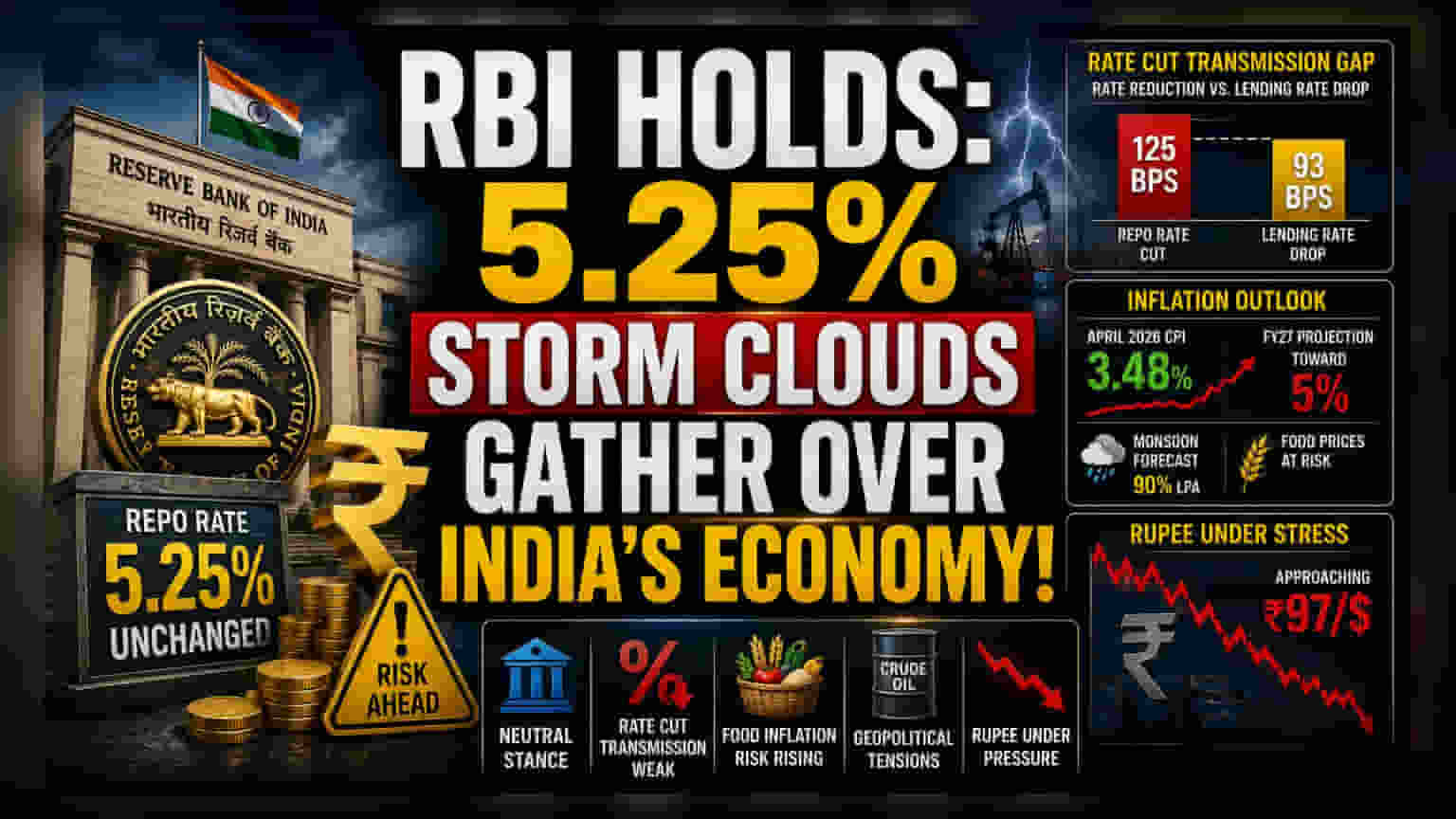


The Policy Stasis
The Reserve Bank of India’s decision to maintain the repo rate at 5.25% in the June 2026 monetary policy meeting signals a tactical pause. Governor Sanjay Malhotra’s committee remains locked in a defensive posture, balancing the need to sustain growth against escalating external threats. By retaining a neutral stance, the central bank aims to preserve flexibility while navigating a turbulent global environment where the conflict in West Asia continues to complicate crude oil pricing and supply chain logistics.
The Transmission Gap
Financial institutions have struggled to align retail rates with the central bank’s easing trajectory. While the repo rate was reduced by 125 basis points in previous cycles, the flow-through to lending and deposit markets has been notably sluggish. Weighted average lending rates on new loans have only retreated by approximately 93 basis points, and in some recent instances, have even drifted higher. This indicates that liquidity conditions are tightening, forcing banks to hold onto deposit rates to attract capital, thereby stalling the anticipated decline in borrowing costs for the broader economy.
The Inflationary Horizon
The central bank faces a shifting inflation risk profile. While retail inflation remained relatively contained at 3.48% in April 2026, forward-looking indicators suggest mounting pressure. The India Meteorological Department has downgraded the southwest monsoon forecast to 90% of the long-period average, raising severe concerns about kharif crop yields. Historically, agricultural output disruptions trigger volatility in food prices, which carry significant weight in the Indian consumer basket. With crude oil prices elevated due to persistent regional instability, the core inflation anchor is likely to come under fire in the coming quarters.
The Forensic Bear Case
The market’s optimism for further rate cuts is increasingly disconnected from the reality of the domestic macroeconomic landscape. Unlike a period of global stability, the current geopolitical environment poses third-round effects that could push headline inflation toward the 5% threshold by the end of the fiscal year. Furthermore, the Indian rupee has faced significant depreciation pressure, approaching the 97-per-dollar mark. This limits the RBI’s ability to act independently of global interest rate trends. Any failure to support the currency or address structural food inflation could necessitate a hawkish pivot, leaving highly leveraged sectors vulnerable to a rapid spike in capital costs. The risk of policy error remains elevated as the committee attempts to look through short-term price spikes that may, in fact, become structural.