 Whalesbook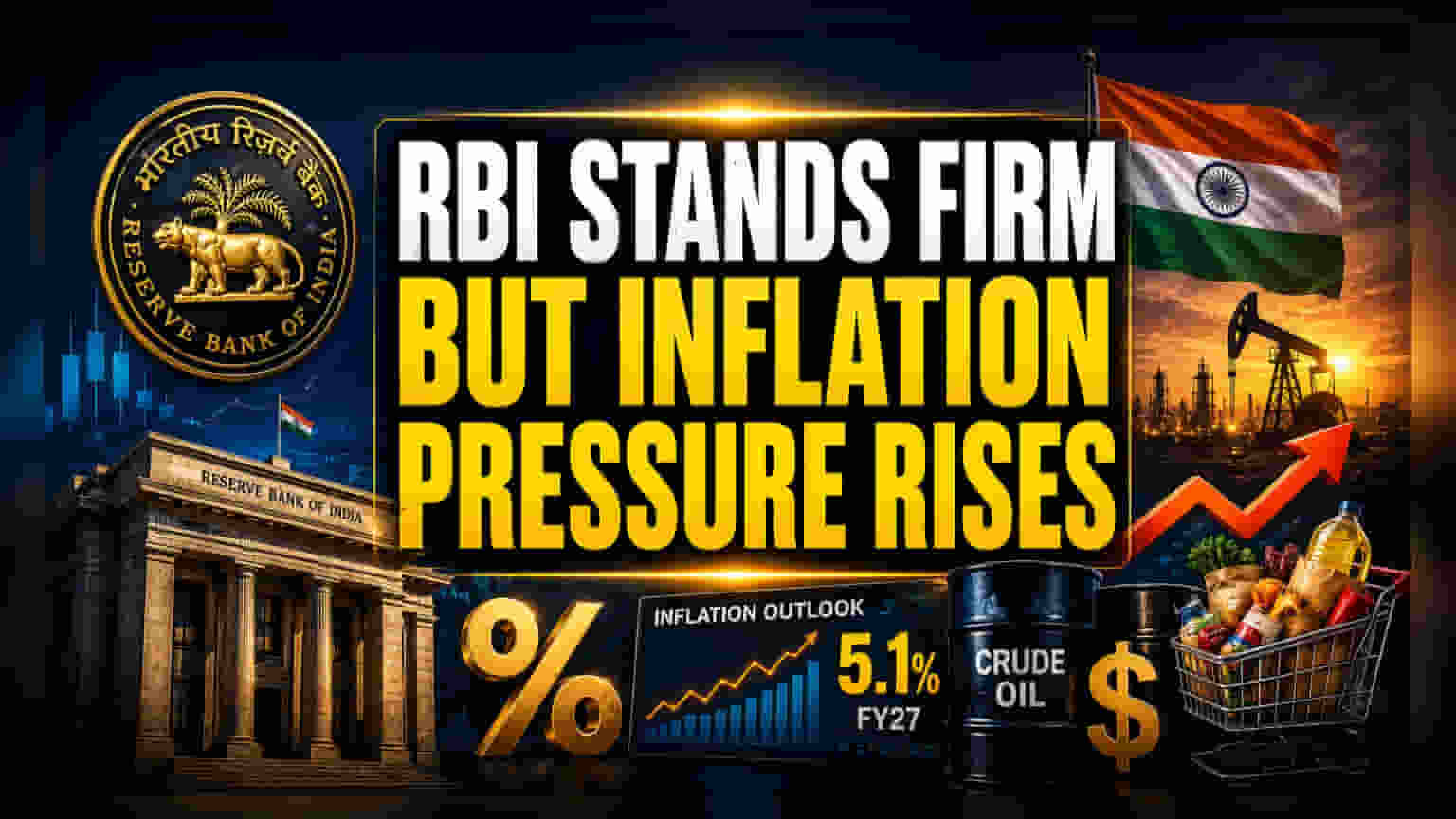


The Credibility Gap
Maintaining a 4% target while acknowledging a fiscal year forecast of 5.1% creates a challenging communication environment for the Reserve Bank of India. By holding the repo rate steady at 5.25% under a neutral policy stance, the central bank is effectively betting that current inflationary spikes are transient rather than structural. However, the decision to elevate the FY27 outlook reveals a growing recognition that global headwinds are no longer peripheral. Market participants are left to reconcile the stated commitment to 4% with the reality of an upward-trending CPI, which necessitates a more cautious approach to future liquidity management.
Energy Dependence and Macro Pressures
The central bank’s decision to bake a $95 per barrel crude oil price assumption into its fiscal models marks a shift toward greater defensive planning. This adjustment is not merely a technical revision but a reaction to the persistent volatility in West Asia, which threatens the stability of India’s import bill and broader current account deficit. Unlike previous cycles where the RBI could look through supply-side noise, the current configuration of global trade risks suggests that commodity-driven inflation could easily spill over into core services. Should oil prices remain sticky near the upper bound of the new forecast, the 'neutral' stance will face intense pressure to shift toward a tightening bias before the end of the calendar year.
The Risk of Entrenched Expectations
While the current policy remains fixed, the primary concern for institutional observers is the potential for inflation to move from the periphery to the center of consumer behavior. The central bank has signaled that it will tolerate supply-driven shocks, yet the historical record suggests that once inflation expectations become entrenched, the cost of correction rises exponentially. By forecasting a peak of 5.9% in the third quarter of the fiscal year, the RBI acknowledges a period of significant price discomfort. The reliance on data-dependent decision-making provides flexibility, but it also creates uncertainty for bond markets that require a clearer terminal rate path to price long-term debt effectively.
Structural Vulnerabilities
Investors should remain wary of the disparity between official policy targets and ground-level inflationary reality. The primary risk factor involves a potential divergence where the RBI remains static while global central banks initiate different trajectories. If the central bank is forced to abandon its neutral stance to combat generalized price pressures, the resulting yield curve shift could compress equity valuations in interest-sensitive sectors. Furthermore, the commitment to a 4% target, while theoretically sound, may be tested by domestic fiscal expansion and the persistent inability of global supply chains to return to pre-crisis efficiency levels.