

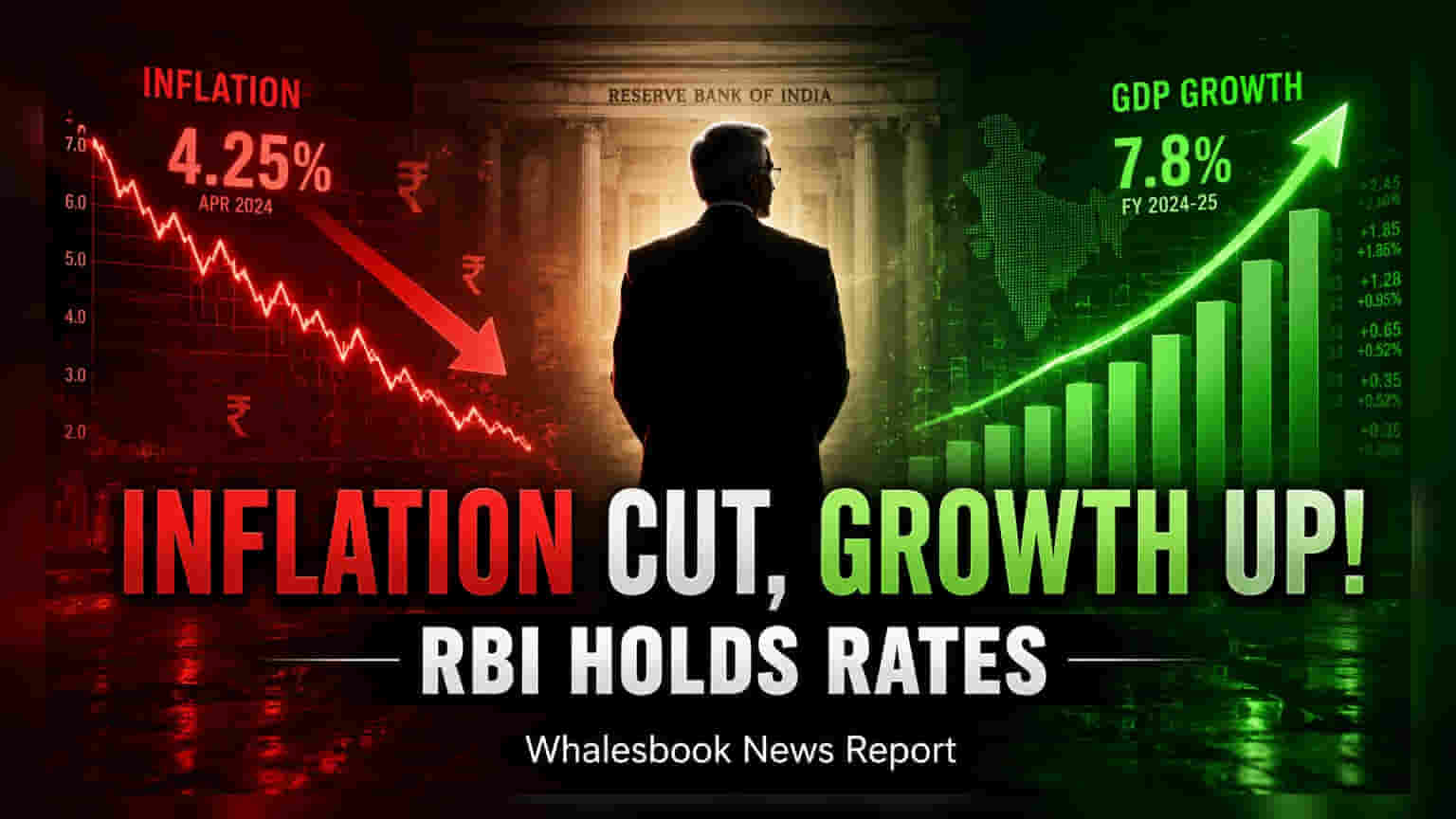
The Reserve Bank of India (RBI) kept the repo rate steady at 5.25% in its latest policy meeting on August 5, 2026. While trimming the inflation forecast for FY27 to 5%, the central bank raised its GDP growth projection to 6.7%. The policy stance remains neutral, signaling a cautious approach as the bank balances economic growth with persistent supply-side uncertainties.
The Reserve Bank of India (RBI) maintained the benchmark repo rate at 5.25% during its Monetary Policy Committee (MPC) meeting on August 5, 2026. This decision means that the interest rate at which commercial banks borrow funds from the central bank remains unchanged, keeping borrowing costs steady for businesses and individual borrowers for now.
The MPC, led by Governor Sanjay Malhotra, also retained a 'neutral' policy stance. This indicates that the central bank is not leaning toward either increasing or decreasing rates in the immediate future, preferring instead to stay data-dependent to manage economic shifts.
In a move that suggests growing confidence in the domestic economy, the RBI raised its real GDP growth projection for the fiscal year 2027 to 6.7%, up from the previous estimate of 6.6%. This upward revision is attributed to the continued resilience in the Indian manufacturing sector and broader economic activity observed in the first quarter of the fiscal year.
Simultaneously, the central bank adjusted its consumer price index (CPI) inflation forecast downward to 5.0% for FY27, compared to the earlier projection of 5.1%. The RBI noted that recent price increases are largely driven by supply-side pressures, such as the conflict in West Asia, rather than a broad-based rise in demand across the economy. The central bank expects core inflation, which excludes volatile food and fuel prices, to moderate after reaching a peak in the third quarter.
Despite the positive growth outlook, the MPC highlighted several lingering risks that could affect the economy. The central bank remains cautious about food inflation, citing potential risks from the monsoon season and El Niño conditions, which could impact agricultural output. Additionally, ongoing geopolitical developments and global trade uncertainties, including potential changes in international tariffs, remain key factors that could influence energy prices and overall economic stability.
The committee also confirmed that liquidity conditions remain in surplus, with an average daily surplus of approximately ₹1 lakh crore observed recently. The Standing Deposit Facility (SDF) rate was maintained at 5.0%, and the Marginal Standing Facility (MSF) rate was kept at 5.50%.
For investors and the broader market, the key monitorable remains the evolution of inflation data and the impact of global geopolitical tensions. The RBI's future policy actions will likely depend on how these external risks unfold and whether they translate into persistent inflationary pressure. Market participants will track upcoming MPC meeting minutes and inflation reports to gauge the central bank’s evolving assessment of the economic environment.