

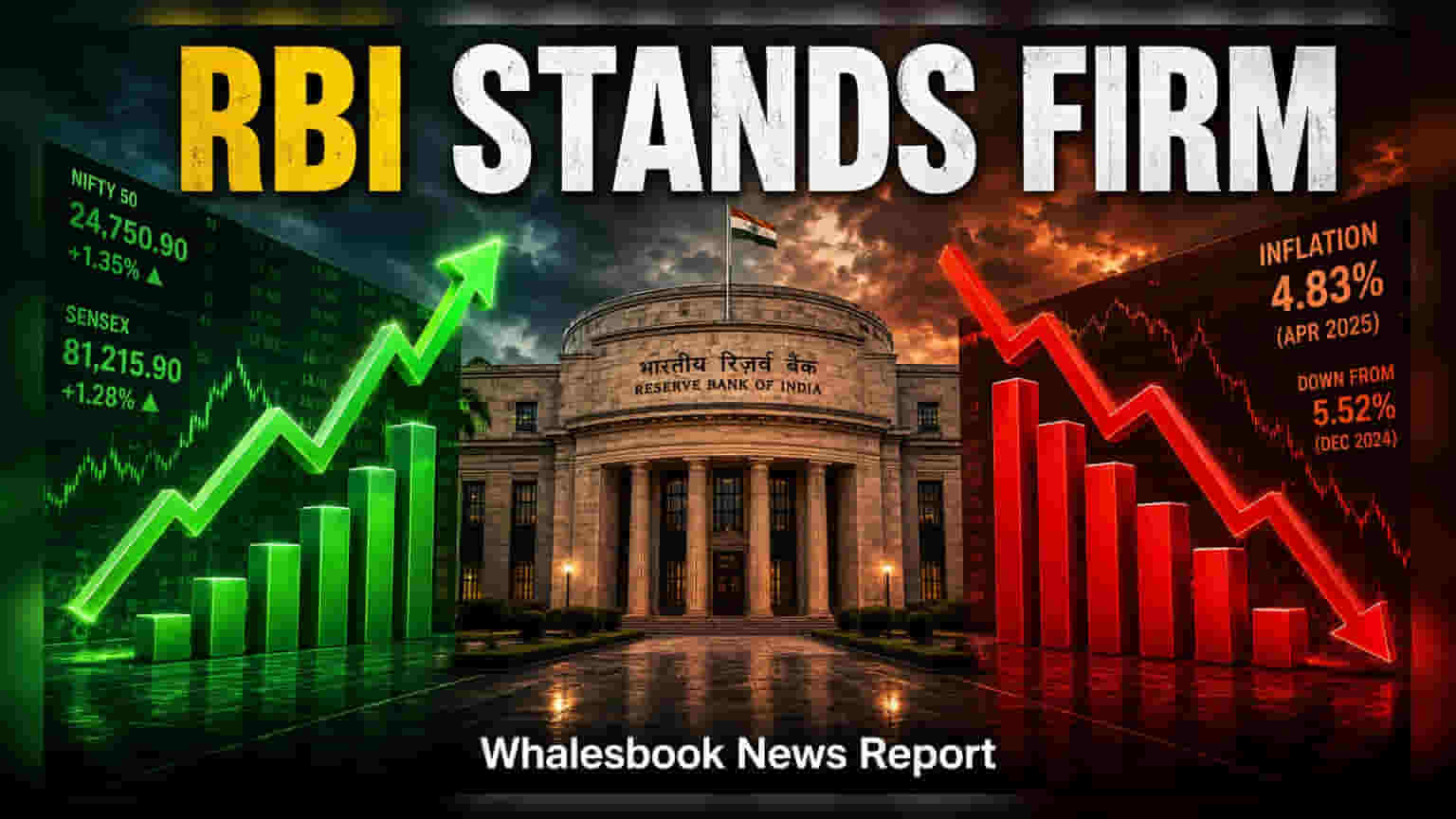
The Reserve Bank of India kept the repo rate unchanged at 5.25% in its August 5, 2026 policy meet, maintaining a neutral stance. The central bank raised its FY27 GDP growth forecast to 6.7% and lowered inflation projections to 5.0%, signaling confidence in domestic demand. This stability provides clarity for interest-sensitive sectors, though global risks regarding energy prices persist.
On August 5, 2026, the Reserve Bank of India's (RBI) Monetary Policy Committee (MPC) unanimously decided to keep the repo rate steady at 5.25%. This is the interest rate at which commercial banks borrow money from the central bank. By maintaining a neutral policy stance, the RBI indicated it is comfortable with the current economic balance and prefers a data-dependent approach for future decisions.
Economic Outlook and Inflation
The central bank has expressed greater confidence in the domestic economy. The RBI upwardly revised its Gross Domestic Product (GDP) growth forecast for the fiscal year 2027 to 6.7%, citing resilient private consumption and steady investment activity. Simultaneously, the Consumer Price Index (CPI) inflation projection was trimmed to 5.0%. This combination of higher growth and moderating inflation expectations is generally seen as a healthy sign for the overall economic environment.
For investors, the decision to keep rates stable is particularly relevant for interest-sensitive sectors. Industries such as banking, real estate, and automobiles often benefit from predictable interest rate environments, as they rely on consumer and corporate borrowing. When the repo rate remains steady, banks can better manage their loan pricing, and the predictability in borrowing costs can help support consumer demand for home and auto loans.
Key Risks and Challenges
Despite the positive domestic outlook, the RBI Governor highlighted that risks remain on the horizon. Geopolitical tensions in the Middle East continue to create uncertainty, which could disrupt global supply chains and lead to volatility in crude oil prices. Higher energy costs are a constant risk to the inflation target. Additionally, the central bank is monitoring weather-related uncertainties, specifically those linked to El Niño patterns, which could impact agricultural output and potentially lead to spikes in food inflation. These factors will likely remain the primary focus for the central bank in the coming months.
Regulatory Updates for Banking
The RBI also introduced specific regulatory measures to strengthen the financial system. It proposed an on-tap licensing framework for Urban Co-operative Banks (UCBs), which is designed to improve governance and bring more capital into the sector. Furthermore, the regulator issued revised guidelines for Rural Co-operative Banks (RCBs) to better manage concentration risk, ensuring these institutions remain stable. These moves are part of a broader effort to standardize loan pricing and improve consumer protection across regulated entities.
The most important factor for investors to monitor in the coming months will be the incoming data on food price inflation and global crude oil trends. These indicators will determine if the RBI maintains its current neutral stance or shifts its outlook in future meetings.