

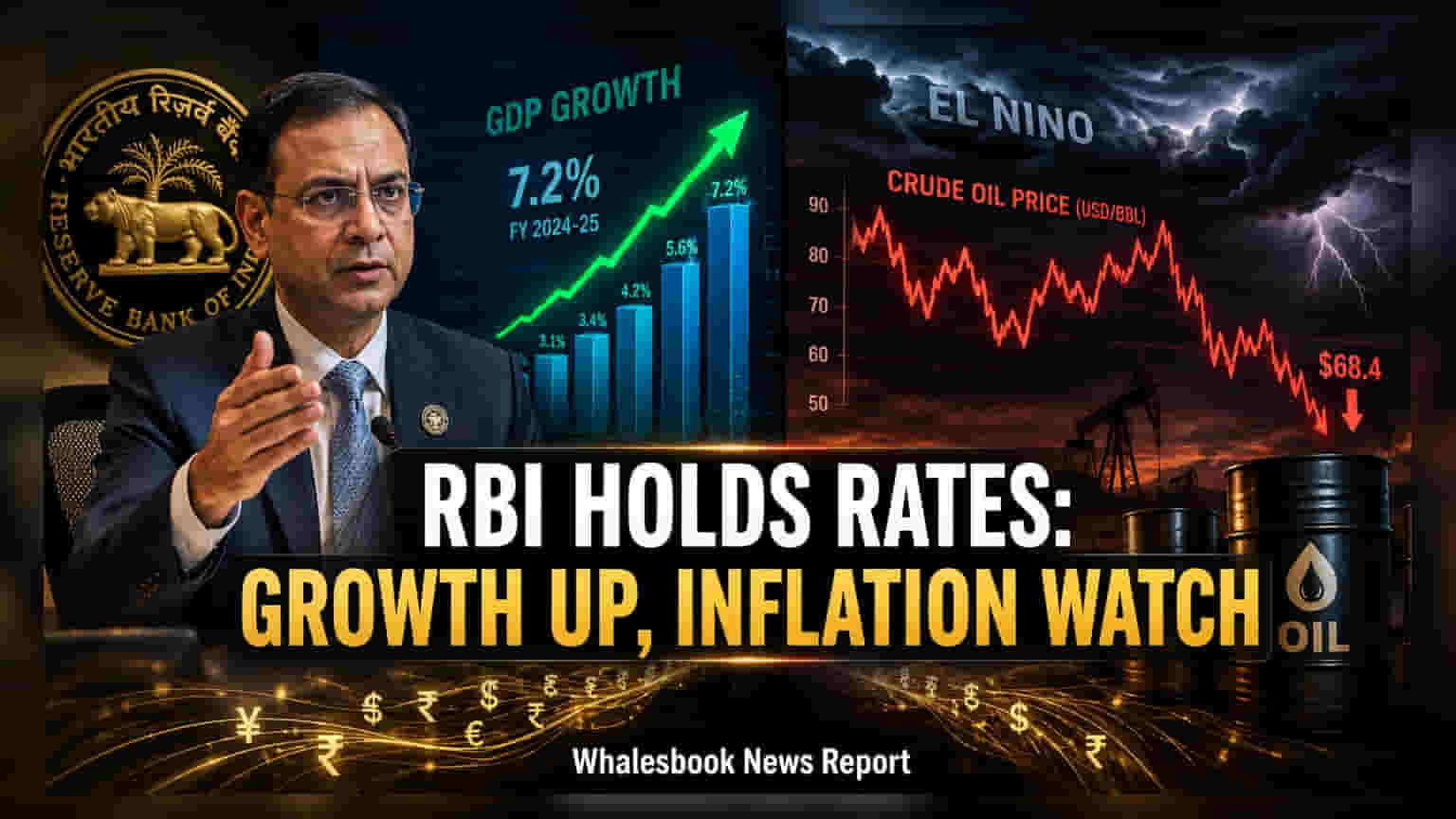
The Reserve Bank of India’s Monetary Policy Committee unanimously maintained the repo rate at 5.25% today, keeping its neutral stance unchanged. While inflation remains a key point of watch, the central bank expressed confidence in domestic growth, upgrading its FY27 GDP projection to 6.7%. For investors, this stability provides clarity on interest rate paths, though global supply chain risks and monsoon-linked food inflation remain critical factors to monitor in the coming months.
The Reserve Bank of India (RBI) kept the repo rate unchanged at 5.25% in its policy meeting today, continuing a stable interest rate environment for borrowers. The Monetary Policy Committee (MPC) decision was unanimous, confirming that the central bank intends to maintain its current neutral stance as it balances domestic economic growth against persistent inflationary pressures.
The central bank signaled confidence in the domestic economy by raising its real GDP growth forecast for the 2026-27 financial year to 6.7%, up from the previous estimate of 6.6%. This upward revision reflects steady activity in manufacturing and the services sector, which have proven resilient despite wider global uncertainty. This indicates that the RBI sees strong demand drivers within the country that can support expansion even as international markets fluctuate.
On the inflation front, the RBI slightly lowered its FY27 projection to 5.0% from 5.1%. Headline CPI inflation for June 2026 was reported at 4.38%, well within the bank’s tolerance band. While the core inflation reading has shown signs of stability, the central bank maintains a vigilant approach, noting that price pressures are still concentrated in specific categories, primarily food and fuel, rather than being widespread across the economy.
It is important to note that the path ahead is not without obstacles. The MPC highlighted several external and domestic factors that could impact financial stability. Geopolitical conflict in West Asia remains a primary concern, as it threatens to disrupt supply chains and cause sudden volatility in global crude oil prices. Domestically, the performance of the monsoon is being watched closely. Unpredictable rainfall or the development of El Niño conditions could negatively impact agricultural output and potentially stir up food inflation, which would limit the RBI's ability to maintain this neutral stance in the long run.
For investors, the current policy decision signals a period of relative stability. The status quo in rates suggests that the cost of borrowing for retail products like home and vehicle loans may remain steady for now, which is generally supportive for consumer-facing businesses. The next few months will be crucial, however. Market participants will likely focus on incoming data regarding food supply chains and any shifts in global interest rate trends, which could influence capital inflows into the Indian market.