

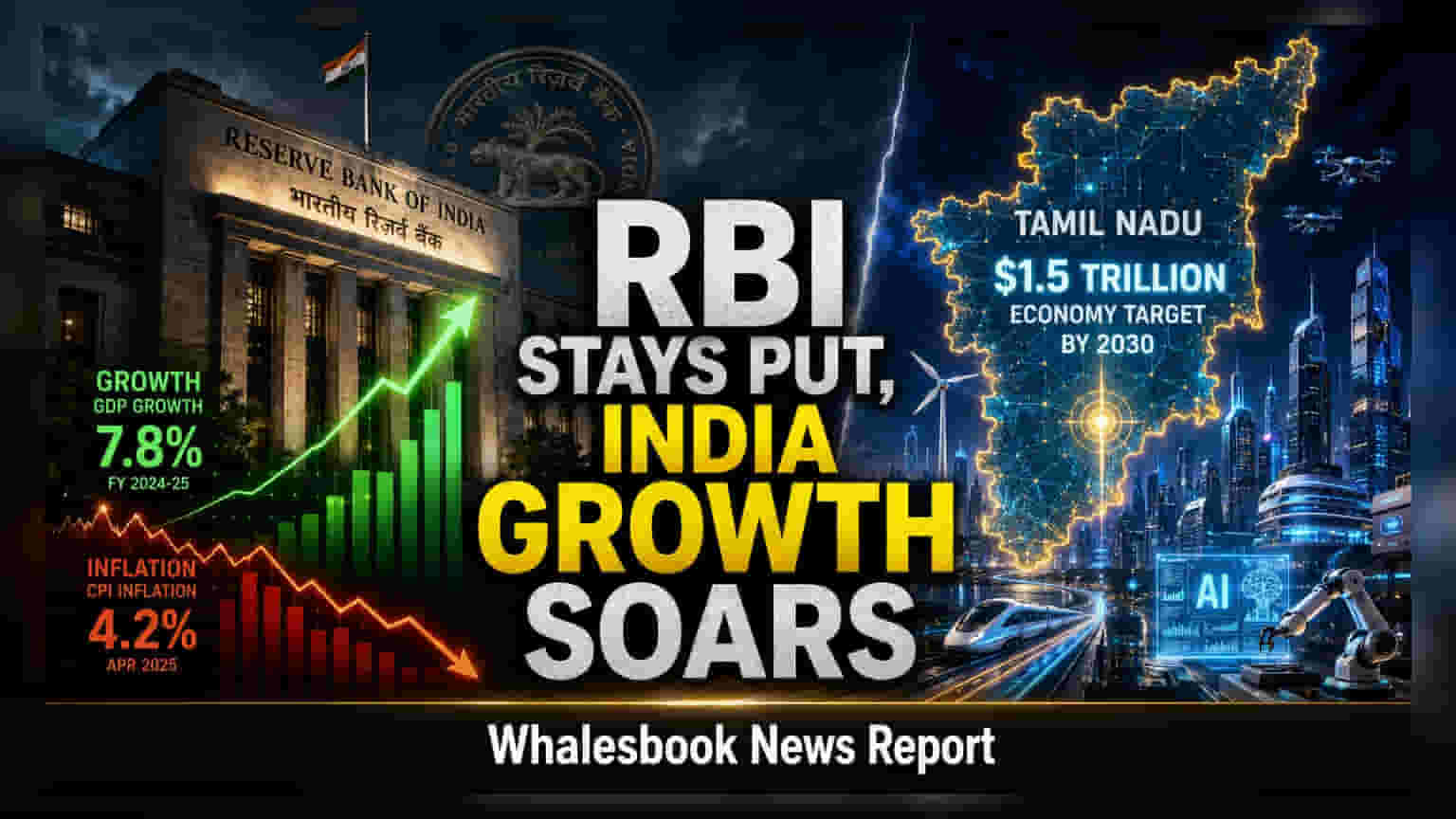
The Reserve Bank of India has kept its repo rate unchanged at 5.25%, maintaining a neutral policy stance. The central bank raised its FY27 GDP growth target to 6.7% while slightly lowering inflation projections to 5.0%. Investors should monitor how geopolitical tensions and monsoon variations impact these outlooks, even as sectors like agriculture show signs of resilience.
The Reserve Bank of India (RBI) Monetary Policy Committee (MPC) unanimously decided on August 5, 2026, to keep the policy repo rate steady at 5.25%. The central bank chose to maintain a neutral policy stance, signaling that it will monitor incoming data before making any changes to interest rates. This cautious approach reflects an effort to balance domestic growth with global uncertainties that could affect the Indian economy.
Alongside the rate decision, the central bank expressed confidence in domestic economic resilience. The RBI revised its Gross Domestic Product (GDP) growth projection for fiscal year 2027 upward to 6.7%, compared to its previous estimate of 6.6%. Simultaneously, it slightly lowered the inflation forecast for the same period to 5.0%, down from 5.1%. While these revisions point to a stable outlook, the central bank remains vigilant about risks including volatile crude oil prices and ongoing geopolitical tensions in regions like West Asia, which could pressure energy costs and inflation.
Agriculture and Rural Demand Indicators
The central bank's focus on the monsoon is significant, as it remains a key factor for rural demand and food inflation. Data from July 2026 shows a positive trend in this sector, with fertilizer sales reaching 41.09 lakh tonnes by July 17. This surge is directly linked to the progress of the kharif sowing season, which gained momentum following improved rainfall. Urea continues to account for nearly two-thirds of these sales, indicating that farmers are actively preparing for the current crop cycle. Investors often track these agricultural numbers as a proxy for rural consumption and potential earnings for fertilizer and tractor companies.
Regional Growth and Policy Updates
Beyond national monetary policy, regional economic developments continue to shape the investment landscape. Tamil Nadu has announced an ambitious industrial roadmap with a goal to reach a $1.5 trillion economy by 2036. The state plans significant capital spending, including the allocation of ₹3,200 crore for new industrial parks and the development of 'Arivagam,' an AI and innovation city. Such long-term infrastructure projects typically create opportunities for construction, technology, and manufacturing sectors, though the state's public debt levels remain a factor that investors often monitor in such large-scale initiatives.
In the digital and regulatory space, the Ministry of IT has held discussions with Meta regarding content safety and platform compliance. The government has raised concerns about child safety and adherence to Indian legal frameworks following recent content removal issues. For investors, these discussions highlight the evolving regulatory environment for global technology firms operating in India, where compliance with local laws has become a critical operational focus.
Looking ahead, the market will likely track upcoming inflation prints, crude oil price movements, and the final impact of the monsoon on crop yields. These factors will influence whether the RBI stays on its current path or shifts its stance in the coming months.