 Whalesbook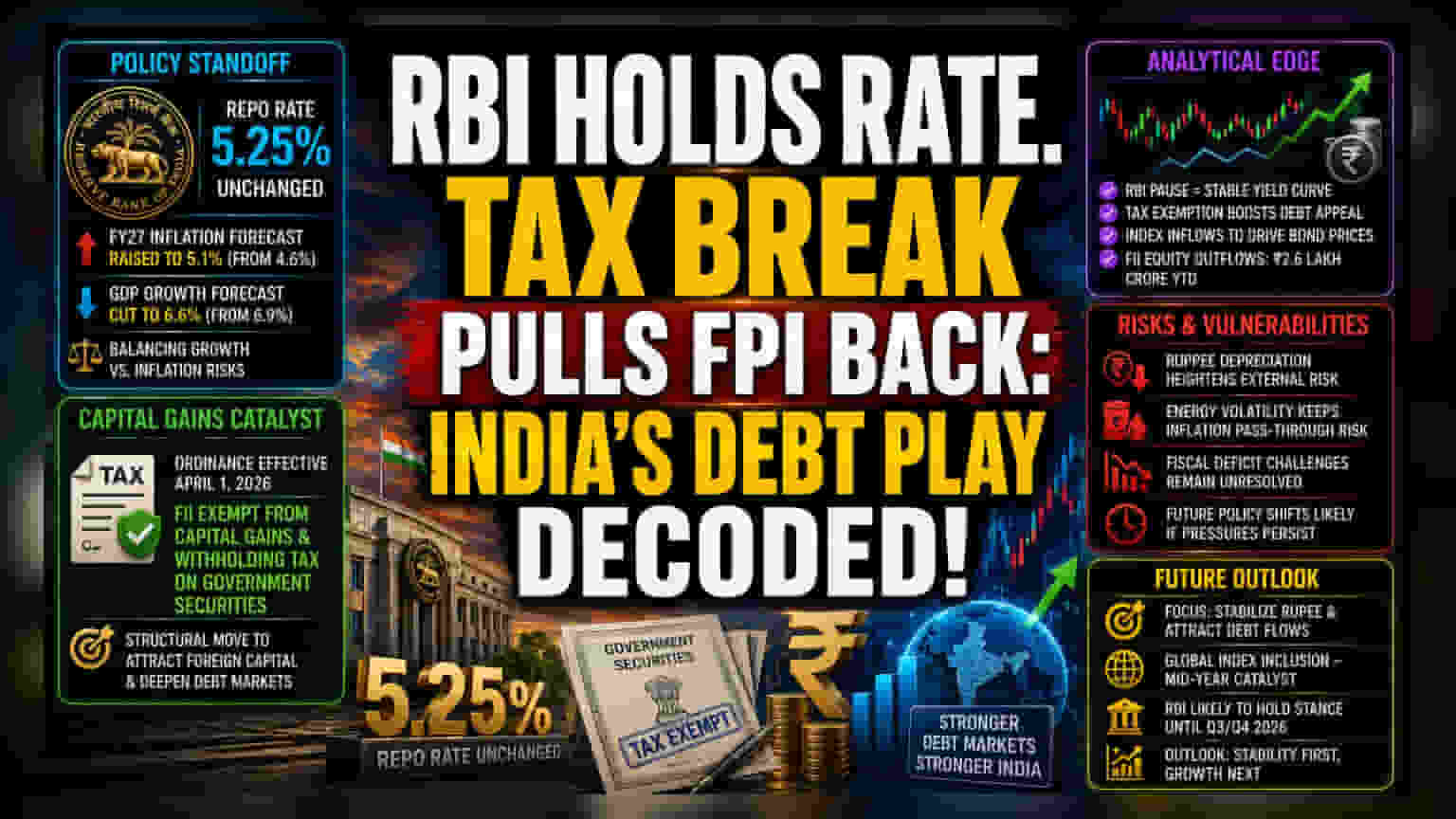


The Policy Standoff
The Reserve Bank of India’s Monetary Policy Committee elected to keep the benchmark repo rate steady at 5.25% in its June 2026 meeting, rejecting aggressive tightening calls despite inflationary concerns. While the central bank raised its fiscal year 2027 inflation forecast to 5.1% from 4.6%—citing volatile crude prices and West Asian geopolitical instability—it simultaneously downgraded its GDP growth projection to 6.6% from 6.9%. This decision highlights a delicate balancing act: shielding the economy from global supply-side shocks while avoiding the suppression of cooling domestic growth.
The Capital Gains Catalyst
To counter persistent foreign portfolio outflows, the Indian government promulgated an ordinance, effective April 1, 2026, exempting foreign institutional investors from capital gains and withholding taxes on government securities. This fiscal pivot serves as a structural response to the market’s demand for improved post-tax returns. By removing these friction points, policymakers aim to solidify India’s debt market appeal, effectively using fiscal incentives to sustain liquidity where high interest rates might otherwise act as a drag on the broader economy.
The Analytical Deep Dive
Market participants have largely priced in the neutral stance, but the tax exemption provides a clear tailwind for domestic debt appetite. Analysts note that with the RBI holding the repo rate, the yield curve faces less pressure from policy-driven hikes, allowing market forces and index-related inflows to dominate bond pricing. This stands in contrast to the volatility seen in equity markets, where foreign investors have offloaded over ₹2.6 lakh crore year-to-date. The move is widely seen as an effort to improve India's competitive standing against other emerging market debt destinations.
Risk Factors and Structural Weakness
The strategy is not without vulnerability. The reliance on foreign capital flows to defend a rupee that has depreciated significantly over the past year leaves the market susceptible to sudden shifts in global risk appetite. Furthermore, while the tax exemption improves the investment case for sovereign bonds, it does not address the underlying fiscal deficit challenges or the pass-through effects of energy volatility. Management at firms like HDFC AMC continue to monitor the timing of future adjustments, noting that any deviation from the current path—particularly if energy prices remain elevated—could force a reassessment of the central bank's neutral trajectory later in the third or fourth quarter.
The Future Outlook
Looking ahead, the focus shifts to how these measures impact the balance of payments. While inclusion in major global indices remains a mid-year talking point, the immediate priority for authorities is stabilizing the rupee and ensuring foreign capital is attracted to the sovereign bond market. Consensus expectations lean toward the RBI maintaining its current stance until geopolitical tensions subside or domestic demand shows signs of renewed, non-inflationary vigor.