 Whalesbook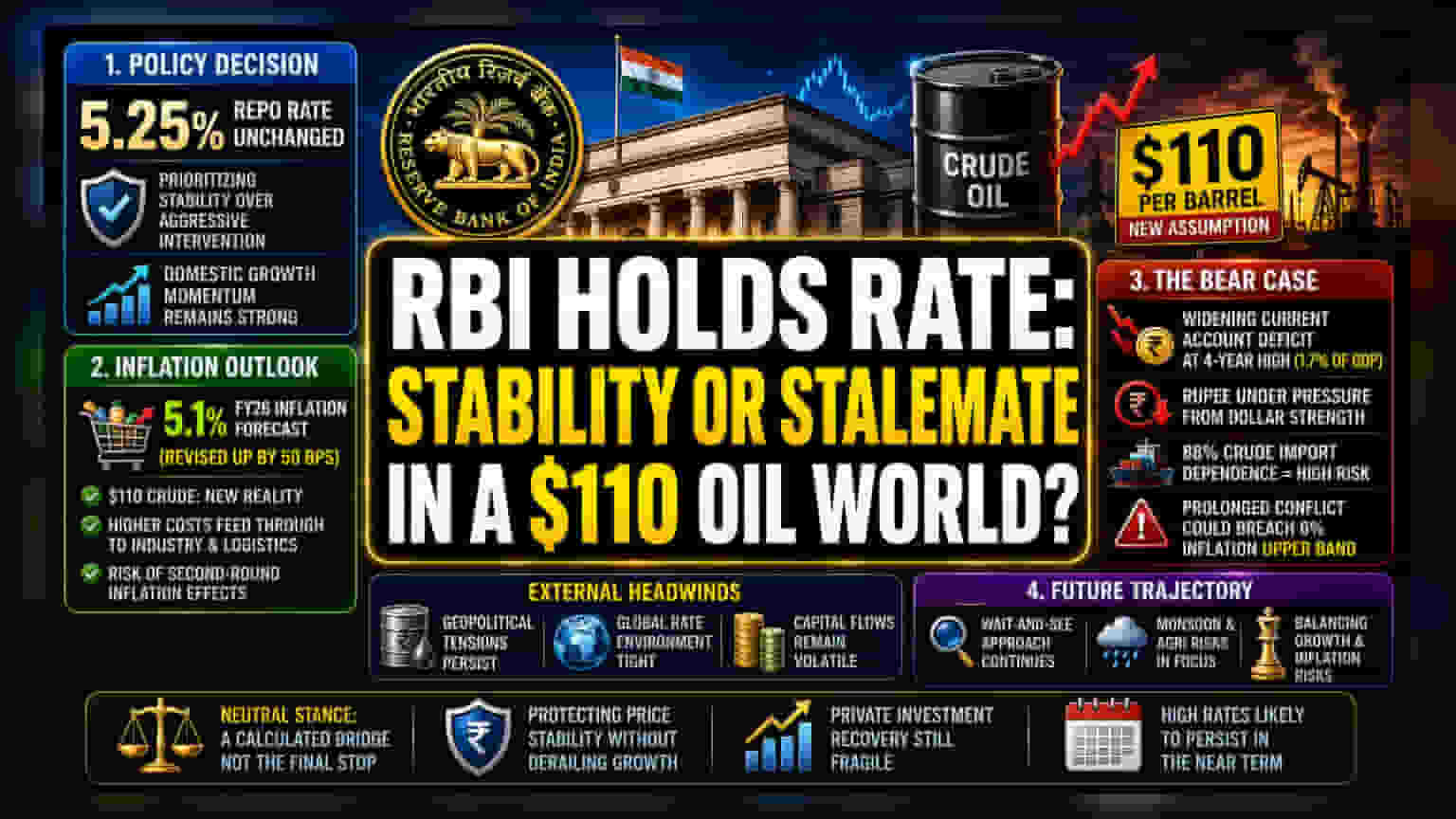


The Valuation of Economic Resilience
The decision to maintain the repo rate at 5.25% underscores the central bank's strategic prioritization of stability over aggressive intervention. While domestic manufacturing and services sectors maintain momentum, the macroeconomic narrative has shifted. The previous assumption of $85 per barrel for crude oil has been discarded in favor of a $110 reality, forcing a systemic reassessment of the fiscal and inflationary trajectory. This move reflects a defensive posture against external supply shocks that threaten to erode the hard-won gains in private consumption and fixed investment.
The Inflationary Pass-Through
Inflationary expectations have been revised upward by 50 basis points to 5.1% for the fiscal year. The mechanics of this revision are rooted in the direct transmission of higher energy costs to industrial inputs, including chemicals, metals, and logistics. While headline retail inflation remained within the tolerance band during early spring, the central bank anticipates second-round effects manifesting through wage adjustments and increased transportation costs. Unlike previous cycles where energy shocks were transitory, the persistence of the West Asian conflict suggests these costs will remain embedded in the domestic supply chain for the duration of the fiscal year.
The Forensic Bear Case
The central bank's optimism regarding domestic resilience faces significant structural headwinds. Beyond the immediate energy price squeeze, the Indian economy is grappling with a widening current account deficit, projected by some analysts to reach a four-year high of 1.7% of GDP. This external pressure is compounded by the volatility of the rupee, which has faced sustained depreciation against the dollar. Furthermore, the reliance on external energy imports—nearly 88% of crude oil—leaves the sovereign balance sheet highly susceptible to the duration of the conflict. Should crude prices breach the current $110 average, the risk of a full-scale breach of the RBI’s 6% upper inflation tolerance band rises substantially, potentially necessitating a reversal of the neutral policy stance toward a more restrictive environment.
Future Policy Trajectory
Looking ahead, the Monetary Policy Committee remains in a wait-and-see configuration. The neutral stance is a calculated bridge, allowing policymakers to evaluate the intensity of monsoon-related agricultural risks and the efficacy of government-led supply-side interventions. Consensus among market observers points to a persistent high-rate environment, as the central bank balances the necessity of curbing imported inflation against the risk of stifling the nascent recovery in private investment.