 Whalesbook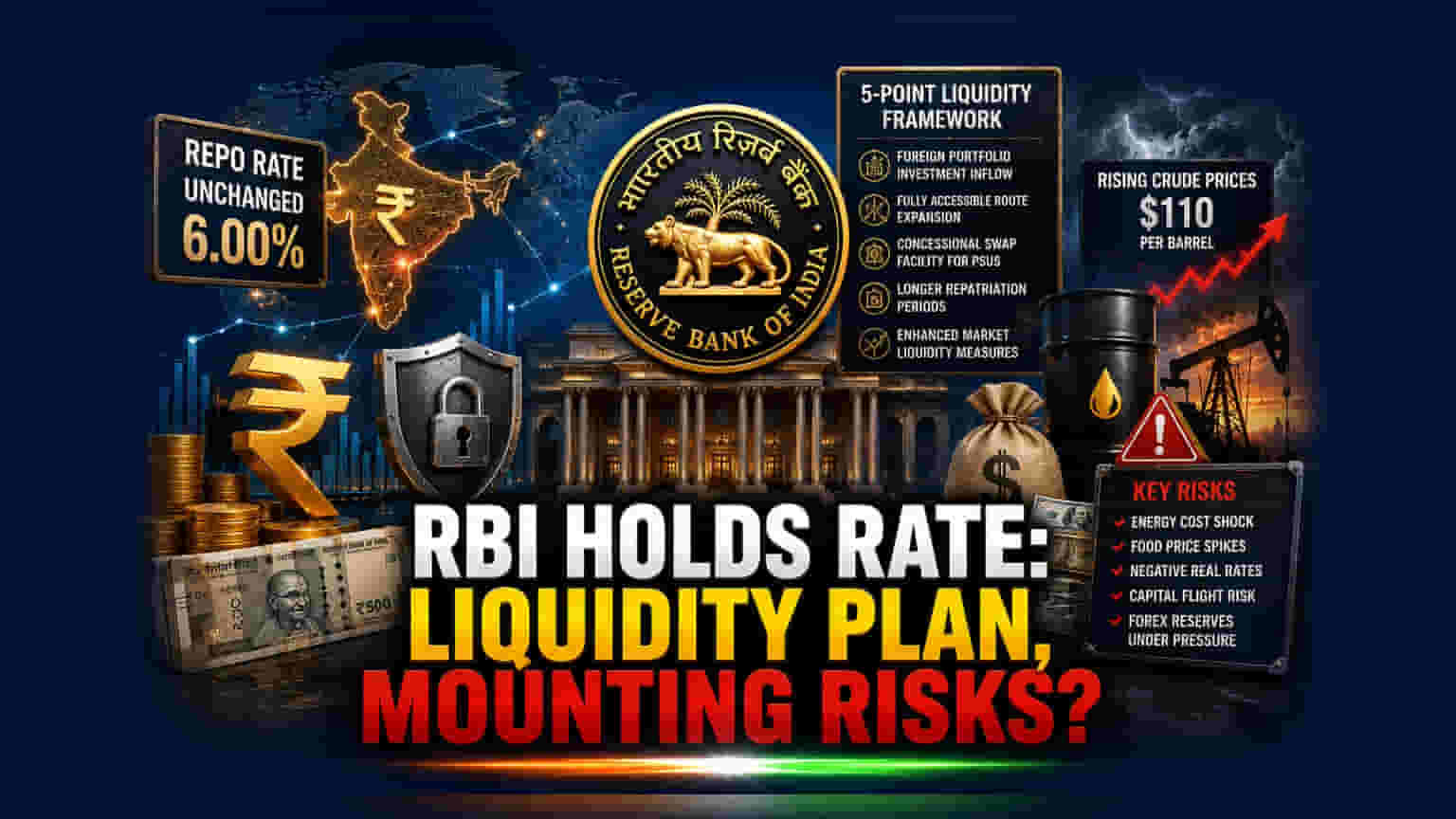


The Shift Toward Liquidity Engineering
Rather than adjusting borrowing costs, the Reserve Bank of India has signaled a transition toward defensive liquidity management. By maintaining the benchmark rate, the monetary authority is effectively attempting to balance the competing pressures of a weakening domestic currency and a moderating growth trajectory. This decision highlights a departure from aggressive inflation targeting in favor of insulating the economy from external supply-chain shocks and energy-driven cost push inflation.
The Capital Inflow Calculus
The introduction of a five-point liquidity framework signals that the central bank views currency stabilization as a task better suited to capital account measures than to interest rate adjustments. By expanding the Fully Accessible Route for government securities and offering concessional swap facilities to public sector entities, the regulator is directly targeting institutional foreign participation. This strategy aims to bridge the balance of payments gap without forcing a higher interest rate environment that could prematurely stifle credit expansion. Market participants will note that this reliance on synthetic liquidity support reflects an acknowledgement that traditional yield-based interventions are increasingly ineffective in the current climate of global monetary divergence.
The Forensic Bear Case
Critics point to the underlying fragility of this "growth-first" strategy. By keeping rates steady while energy prices surge toward $110 per barrel, the central bank risks falling behind the curve on secondary inflation effects. Should food prices spike due to adverse weather patterns, the current real interest rate environment could turn negative, punishing domestic savers and potentially triggering capital flight. Furthermore, the reliance on debt-driven inflows to defend the currency creates a dependency on foreign bondholders who may exit quickly if global volatility rises. Unlike economies that have proactively hiked rates to anchor inflation expectations, India’s current approach leaves its foreign exchange reserves exposed to sustained pressure if global supply-chain dysfunction persists into the coming fiscal quarters.
Future Trajectory
Forward-looking sentiment suggests that the current window for holding rates is rapidly closing. While the central bank is currently prioritizing macroeconomic expansion, the projected peak in headline inflation for later this year will likely force a more aggressive posture. Moving forward, observers should monitor the effectiveness of the new repatriation timelines and whether they successfully mitigate volatility in the currency markets, or if the central bank will eventually be forced to abandon its neutral stance in the face of persistent cost pressures.