 Whalesbook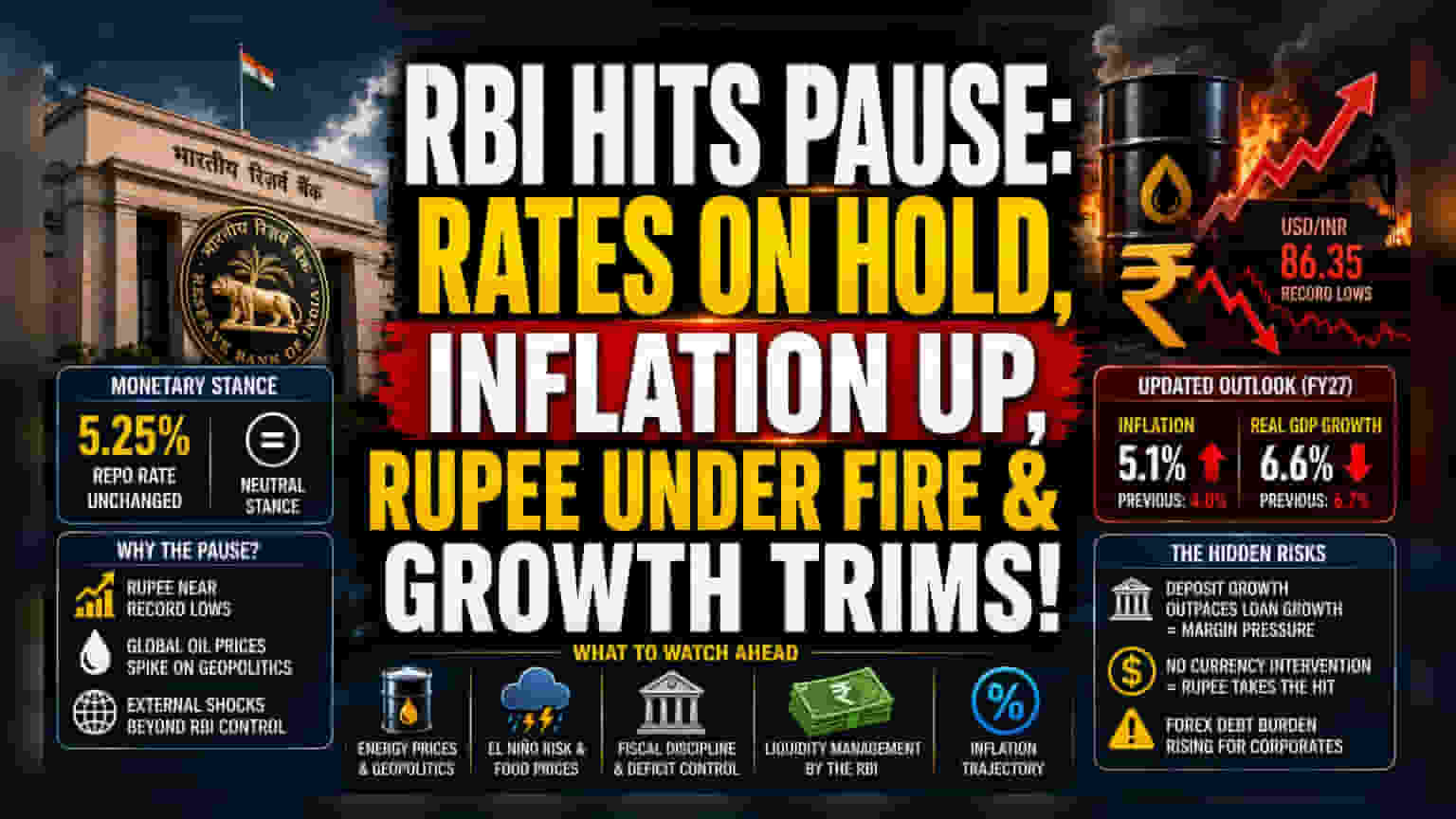


The Shift in Monetary Posture
The decision to maintain the repo rate at 5.25% marks a definitive departure from the prior easing cycle, signaling that the central bank is prioritizing defensive stability over growth stimulation. While the official communication emphasizes a neutral stance, the underlying data indicates that the MPC is increasingly constrained by external variables that lie beyond the reach of domestic interest rate policy. With the rupee hovering near record lows against the dollar and energy premiums spiking due to regional conflict, the cost of capital is effectively being set by global risk appetites rather than domestic demand requirements.
Inflationary Headwinds and Fiscal Anchoring
By revising the FY27 inflation projection upward to 5.1%, the committee is tacitly acknowledging that the domestic price environment has become significantly more sensitive to supply-side shocks. This upward revision is not merely a technical adjustment; it represents a loss of control over the primary inflation levers, particularly as the threat of an El Niño event looms over the kharif season. If food prices climb, the real interest rate environment could tighten rapidly, potentially stifling the consumption patterns that were previously expected to drive GDP expansion. The downward revision of the real GDP growth forecast to 6.6% reflects this sobering reality, suggesting that the central bank is bracing for a period of stagflationary pressure.
The Forensic Bear Case: Structural Vulnerabilities
Investors should look past the narrative of stability and focus on the widening divergence between deposit and loan growth. While the banking sector reports strong asset quality with gross NPAs at 1.73%, this metric is a lagging indicator. The current pause exposes the banking system to significant margin compression if the anticipated deposit repricing cycle fails to align with loan yields. Furthermore, by choosing to remain on the sidelines regarding currency intervention, the central bank is allowing the rupee to act as the primary shock absorber for the economy. This policy places an outsized burden on corporates with high foreign-currency denominated debt, which could lead to credit quality deterioration in sectors that are traditionally reliant on external funding.
The Path Forward: Managing Expectations
Future policy decisions will likely be dictated by the duration of the geopolitical risk premium currently embedded in energy markets. With the central bank now effectively in a holding pattern, the market must prepare for a higher-for-longer regime. The expectation for a swift return to monetary easing is being replaced by a focus on liquidity management and balance sheet preservation, as the central bank aims to guide the economy through a period of elevated global uncertainty without further destabilizing the currency.