 Whalesbook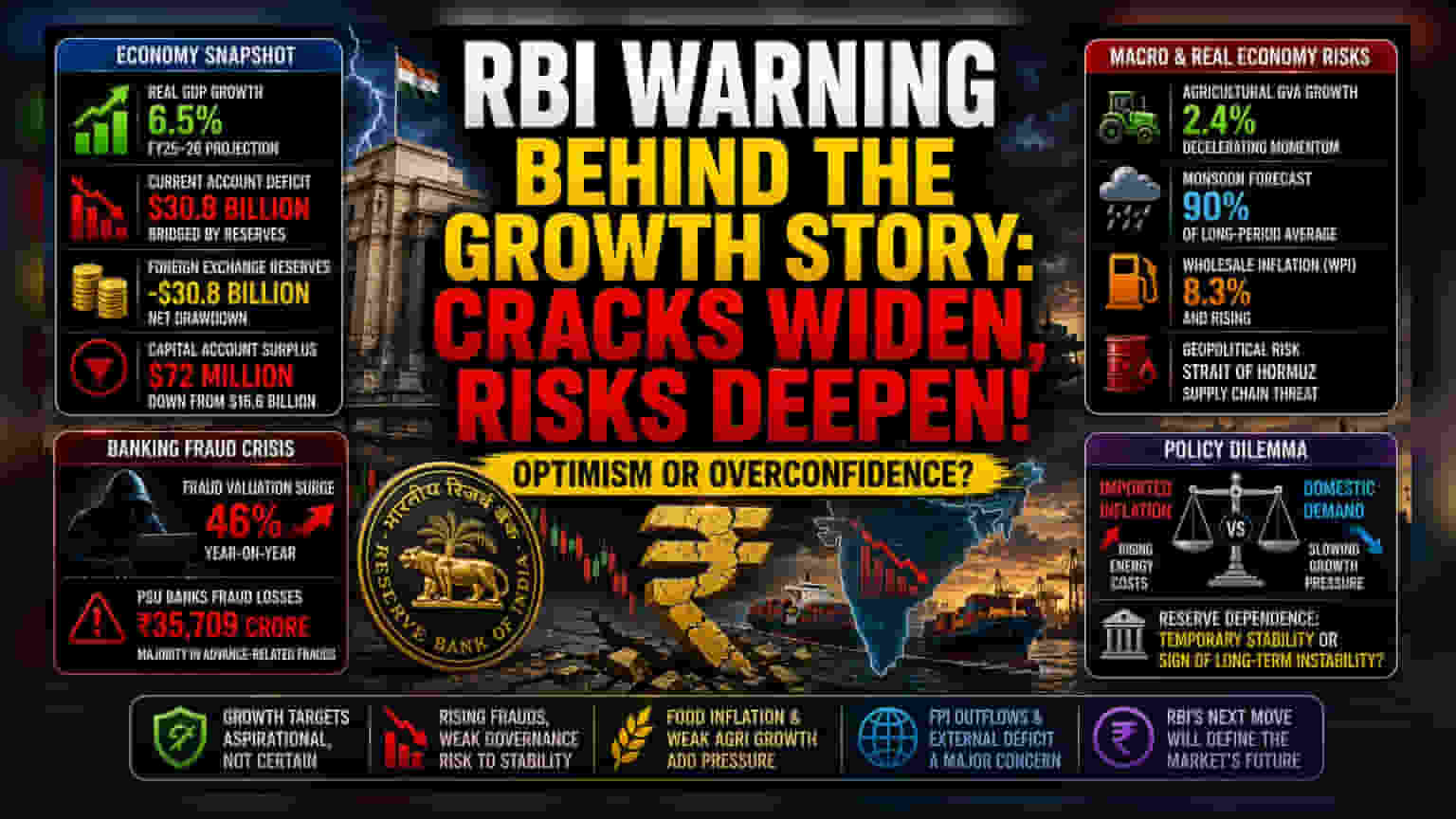


The Divergence Between Narrative and Reality
The Reserve Bank of India’s latest annual assessment projects a robust economic trajectory, yet this optimistic outlook appears increasingly decoupled from fundamental monetary and external pressures. While headline figures suggest a resilient domestic economy, the reliance on foreign exchange reserve depletion to bridge a $30.8 billion balance of payments deficit signals a critical structural shift. This move, executed as foreign portfolio investors aggressively offloaded domestic holdings, reflects a waning confidence in the current account sustainability that official growth projections struggle to reconcile.
Systemic Erosion in Financial Oversight
Beyond external account pressures, the banking sector faces a crisis of internal governance characterized by a 46% escalation in fraud valuations. Public sector lenders remain disproportionately exposed, carrying the weight of Rs 35,709 crore in losses. The concentration of these illicit activities within advance-related portfolios suggests that despite improved reported asset quality, the underlying risk management frameworks are failing to stem institutional leakage. When cross-referenced against the broader contraction in core industry output and cooling fuel consumption, these fraud figures imply that liquidity is being misallocated at a time when the broader economy requires precise capital deployment.
The Agricultural and Macro Vulnerability
Agricultural sector performance further complicates the official growth narrative. With gross value added growth decelerating to 2.4%, the sector is proving unable to convert record production into meaningful economic momentum. The reliance on a monsoon forecast of 90% of the long-period average adds a precarious layer of volatility, particularly as wholesale inflation continues to climb toward 8.3%. Rising energy costs, compounded by the constant threat of supply chain disruptions near key maritime chokepoints like the Strait of Hormuz, leave the central bank with limited policy levers to combat both imported inflation and cooling domestic demand simultaneously.
The Institutional Bear Case
Market participants are beginning to view the official growth targets as aspirational rather than predictive. The primary concern remains the erosion of the capital account surplus, which plummeted from $16.6 billion to a mere $72 million. Such a sharp reversal suggests that the economy is no longer attracting the foreign capital necessary to offset domestic consumption shifts. Furthermore, the persistent rise in food inflation, coupled with the depreciating rupee, forces the central bank into a defensive posture. Analysts are increasingly focused on whether the reliance on reserves is a temporary stabilization effort or a sign of long-term external instability that could necessitate a sharper, more painful interest rate adjustment in the upcoming quarters.