

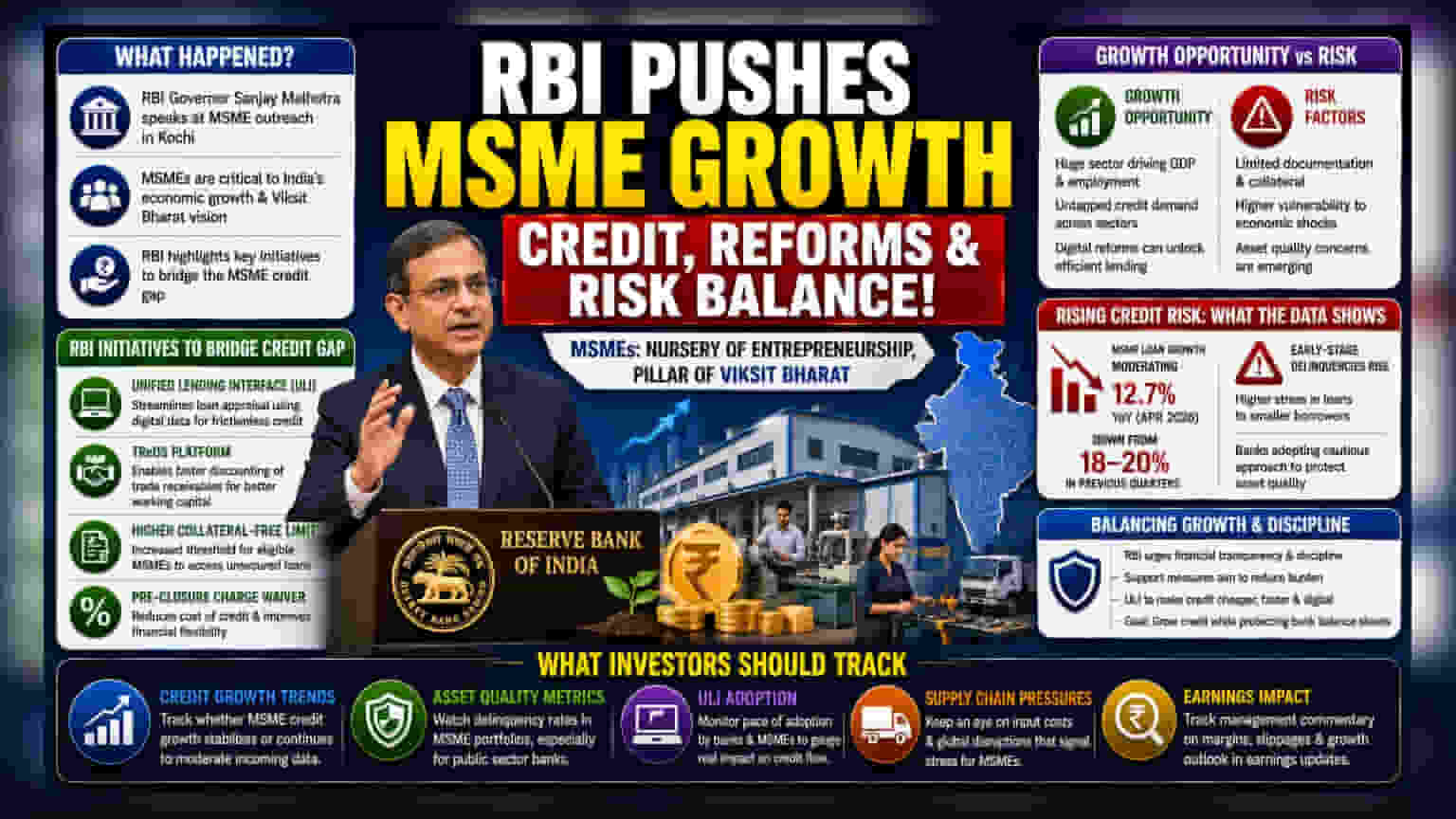
RBI Governor Sanjay Malhotra recently highlighted MSMEs as the 'nursery of entrepreneurship,' reaffirming support through digital tools like the Unified Lending Interface. While credit expansion remains a policy focus, the banking sector is increasingly cautious due to rising signs of stress in MSME loan portfolios. Investors are watching how these digital initiatives manage the credit gap without increasing risk.
What Happened
Reserve Bank of India (RBI) Governor Sanjay Malhotra emphasized the critical role of Micro, Small, and Medium Enterprises (MSMEs) in India’s economic growth, describing the sector as the 'nursery of entrepreneurship.' Speaking at a special outreach program in Kochi ahead of International MSME Day 2026, the Governor stressed that MSMEs are essential to the nation's 'Viksit Bharat' vision. He highlighted several key RBI initiatives designed to bridge the persistent credit gap, including the upcoming Unified Lending Interface (ULI) to streamline loan appraisals, the Trade Receivables Discounting System (TReDS), and an increased collateral-free loan threshold for eligible units.
Why This Matters for Investors
For the Indian banking and financial sector, MSMEs represent both a massive growth opportunity and a complex risk. While the sector contributes significantly to GDP and employment, it has historically struggled with a large credit gap, often due to a lack of formal financial documentation and collateral. The RBI’s push for digital tools like ULI is aimed at reducing these 'friction' points, potentially allowing banks to lend more efficiently. However, as the central bank encourages credit flow, lenders are simultaneously balancing this with emerging signs of asset quality concerns. Investors tracking banking and NBFC stocks should monitor how these digital lending platforms help banks maintain healthy asset quality while scaling their MSME portfolios.
The Rising Credit Risk
While policy support continues, the ground reality for MSME lending has become more nuanced in recent months. Financial sector reports from April 2026 indicate that banks are adopting a more cautious stance, with year-on-year MSME loan growth moderating to approximately 12.7%, down from the 18–20% range seen in previous quarters. Data from credit bureaus has shown an uptick in early-stage delinquencies, particularly in loans to smaller borrowers. This trend suggests that while credit demand remains, lenders are increasingly selective to avoid potential bad loans amid rising input costs and supply chain uncertainties affecting small businesses.
Balancing Growth and Discipline
The RBI Governor urged entrepreneurs to focus on financial transparency and discipline, noting that the central bank’s support measures—such as waiving pre-closure charges and utilizing TReDS—are intended to reduce the financial burden on smaller businesses. The ULI is a critical part of this strategy, intended to facilitate 'frictionless' credit by leveraging digital data, which could reduce the manual processing costs that often keep small enterprises out of the formal banking system. Whether this technology-led approach can successfully lower the cost of credit while simultaneously protecting bank balance sheets will be a key performance indicator for the financial sector.
What Investors Should Track
Investors should keep a close watch on the following monitorables:
- Credit Growth Trends: Look for whether MSME credit growth stabilizes or continues to moderate in upcoming monthly data.
- Asset Quality Metrics: Watch for updates on delinquency rates in MSME portfolios, especially for public sector banks which have reported higher vulnerability compared to private peers.
- ULI Adoption: Monitor the pace at which banks and MSMEs adopt the Unified Lending Interface, as this will determine its actual impact on reducing the credit gap.
- Supply Chain Pressures: Keep an eye on reports regarding input costs and global supply chain disruptions, which often serve as early indicators of stress for the MSME sector.