 Whalesbook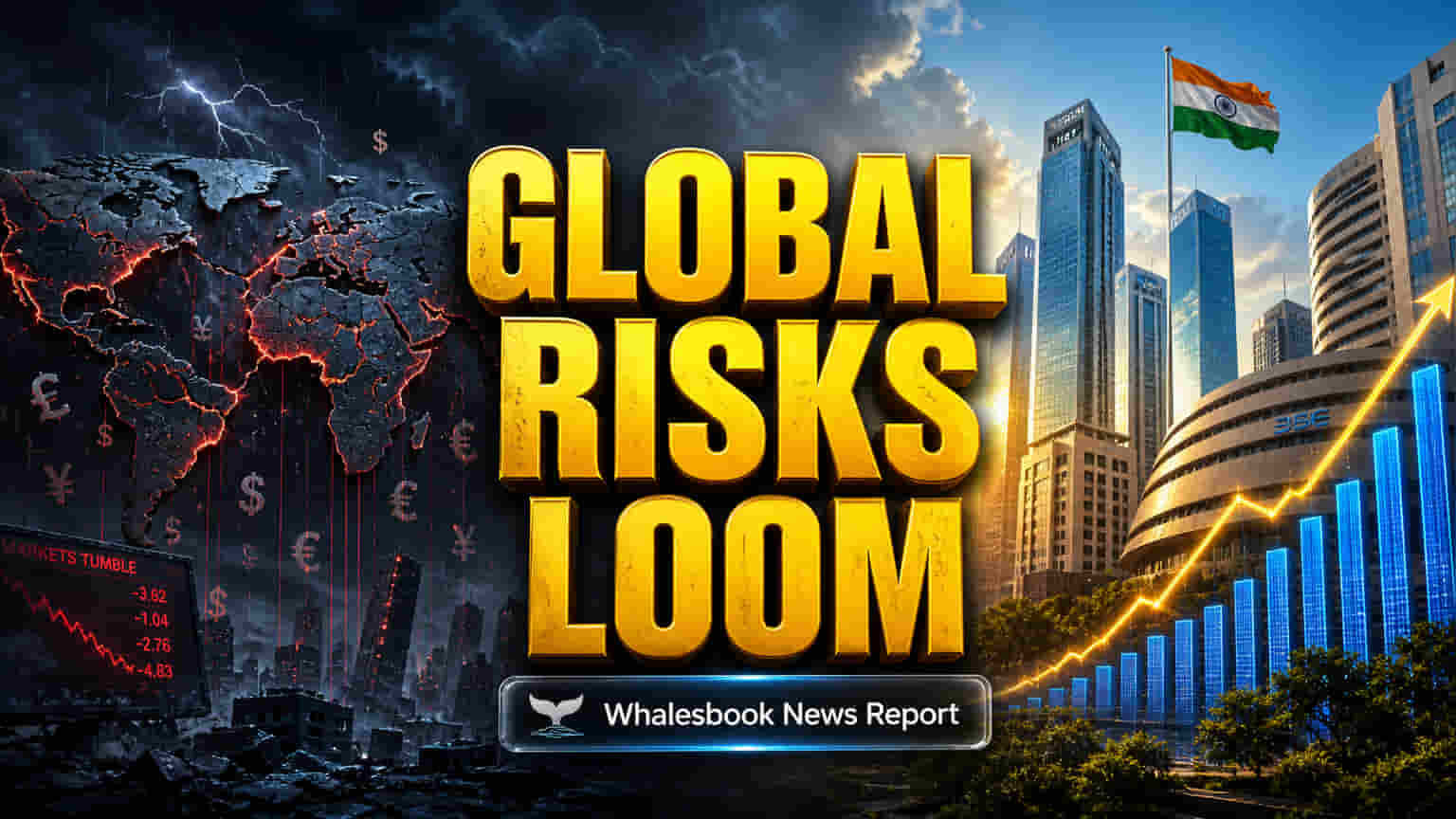


Global Storm Clouds Gather
Reserve Bank of India Governor Sanjay Malhotra described a worrying global economic picture, citing increased risks from economic fragmentation. This fragmentation, driven by tariffs, trade barriers, and industrial policies, is disrupting supply chains and financial flows. Malhotra warned it could split the global financial system, raising costs and volatility. Rising geopolitical tensions worsen these issues, driving up global defense spending and threatening long-term government finances in major economies. Global public debt has passed $100 trillion and may reach 100% of global GDP by 2030, straining government finances, especially in emerging markets.
Malhotra also pointed to high prices for some assets, especially tech stocks, and identified AI as a major source of uncertainty. Questions remain about AI business models, efficiency gains, and job losses. Furthermore, the rapid growth in private credit markets has created less transparency and potential wider financial risk due to links with regulated sectors. While analyses in 2025 found private credit posed no current systemic threat, its rapid growth and links mean it needs watching.
India's Economy Stands Strong
In contrast to the uncertain global outlook, India's economy is fundamentally strong. The external sector is resilient, with comfortable foreign exchange reserves covering about 11 months of imports. The current account deficit is manageable, though high global energy prices are a risk, partly offset by new trade deals. Foreign direct investment (FDI) is strong, with a surge in new projects announced, particularly in finance and tech.
Domestically, growth is robust, driven by strong consumer spending and public investment. Official estimates show growth at 7.6% for FY2025-26 and 6.9% for FY2026-27. Recent forecasts from the World Bank (6.6% in FY27), Goldman Sachs (6.9% in 2026), and IMF (6.5% in FY26-27) predict India will remain the fastest-growing major economy. This growth outpaces most emerging markets, positioning India as a key global economic player set to become the world's fourth-largest economy soon, surpassing Japan. S&P upgraded India's sovereign rating to BBB- in August 2025.
Call to Deepen Financial Markets
Despite its economic strength, Governor Malhotra stressed that India's financial markets need significant deepening and strengthening. He noted that while the government securities market is liquid, liquidity across all maturities and instruments could be better. The over-the-counter (OTC) derivatives market, especially for interest rates, is concentrated and needs expansion for better hedging options.
Governor Malhotra urged Indian banks to become global market-makers in the offshore INR market, rather than relying on others. Improving the forex retail platform was also a priority for fair retail deals. Credit derivatives, largely untapped, offer significant potential. These market developments are crucial in a fragmented world needing efficient capital allocation and strong risk management. The RBI reiterated its commitment to improving market efficiency, broadening participation, and strengthening frameworks to meet market needs and ensure order.
Potential Risks and Weaknesses
However, India's resilience faces significant risks. Geo-economic fragmentation is a persistent threat, potentially affecting supply chains, trade, and FDI attractiveness as countries prioritize 'friend-shoring' and national security. While private credit risk is seen as contained, its opacity and rapid growth could worsen financial instability during severe downturns. High global public debt and rising geopolitical tensions driving defense spending could challenge long-term government finances if not managed well. India's low external debt-to-GDP ratio is a strength, but reliance on oil imports exposes it to price volatility from Middle East conflicts, potentially widening its current account deficit.
Crucially, gaps in financial market development are a structural weakness. An illiquid government securities market, underdeveloped derivatives, and the need for Indian banks to be global market-makers mean the country may not be fully equipped to harness its growth or shield itself from global financial shocks. Concentrated OTC derivatives limit hedging options, and the early stage of credit derivatives means missed opportunities for sophisticated risk management. Failing to address these issues could hinder channeling domestic savings into productive investment and attracting international capital.
Future Outlook and Market Growth
Looking ahead, multilateral institutions and financial analysts remain optimistic, projecting India as the fastest-growing major economy through 2027. Easing US tariffs after a trade deal should boost exports and economic activity. However, sustained growth depends on the government maintaining economic stability, managing fiscal pressures, and accelerating reforms to deepen financial markets. Developing robust OTC and credit derivative markets, improving liquidity, and fostering domestic market-making capacity will be key to India's long-term success and ability to withstand global shocks.