

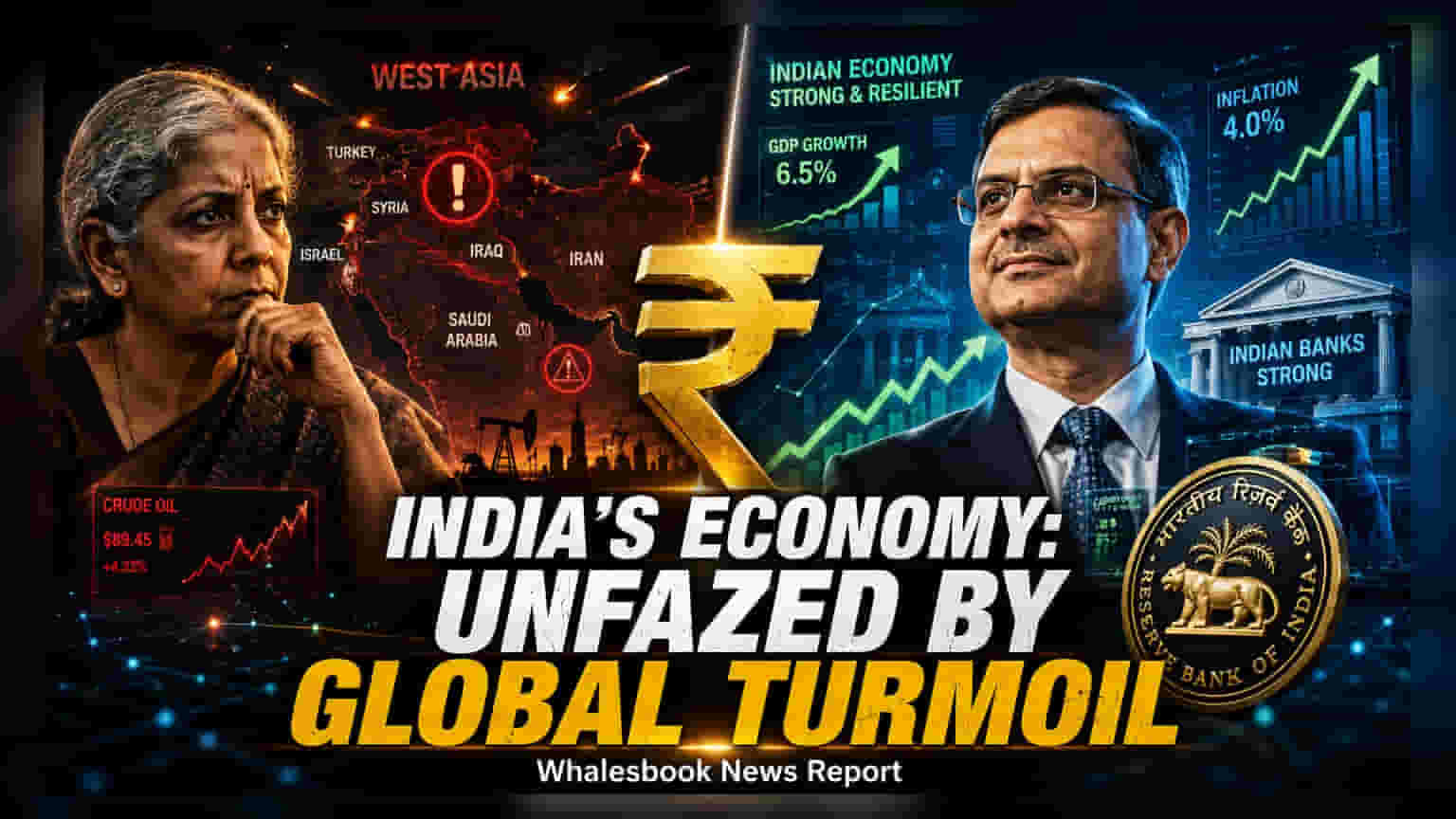
RBI Governor Sanjay Malhotra stated the Indian banking sector is well-positioned to handle global uncertainties, such as the West Asia crisis and cyber threats. He noted that strong financial health, including high capital adequacy and low bad loans, provides a vital buffer. This message follows the RBI's recent decision to keep the repo rate at 5.25% in its August 2026 policy review.
RBI Governor Sanjay Malhotra signaled confidence in the Indian financial sector during the FICCI-IBA Annual Banking Conference, FIBAC 2026. He emphasized that both the economy and the banking system are strong enough to manage potential global shocks. This reassurance comes as the central bank remains watchful of how geopolitical tensions in West Asia and shifting trade policies might impact the country.
The Governor highlighted that banks are in a healthy position, citing capital-to-risk-weighted assets ratios of 17-18% and gross non-performing assets—or bad loans—of less than 2%. For investors, these metrics suggest that banks have enough financial cushion to handle unexpected economic pressures without facing immediate stability concerns.
Beyond traditional risks like global trade volatility, the central bank is also focusing on modern threats. Governor Malhotra specifically identified cyber risks as a significant challenge that financial institutions must proactively address. He also advised banks to treat artificial intelligence as a strategic, board-driven project rather than just a technical update, ensuring clear accountability for how these technologies are implemented across their operations.
This commentary aligns with the central bank's current monetary policy stance. In the recent August 2026 meeting, the Monetary Policy Committee decided to hold the repo rate at 5.25%, maintaining a neutral position. The central bank continues to adopt a cautious approach, keeping a close eye on the balance between domestic inflation and global growth trends.
While the domestic banking sector remains robust, the ability of financial institutions to navigate cyber threats and adapt to new technology will be important to track. Investors may also monitor how geopolitical factors, such as the situation in West Asia, influence energy prices and, consequently, domestic inflation in the coming months.