 Whalesbook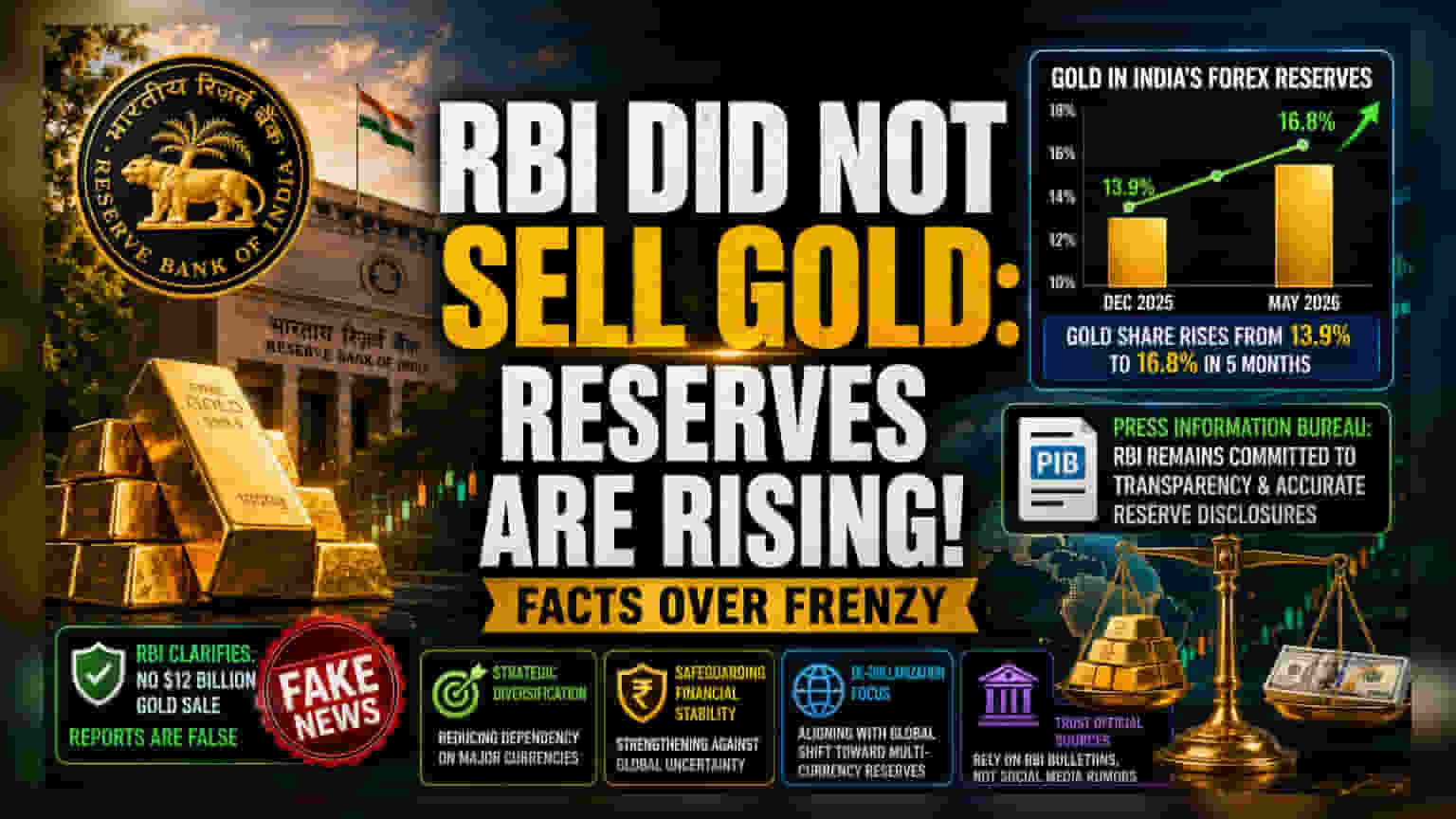


Beyond the Noise: A Strategic Accumulation
Market participants often mistake volatility for structural change, but the recent frenzy surrounding purported central bank intervention demonstrates a disconnect between social media narratives and institutional reality. While speculative reports claimed the Reserve Bank of India (RBI) liquidated $12 billion in gold to provide a liquidity buffer against regional geopolitical instability, the reality is a story of continued asset accumulation. By tracking the actual composition of India’s foreign exchange reserves, it becomes clear that the central bank is adhering to a long-term strategy of diversification rather than tactical liquidation.
The Data Reality Check
An analysis of the central bank’s transparent reporting structure highlights the inaccuracy of the divestment narrative. The gold component within India's reserve portfolio has climbed from approximately 13.9% in late 2025 to over 16.8% by late May 2026. This consistent upward trajectory indicates that policymakers are actively fortifying the balance sheet with physical gold, likely in response to the broader macroeconomic objective of de-dollarizing trade and mitigating the risks associated with volatile global currency markets. The Press Information Bureau's swift intervention served not just to correct a false report, but to reiterate the central bank's commitment to transparency regarding its reserve management.
The Risk of Disinformation in Thin Markets
Instances of fabricated financial news carry inherent risks for market stability, especially when they intersect with sensitive commodity classes. Gold, acting as a traditional safe-haven asset, is particularly susceptible to noise-driven price swings. When investors act upon unverified claims regarding sovereign sell-offs, they risk front-running events that have no basis in reality. This incident underscores a structural weakness in the digital information environment, where high-frequency trading algorithms or retail sentiment may overreact to headlines before official verification can be synthesized. For institutional players, the lesson remains anchored in reliance on primary source bulletins rather than fragmented media reports.
Looking Ahead: Reserve Management Trajectory
Looking toward the remainder of 2026, the central bank is expected to maintain its current trajectory regarding reserve composition. The push to bolster gold holdings suggests a defensive posture against fluctuating global energy prices and the ongoing shift in international monetary policy. Analysts remain focused on the RBI's monthly bulletins as the ultimate arbiter of truth, noting that any significant shift in reserve strategy would be communicated through formal channels rather than speculative market commentary.