 Whalesbook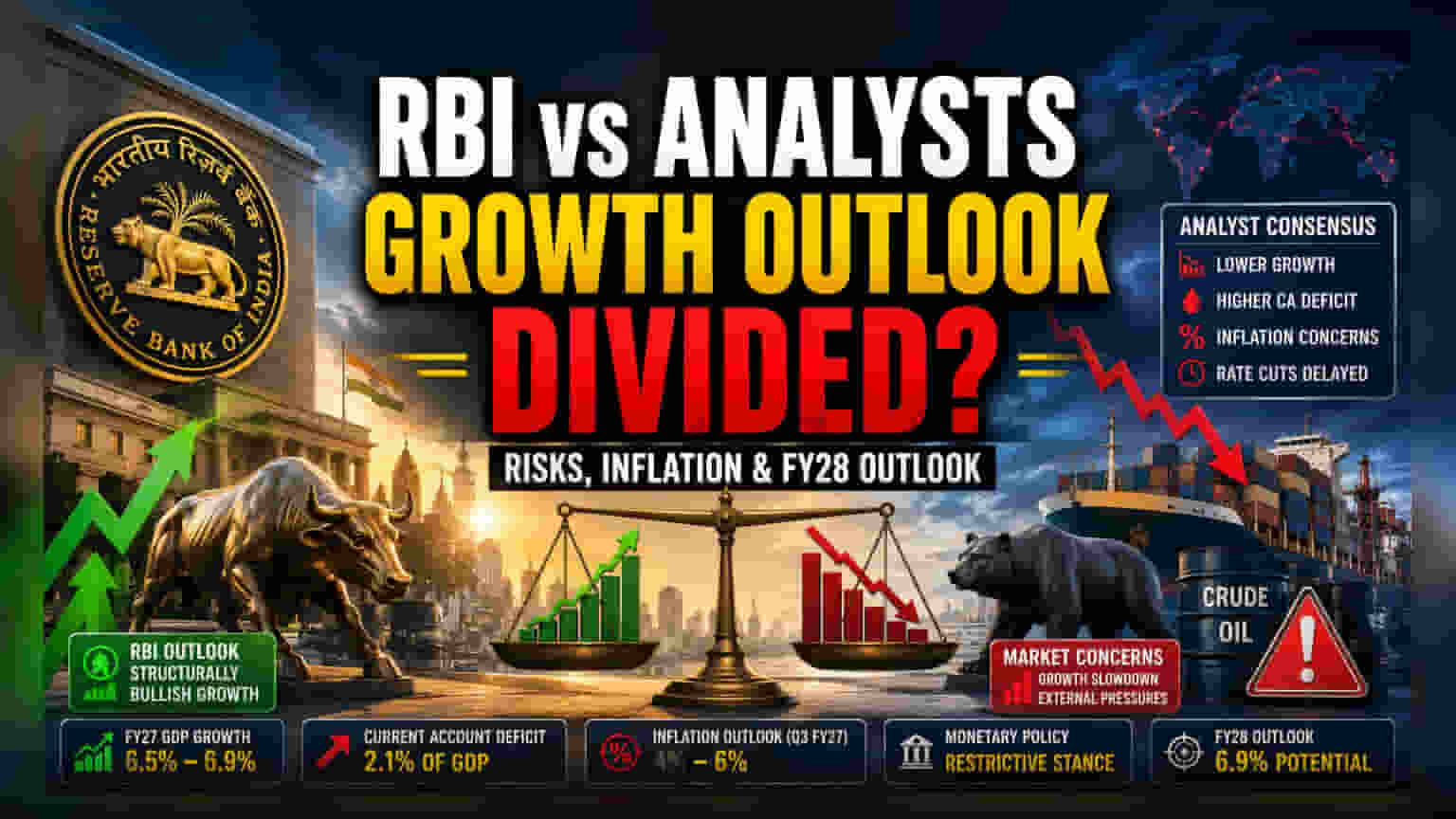


The Divergence in Monetary Strategy
The gap between the Reserve Bank of India’s internal mandates and the collective sentiment of the 40 analysts involved in the latest Survey of Professional Forecasters signals a shift in market confidence. While the central bank maintains a structurally bullish growth narrative, the private sector consensus reveals a tactical retreat. This misalignment is not merely statistical; it suggests that while the RBI remains focused on potential second-round inflationary shocks, the broader analyst community is increasingly concerned that high interest rates and global energy bottlenecks are actively pruning the country's economic momentum.
Assessing the External Pressure
The elevation of the projected current account deficit to 2.1% of GDP for FY27 underscores a mounting vulnerability to external supply shocks. This jump, compared to previous estimates of 1.5%, reveals that the economy’s trade balance is proving less resilient to high commodity costs than officials initially projected. When benchmarking this against regional peers, India’s dependence on imported energy remains a persistent friction point that limits the effectiveness of domestic monetary tightening. Analysts are increasingly modeling scenarios where the cost of capital remains higher for longer, effectively capping the ceiling for manufacturing expansion.
The Forensic Bear Case
The primary systemic risk centers on the friction between inflation management and consumption growth. Although headline inflation currently sits below the 4% threshold, the central bank’s fear of a sharp reversal toward the 6% upper limit by the third quarter creates a precarious environment for investors. If the RBI maintains a restrictive liquidity stance to guard against wage-price spirals, they risk choking off the nascent recovery in private investment. Furthermore, the reliance on high-frequency indicators as a proxy for economic health can be misleading; these metrics often mask structural weaknesses in rural demand, which remains susceptible to volatile monsoon patterns and unpredictable agricultural yield impacts. Investors should be wary of the persistent gap between the government's optimism and the actual, debt-adjusted performance of the manufacturing sector.
Future Trajectory
Looking toward FY28, the optimistic projection of 6.9% GDP growth assumes a significant stabilization in global supply chains and a softening of energy prices. However, the path to this recovery is narrow. The consensus remains centered on a growth corridor of 6.5-6.9%, implying that any failure to hit these targets will likely trigger immediate volatility in equity markets and a re-evaluation of currency valuations. The market is now looking for clear signals that capital expenditure cycles can sustain momentum without the tailwind of aggressive government spending.