

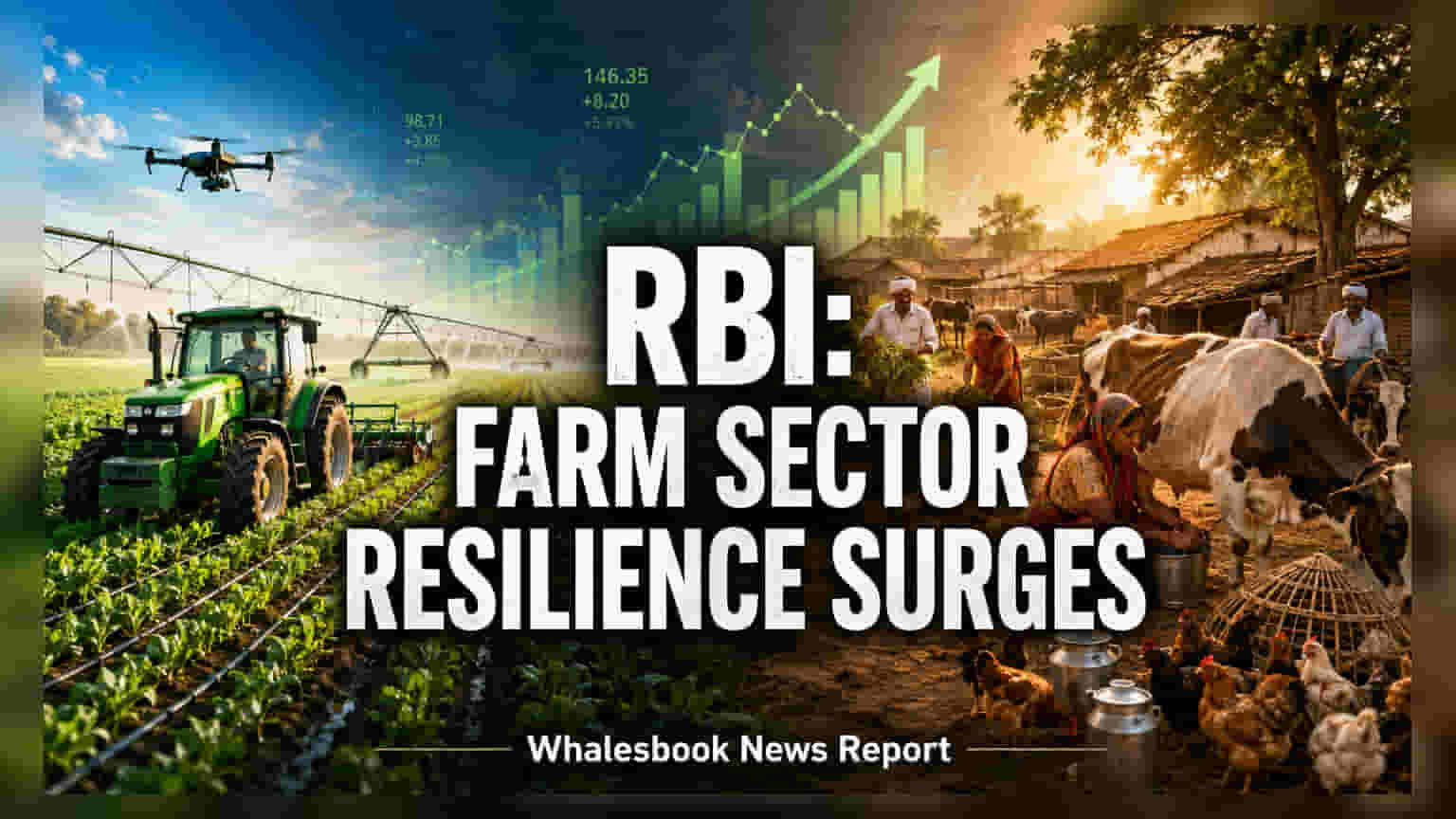
The Reserve Bank of India has observed that the rural economy is significantly more resilient than 15 years ago. This assessment comes as the central bank held the repo rate at 5.25% and raised its FY27 GDP growth forecast to 6.7%, citing better irrigation and allied agricultural activities as key structural strengths.
The Reserve Bank of India (RBI) has highlighted a structural shift in India's rural economy, noting that it is far more resilient to shocks than it was 15 years ago. This observation was shared during the Monetary Policy Committee (MPC) meeting on Wednesday, where the RBI maintained the repo rate at 5.25% while upwardly revising its real GDP growth projection for FY27 to 6.7%.
Resilience Drivers: Mechanisation and Allied Activities
RBI Deputy Governor Poonam Gupta attributed this enhanced resilience to several long-term structural changes in the farm sector. Unlike the past, where agriculture was almost entirely dependent on weather patterns, the current rural economy benefits from expanded irrigation infrastructure and increased farm mechanisation. These improvements have enabled more consistent agricultural output.
Additionally, the rise of allied agricultural activities—such as dairy, poultry, and fisheries—has provided a secondary income stream for rural households. This diversification acts as a buffer, helping rural families sustain their spending power even during periods when crop output may be weaker due to poor rainfall. For investors, this shift is notable because it suggests that rural consumption, which is critical for sectors like fast-moving consumer goods (FMCG) and two-wheeler manufacturing, may be less volatile during minor weather-related disruptions than in previous decades.
Risks to the Economic Outlook
Despite the positive assessment of structural changes, the central bank acknowledged that the rural economy is not immune to all risks. RBI Governor Sanjay Malhotra identified the uncertainty surrounding the southwest monsoon and the potential impact of El Niño conditions as ongoing challenges. These factors remain primary risks that could lead to volatility in food prices and affect overall rural demand.
While structural improvements have made the sector more stable, weather patterns and global supply chain pressures—such as volatile oil prices and geopolitical tensions in West Asia—continue to pose downside risks to the inflation outlook. The RBI emphasized that while the sector has better mechanisms to cope with income fluctuations, the threat of high food inflation remains a significant factor that the central bank will monitor closely.
Investors looking at rural-focused businesses should watch for incoming data on the monsoon progress and food inflation trends. These data points will clarify whether the structural resilience of the rural economy can effectively absorb the impact of climate-related disruptions, ensuring that rural consumption remains a steady contributor to India's overall economic growth.