

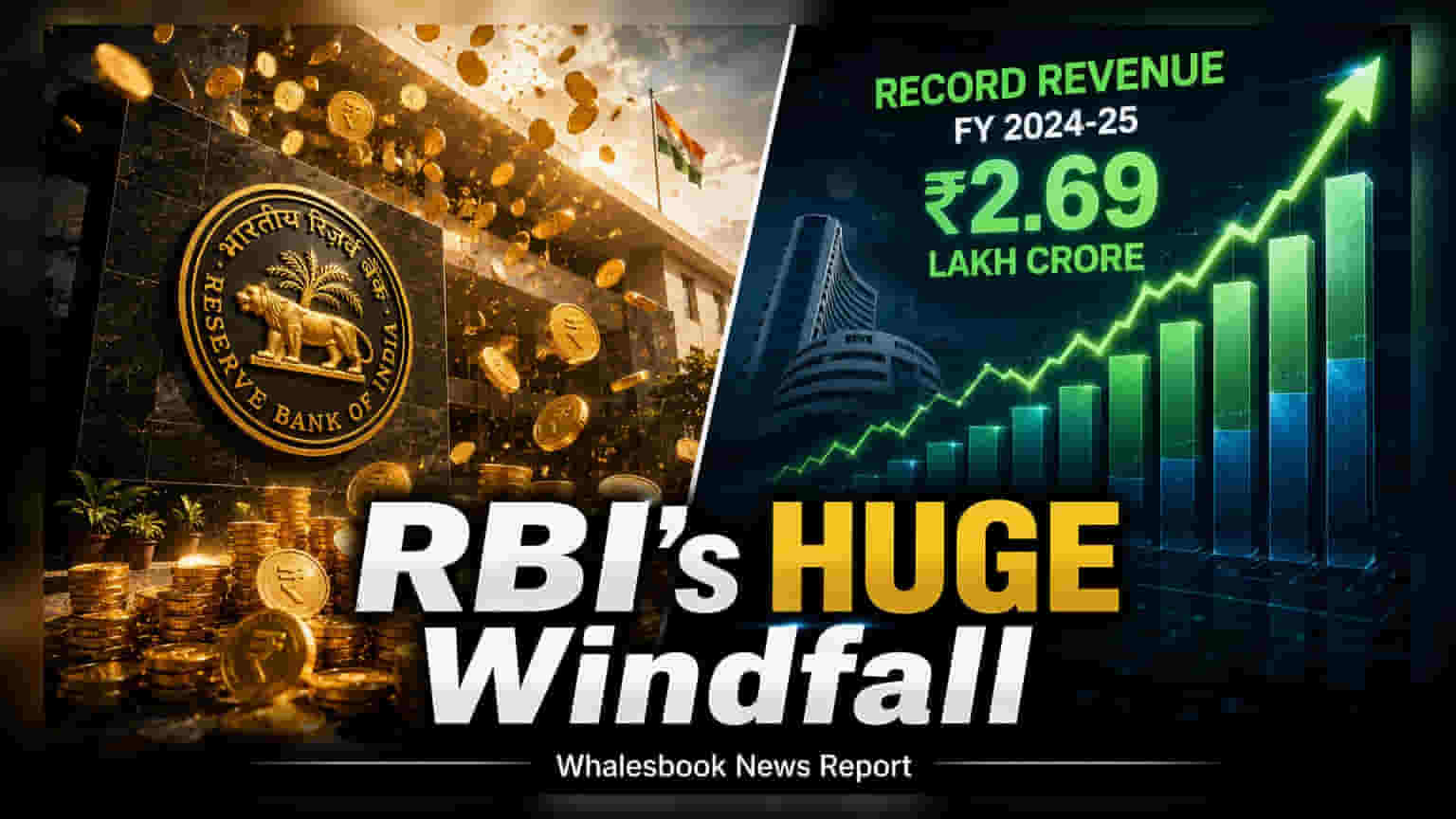
The Indian government has received over ₹3.24 lakh crore in dividends and surplus transfers from the RBI and state-run financial entities, beating the full-year target of ₹3.19 lakh crore. This windfall provides essential fiscal support as the government manages potential pressure on tax collections and increased subsidy spending.
The central government’s fiscal position has received a significant boost as dividend and surplus transfers from the Reserve Bank of India (RBI) and public sector financial institutions have crossed the annual budget estimates early in the fiscal year. As of July 30, 2026, collections under this head reached ₹3.24 lakh crore, surpassing the government’s full-year target of ₹3.19 lakh crore.
Record Surplus Transfers Strengthen Government Balance Sheet
The primary driver of this financial inflow is the record surplus transfer of ₹2.87 lakh crore from the RBI. This substantial transfer reflects the central bank's robust earnings from its foreign exchange operations and domestic interest income over the past year. In addition to the RBI, public sector banks and financial institutions have contributed significantly to this total. Specifically, the Life Insurance Corporation of India (LIC) has transferred over ₹12,000 crore to the exchequer, while the State Bank of India also acted as a major contributor to the government's non-tax revenue pool.
Disinvestment and Capital Receipts Provide Extra Cushion
Beyond direct dividends, the government has seen improved performance in miscellaneous capital receipts, which include proceeds from minority stake sales and remittances from the Specified Undertaking of Unit Trust of India (SUUTI). These collections have crossed ₹21,000 crore, a performance that exceeds the totals recorded in each of the last three fiscal years. While the total budget estimate for miscellaneous capital receipts remains at ₹80,000 crore for the year, this early momentum in asset monetization and stake sales serves as a helpful buffer.
Fiscal Management Amid Economic Pressures
These inflows are particularly timely for the government's fiscal management. While the economy continues to grow, there are concerns regarding potential volatility in direct tax collections. Factors such as geopolitical tensions impacting global supply chains and risks related to monsoon patterns could influence overall revenue growth. Furthermore, the government faces higher-than-anticipated expenditure requirements, particularly in the areas of subsidies and certain welfare schemes.
By exceeding the dividend targets, the government gains flexibility to address these spending demands without needing to aggressively adjust its borrowing plans or compromise on capital spending projects. Investors will continue to monitor the progress of tax collections and expenditure trends in the coming months, as these will determine whether the government can meet its fiscal deficit targets for FY26. The next critical update will be the mid-year fiscal review, which will provide a clearer picture of how these non-tax revenues are balancing the broader budgetary requirements.