

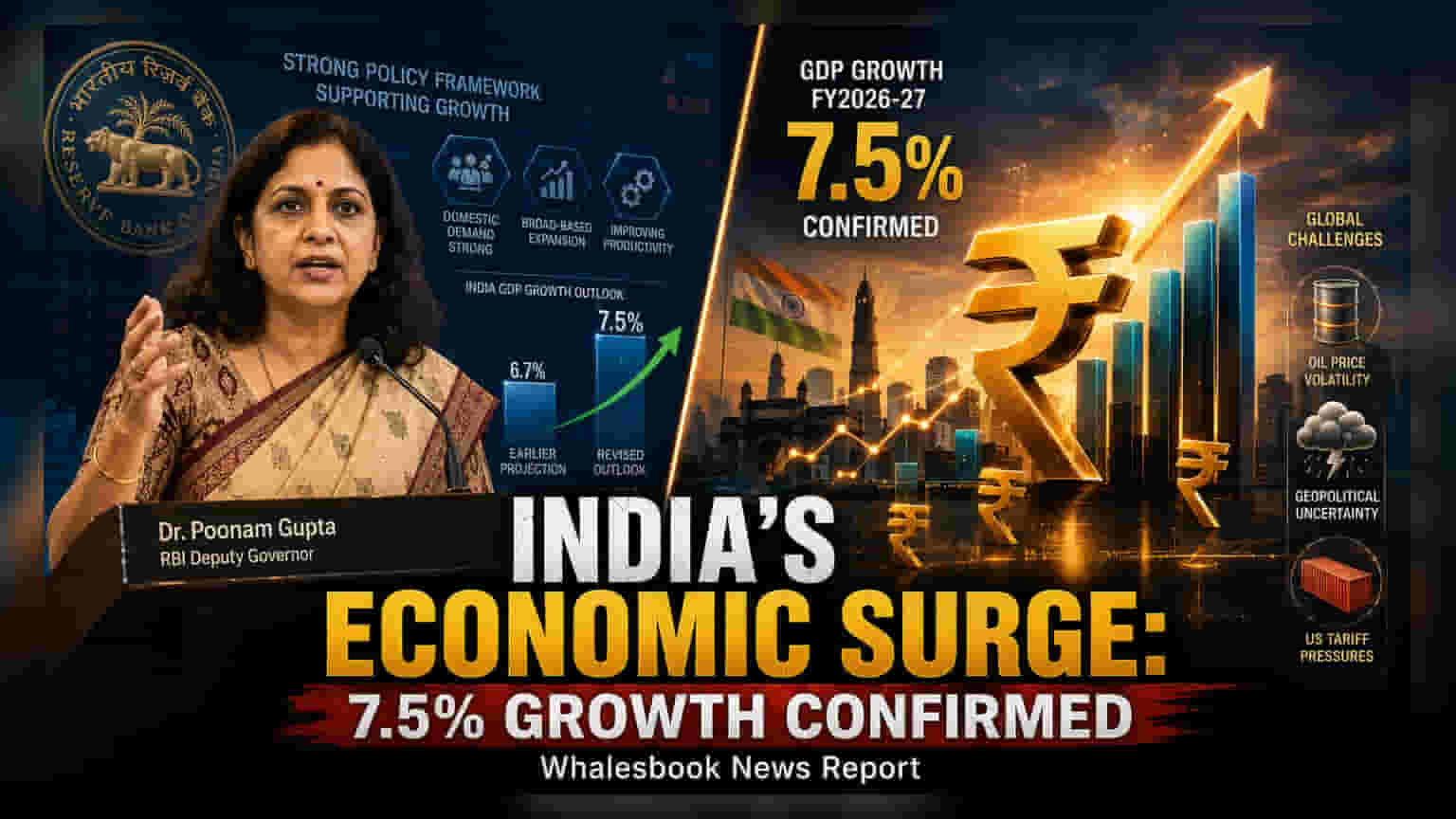
RBI Deputy Governor Dr. Poonam Gupta stated India’s economy is showing resilience against global risks, with growth likely to outperform the initial 6.7% estimate. She expects the current account deficit to stabilize and FDI inflows to rise, though oil prices and tariffs remain key watch areas.
The Indian economy remains on a stable growth path, with the potential to outperform the initial projection of 6.7% for the current fiscal year, according to RBI Deputy Governor Dr. Poonam Gupta. Speaking at the Madras School of Economics on August 20, 2026, Dr. Gupta emphasized that despite a challenging global environment, domestic demand and strong policy frameworks are supporting economic activity.
Navigating Global Headwinds
The economy is currently managing what Dr. Gupta described as a triple shock: the impact of US tariffs, volatile global oil prices, and broader geopolitical uncertainties. Despite these pressures, the RBI remains optimistic about growth, noting that expansion is becoming more broad-based. Unlike periods where growth relied heavily on increased inputs, recent trends show improvements in labor and capital quality, alongside total factor productivity. This shift suggests that the economy’s underlying capacity for growth is strengthening.
Current Account and FDI Outlook
Beyond domestic growth, the outlook for India’s external sector—which includes trade and investment flows—appears resilient. Dr. Gupta indicated that the current account deficit is on a downward trajectory and expects it to stabilize over the coming years, provided energy markets do not see extreme, unexpected shocks.
Confidence from international investors also appears strong. Projections suggest that Foreign Direct Investment (FDI) inflows could climb significantly, with the potential to reach $150 billion annually if existing trends persist. A steady inflow of FDI is important for the economy as it provides stable long-term capital, which supports infrastructure development and business expansion across sectors.
Economic Risks to Track
While the long-term outlook is positive, the RBI’s commentary highlighted that economic progress is not without risks. Investors and policymakers continue to monitor several factors that could influence stability. Specifically, rising global oil prices pose a direct threat to inflation management and the country's fiscal position. Additionally, the implementation of new trade tariffs by the United States and the risk of unfavorable rainfall patterns remain important variables. These factors can create cost pressure for businesses and influence consumer demand.
For investors, the key monitorable remains how the economy balances these external pressures against domestic resilience. The focus for the coming months will be on how policy measures effectively manage import costs and support the momentum in services and industrial activity, which have served as primary drivers of recent economic expansion.