 Whalesbook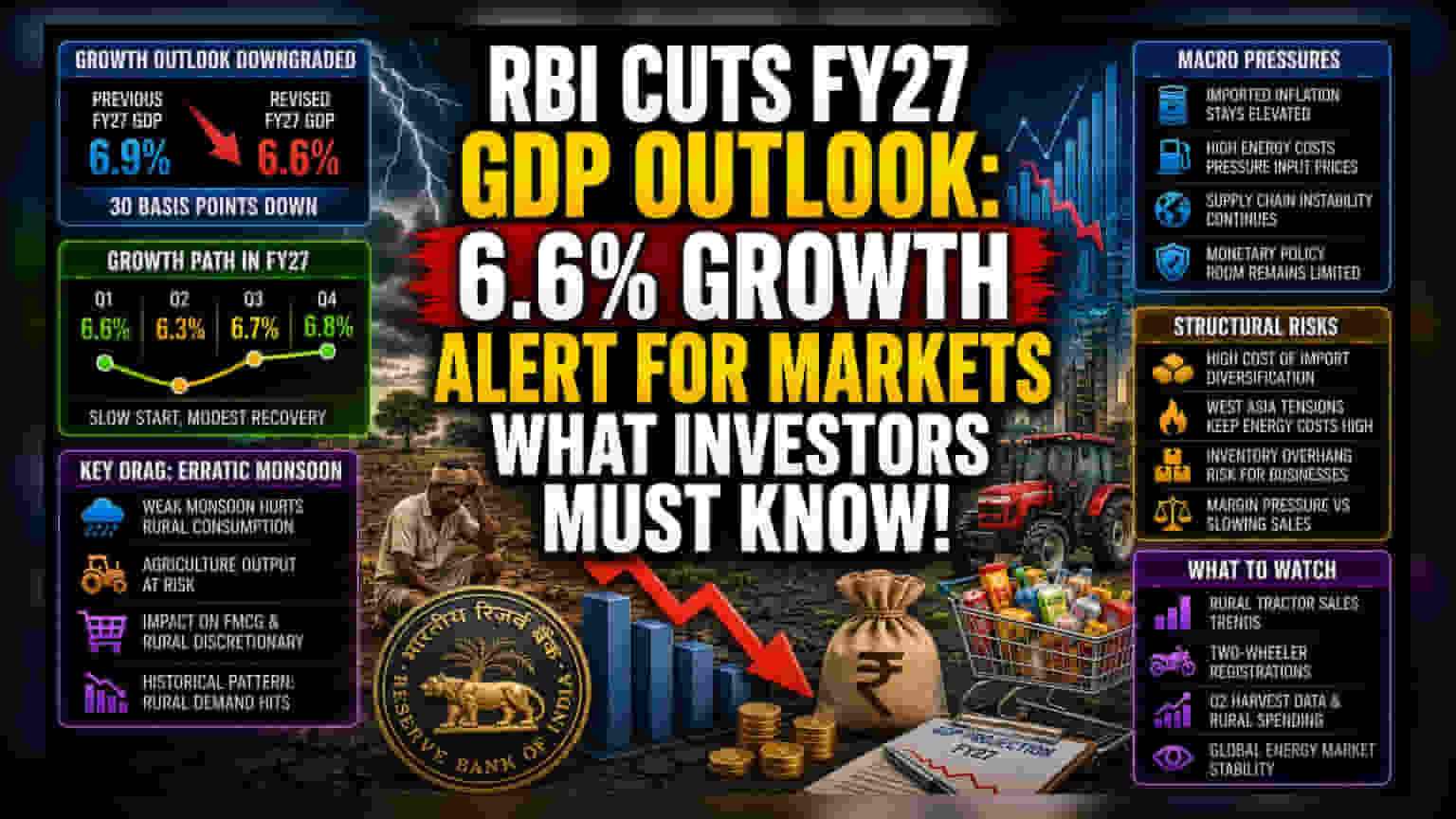


The Growth Compression Catalyst
The revision of the FY27 GDP projection to 6.6% marks a decisive shift in central bank policy, reflecting a departure from the previously optimistic 6.9% target. This 30-basis-point haircut is not merely an adjustment to weather models; it represents a hardening view on the structural vulnerabilities within the domestic economy. While the monetary policy committee continues to navigate the complexities of global supply chain instability, the immediate focus has shifted toward the real-world impact of erratic rainfall on the rural consumption engine. By front-loading the growth slowdown in the first half of the fiscal year, with Q1 at 6.6% and a deceleration to 6.3% in Q2, the central bank is acknowledging that domestic demand is increasingly fragile against the backdrop of imported inflation.
Sectoral Sensitivity and Macro Correlation
The central bank's anxiety regarding rural demand mirrors historical patterns where agricultural output acts as the primary multiplier for fast-moving consumer goods and rural discretionary spending. Unlike previous cycles, where government irrigation and crop diversification projects provided a reliable buffer, the current climate-resilient farming initiatives are now tested by volatile energy inputs. When energy prices rise, the cost of fertilizers and logistics spikes, effectively squeezing the margins of the agricultural sector before the harvest even begins. Market participants should note that previous periods of monsoon deficiency have consistently led to a contraction in rural-centric indices, suggesting that companies with high exposure to non-urban markets may face significant earnings volatility in the coming months.
The Forensic Bear Case: Structural Risks
The narrative of resilient domestic growth is increasingly overshadowed by three specific systemic risks. First, the reliance on commodity import diversification carries a hidden cost, as the move away from traditional supply chains rarely results in price stability. Second, the lingering impact of West Asia geopolitical tensions threatens to keep energy costs elevated, which prevents the central bank from adopting a more accommodative stance. Finally, there is the issue of inventory overhang; if rural demand does not materialize as expected due to the monsoon shortfall, manufacturers face the dual threat of rising input costs and sluggish sales velocity. This environment effectively traps corporations between the desire to protect margins and the necessity of sustaining market share in a cooling consumption environment.
Future Outlook and Policy Trajectory
Looking toward the latter half of FY27, the central bank maintains a modest expectation of recovery, projecting growth to hit 6.8% by Q4. This hinges entirely on the stabilization of global supply chains and a potential cooling of energy markets. However, until the monsoon's actual impact is quantified in the late Q2 harvest data, institutional sentiment is expected to remain defensive. Analysts are now closely monitoring high-frequency data related to rural tractor sales and two-wheeler registrations as the primary indicators of whether the central bank's downgraded outlook remains realistic or if further contractions are on the horizon.