

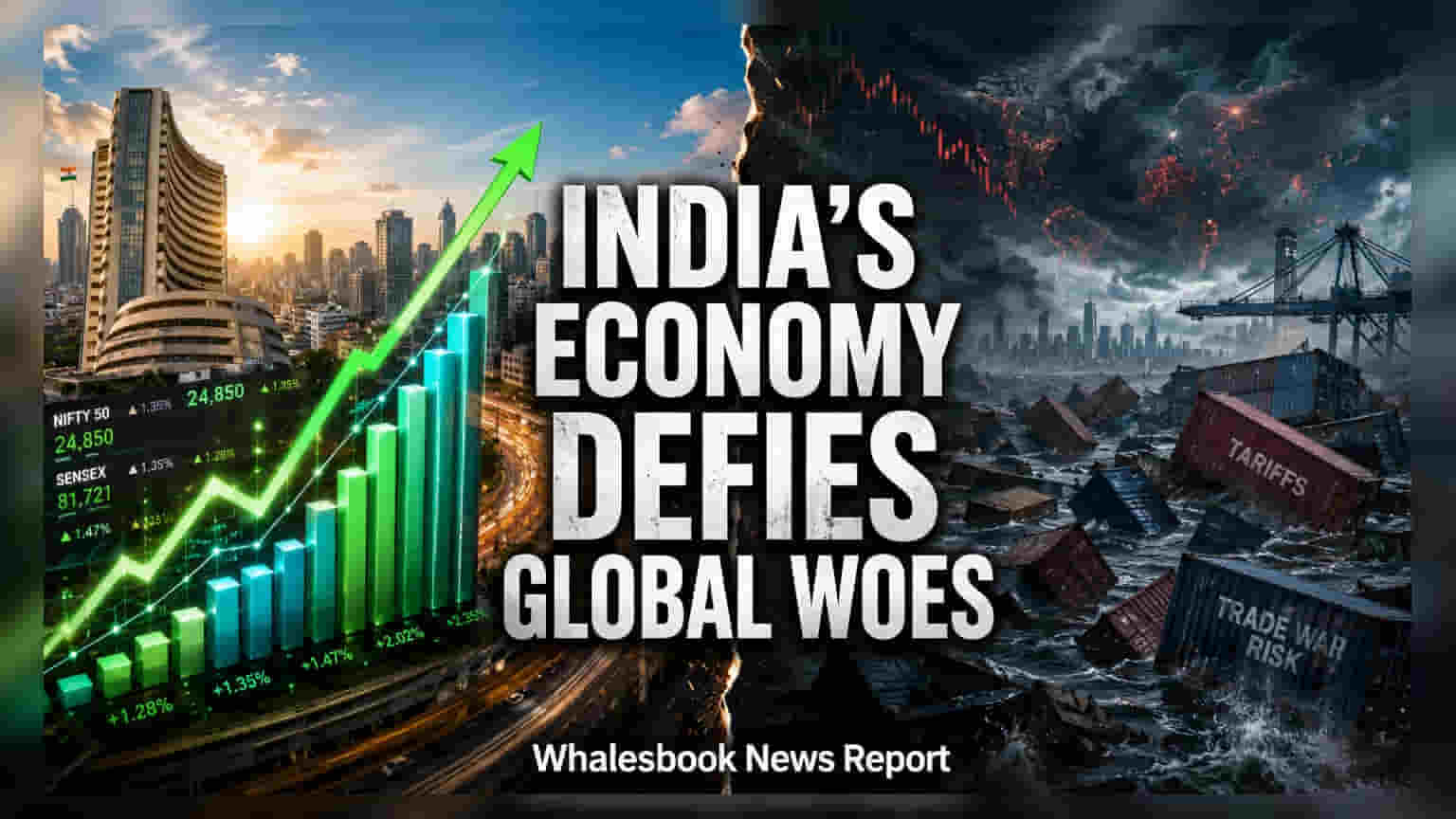
India's economy sustained momentum through June, supported by strong performance in industrial and services sectors according to the Reserve Bank of India. While global trade faces uncertainty due to ongoing geopolitical tensions, India continues to demonstrate resilience in external trade and foreign investment inflows.
Detailed Coverage
India’s economic performance remained steady in the first quarter of the 2026-27 fiscal year, maintaining a growth trajectory that continues to outperform many other global economies. In its latest monthly bulletin released on July 22, 2026, the Reserve Bank of India (RBI) pointed to consistent activity in key areas as the primary driver for this stability. The data suggests that domestic demand and production levels have largely withstood pressures that have slowed growth in other parts of the world.
Industrial and Services Sector Performance
The central bank highlighted that the industrial and services sectors have been the backbone of this momentum. Even as the agricultural sector navigates an uneven southwest monsoon, the RBI indicated that existing foodgrain reserves are sufficient to act as a buffer against volatility in food prices. This suggests that while inflationary risks in food items remain a point of focus, the central bank sees current stockpiles as a protective measure against severe price spikes.
External Trade and Global Risks
External trade activity showed notable expansion during the first quarter. Policymakers are looking toward upcoming trade pacts, such as the India-UK Comprehensive Economic and Trade Agreement, to provide a further boost to export growth in the coming months. Furthermore, recent data on foreign investment into India reflects a level of confidence in the domestic market that contrasts with the cautious sentiment dominating global capital flows.
Despite these domestic strengths, the global economic environment remains fragile. The RBI noted that the collapse of a truce in West Asia in early July has reintroduced uncertainty into global shipping and supply chains. This situation creates a persistent risk of higher logistical costs and renewed inflation pressure for importing nations. For Indian investors, this implies that while domestic growth is currently robust, the potential for imported inflation through energy and supply chain channels remains a factor to watch.
Moving forward, the primary items to monitor include the impact of monsoon patterns on agricultural output and inflation, the progress of new trade agreements, and how global geopolitical developments influence crude oil and commodity prices. The resilience of India's external vulnerability indicators, such as foreign exchange reserves and current account stability, will remain essential to shielding the economy from these external shocks.