

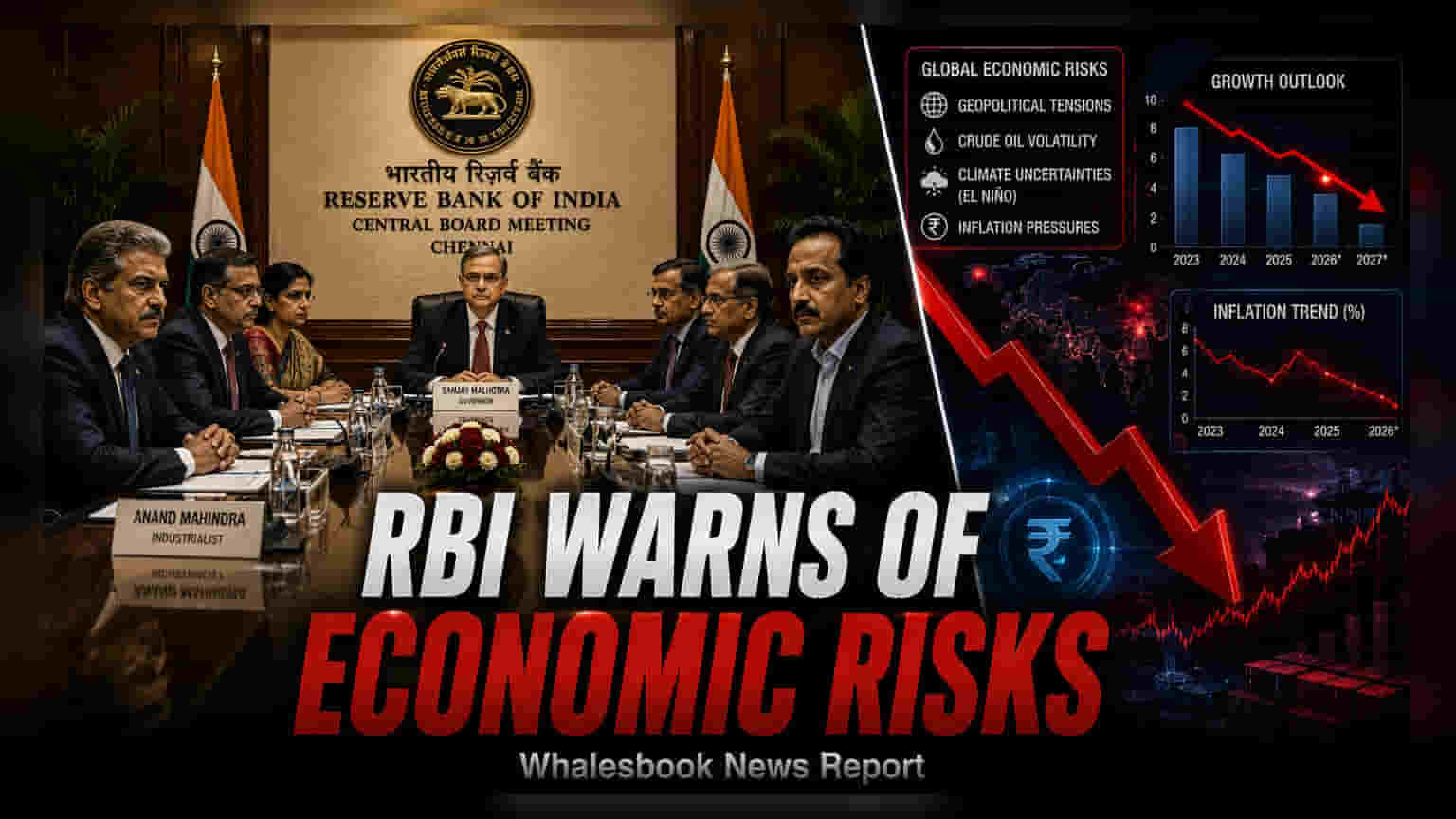
The Reserve Bank of India's Central Board held its 624th meeting in Chennai on August 21, 2026, to assess global and domestic economic risks. Led by Governor Sanjay Malhotra, the session reviewed inflation trends and institutional operations. The meeting takes place as the central bank maintains the repo rate at 5.25%, with investors focused on how the regulator navigates challenges like geopolitical tensions and volatile energy prices.
The Reserve Bank of India's (RBI) Central Board of Directors convened in Chennai on August 21, 2026, for its 624th meeting. Chaired by Governor Sanjay Malhotra, the session provided a platform to analyze the current economic landscape and evaluate risks that could influence India's growth trajectory.
At the core of the discussions was a comprehensive review of the domestic and global economic environment. The central bank has been closely monitoring various pressures, including the volatility of crude oil prices, potential geopolitical tensions in West Asia, and the impact of climate factors such as El Niño on agriculture and inflation. These elements remain central to the bank's decision-making process, especially as it maintains the repo rate at 5.25% to balance growth and price stability.
Beyond macroeconomic assessment, the board reviewed the RBI’s internal operations, including the efficacy of various committees and the performance of the Ombudsman Scheme, which handles customer complaints. The meeting saw the participation of senior officials, including Deputy Governors Swaminathan J., Dr. Poonam Gupta, Shirish Chandra Murmu, and Rohit Jain. The board also included external directors such as Anand Gopal Mahindra, Prof. Sachin Chaturvedi, Revathi Iyer, and former ISRO Chairman S. Somanath.
As part of his visit to Chennai, Governor Sanjay Malhotra also held a courtesy meeting with Tamil Nadu Chief Minister M.K. Stalin at the secretariat to discuss matters of state-level economic coordination.
For investors and market participants, the commentary emerging from such central board meetings is closely tracked for insights into the regulator's mindset. While the meeting focused on review rather than immediate policy changes, the RBI’s ongoing focus on inflation, especially given the persistence of price pressures, remains a key variable for market sentiment. Going forward, the primary monitorables for the markets will be the upcoming Monetary Policy Committee decisions, future inflation prints, and any updates regarding how the RBI plans to manage liquidity and interest rates amidst evolving global and local economic challenges.