

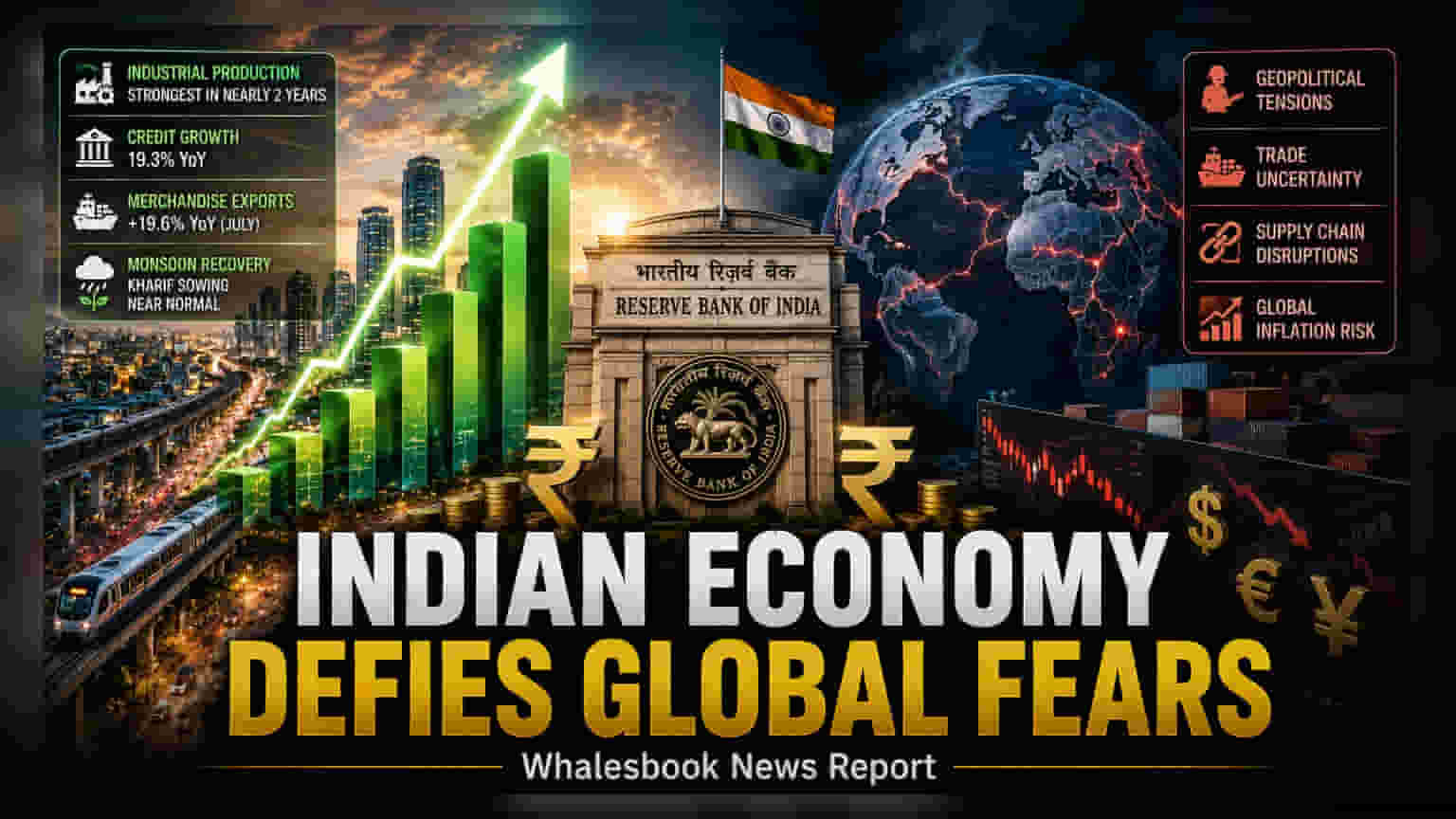
The Reserve Bank of India’s latest bulletin highlights an economy driven by strong manufacturing and services growth. With credit expanding by 19.3%, domestic demand remains a key pillar, though investors should monitor rising inflation and the widening trade deficit in electronics.
The Indian economy continues to demonstrate resilience against global uncertainties, with the latest Reserve Bank of India (RBI) bulletin for August 2026 signaling broad-based strength. Despite international geopolitical headwinds and trade fluctuations, the domestic economy is maintaining momentum, supported by robust activity in manufacturing, services, and consumer demand.
Industrial Growth and Credit Expansion
Economic indicators from the first quarter of the 2026-27 fiscal year carried forward into July, showing sustained health. Industrial production in June reached its strongest growth point in nearly two years, reflecting a significant recovery in manufacturing output. This industrial expansion is mirrored in the financial sector, where credit growth has remained high at 19.3% year-on-year as of July 31, 2026. This trend suggests active investment and borrowing behavior among domestic businesses, which typically supports banking and financial services earnings.
Trade Dynamics and Electronics Deficit
Trade data for July 2026 showed double-digit expansion, with merchandise exports rising by 19.6% and imports increasing by 17.5% year-on-year. While this growth indicates active global trade participation, it has also led to a widening merchandise trade deficit. A specific area of concern for the market is the electronics sector, which has been a primary contributor to this deficit increase. Investors monitoring trade-dependent stocks may want to watch whether this import pressure in electronics continues or stabilizes in the coming months.
Inflation and Sectoral Outlook
Inflation remains a key focal point for the central bank and the market. Headline Consumer Price Index (CPI) inflation edged up to 4.4% in June, marking the first time in 16 months it has moved above the RBI's target. Officials have noted that this movement is largely driven by supply-side factors, such as food and fuel costs, rather than broad demand-side overheating. Core inflation, which excludes these volatile items, has remained stable, offering some comfort.
On the agriculture front, the southwest monsoon showed a positive recovery during July. This turnaround has helped kharif sowing reach near-normal levels, which is a crucial development for rural demand and food price management. The improvement in monsoon coverage helps mitigate some of the downside risks to the agricultural economy that were previously a concern.
What Investors Should Monitor
Looking ahead, the primary areas for investors to track are the trajectory of inflation and its impact on monetary policy. While liquidity conditions are comfortable and government security yields have softened due to capital inflows, the persistence of supply-side inflation could influence future economic decisions. Additionally, the ability of the manufacturing sector to sustain its recent growth despite global geopolitical risks will remain a central theme for market performance in the coming quarters.