

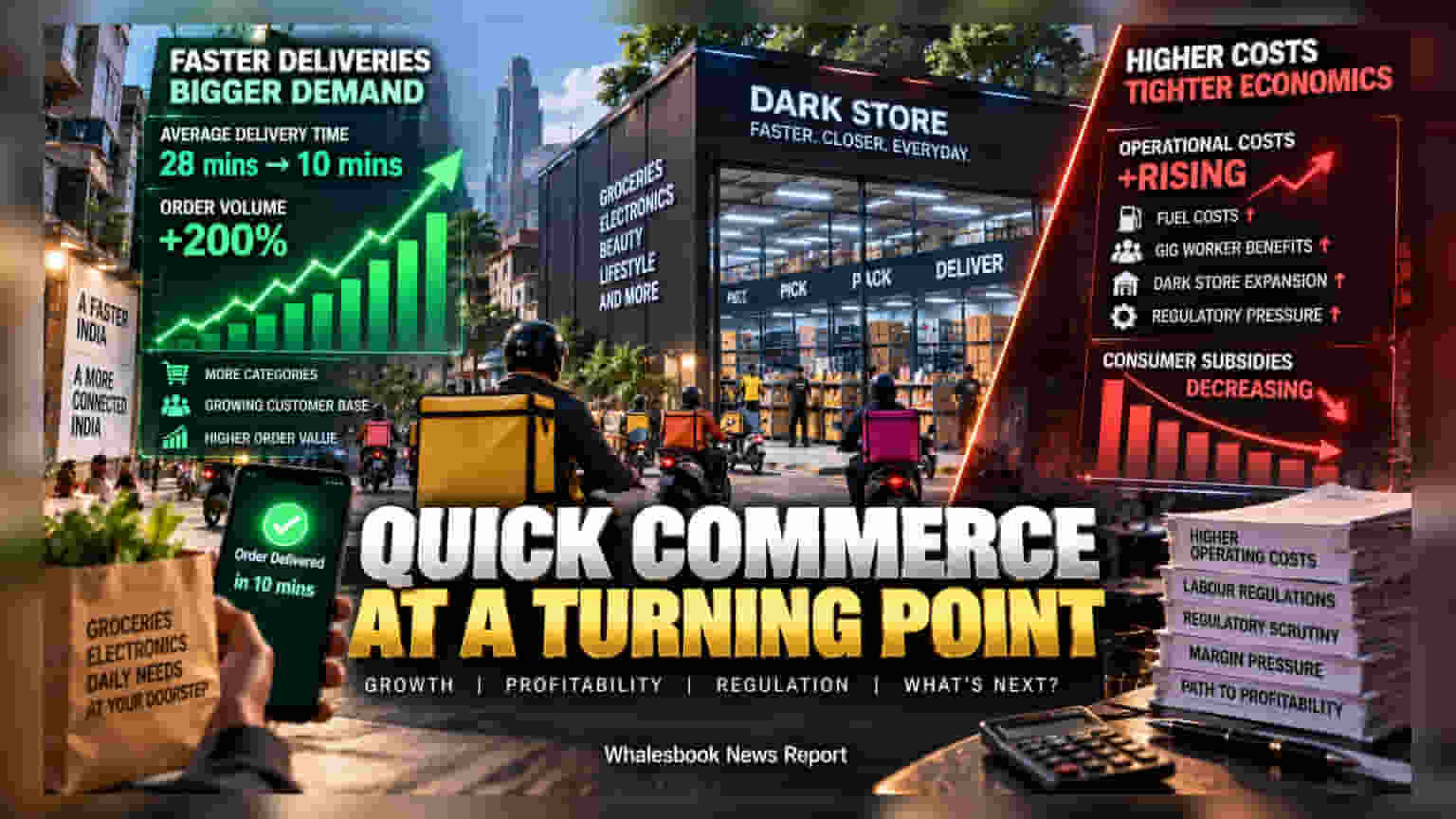
India’s quick commerce companies are pivoting away from deep discounting to prioritize unit economics. While Blinkit has reached operating break-even, competitors like Swiggy, Zepto, and BigBasket continue to report losses due to high operating costs. Investors are closely monitoring rising labor expenses, regulatory scrutiny from local retail bodies, and the impact of these changes on long-term sustainability.
The business strategy for India’s quick commerce sector is undergoing a major change. For years, these companies focused on rapid expansion and heavy consumer discounts to capture market share. Now, the priority has shifted toward sustainable unit economics—ensuring that the company makes a profit on each order rather than spending heavily to acquire customers.
This transition has led to a clear divide in financial performance. Blinkit has emerged as the first major player to reach operating break-even, reporting an adjusted EBITDA of ₹102 crore in the first quarter of the 2027 financial year. This is a significant turnaround compared to the ₹162-crore loss recorded in the same period a year ago. However, the path to profitability remains difficult for others. Swiggy’s quick commerce division reported an operating loss of ₹778 crore in the same quarter. Other competitors, including Zepto and BigBasket, continue to report substantial losses as they invest heavily in maintaining a network of over 7,000 dark stores across the country.
The cost of maintaining these delivery networks is high, and success now relies on increasing the average order value. Companies are moving beyond basic grocery delivery, expanding into higher-margin items like electronics and lifestyle goods. The goal is to maximize the throughput of each delivery vehicle and make the dense network of dark stores more efficient. However, companies still face significant operational hurdles.
Regulatory and social pressures represent a key risk for the sector. Offline retail trade associations have intensified their complaints, alleging that quick commerce platforms use predatory pricing that hurts traditional kirana stores. These allegations have invited increased regulatory scrutiny regarding structural business practices. Furthermore, impending changes in labor laws and new state-level welfare measures for gig workers are expected to increase fleet operating costs. While industry leaders describe these costs as necessary guardrails for long-term growth, they place immediate pressure on profit margins.
For investors, the most important areas to monitor are the trends in average order value and how effectively companies manage their delivery fleet costs. As the regulatory environment regarding gig workers and fair market practices evolves, the ability of these platforms to balance rapid delivery promises with cost control will be the defining factor for future performance. The market will also track whether the current leaders can sustain their momentum and if the smaller, loss-making players can successfully bridge the profitability gap.