

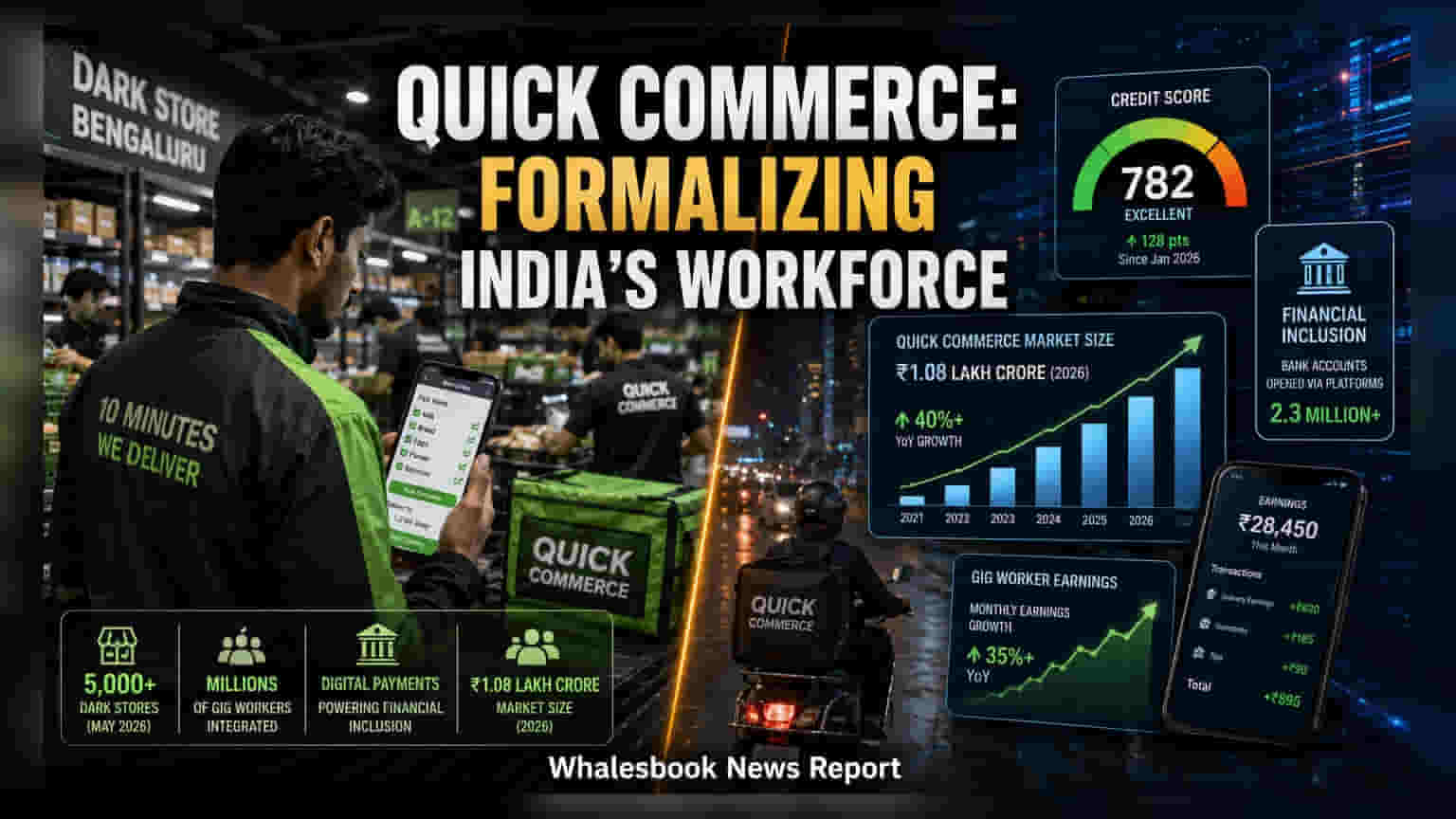
India’s quick commerce market has grown to ₹1.08 lakh crore, fueled by a rapidly scaling network of over 5,000 dark stores. While this expansion helps formalize the gig workforce by creating digital earnings trails for credit access, the sector faces rising investor risks, including labor unrest and potential scrutiny from regulators over competitive practices.
The quick commerce sector in India has reached an estimated market size of ₹1.08 lakh crore as of 2026, marking a growth of over 40% year-on-year. This rapid expansion, visible in the proliferation of over 5,000 dark stores—or small, localized warehouses—by May 2026, is fundamentally changing how urban India shops. Beyond the convenience for consumers, the sector is acting as a major bridge for the informal workforce, effectively integrating millions of gig workers into the formal economy.
The Shift to a Formal Workforce
For gig workers, the quick commerce model provides a digital footprint that was previously unavailable. In the past, informal labor was largely cash-based and undocumented, making it difficult for workers to access loans or insurance. Today, platform-mediated logistics generate continuous, timestamped records of activity and earnings. These digital trails allow workers to prove their income, which is a necessary step for accessing formal credit from banks and financial institutions. By requiring workers to use digital payment channels, these platforms are reducing the reliance on cash and helping to integrate millions into the country's banking system.
Challenges Behind the Growth
While the formalization of the workforce is a positive trend, the rapid growth of the sector brings specific risks that investors should monitor. The intense pressure of the 10-20 minute delivery model has led to significant labor friction. In recent months, over a lakh workers have participated in strikes to protest against delivery time pressures and work conditions. This labor unrest poses a risk to operations and company reputation, which can directly affect long-term stability.
Furthermore, the sector is facing increasing regulatory attention. The Competition Commission of India is monitoring the market amid concerns regarding predatory pricing and the potential displacement of traditional kirana stores. Investors should be aware that regulatory interventions could alter the operational landscape or profit margins for major players like Blinkit, Swiggy Instamart, and Zepto.
Profitability and Market Sustainability
Beyond labor and regulation, the core challenge for companies remains unit economics. While revenue growth has been strong, the transition from rapid expansion to sustainable profitability is a critical hurdle. Firms are balancing high capital spending on store networks against the need to manage food inflation and fluctuating consumer spending patterns. As the industry matures, the ability to maintain margins while navigating these operational pressures will be a key factor for the long-term viability of the quick commerce model. Investors should track future developments in labor policy, regulatory rulings by the competition watchdog, and management commentary on reaching consistent operational profitability.