

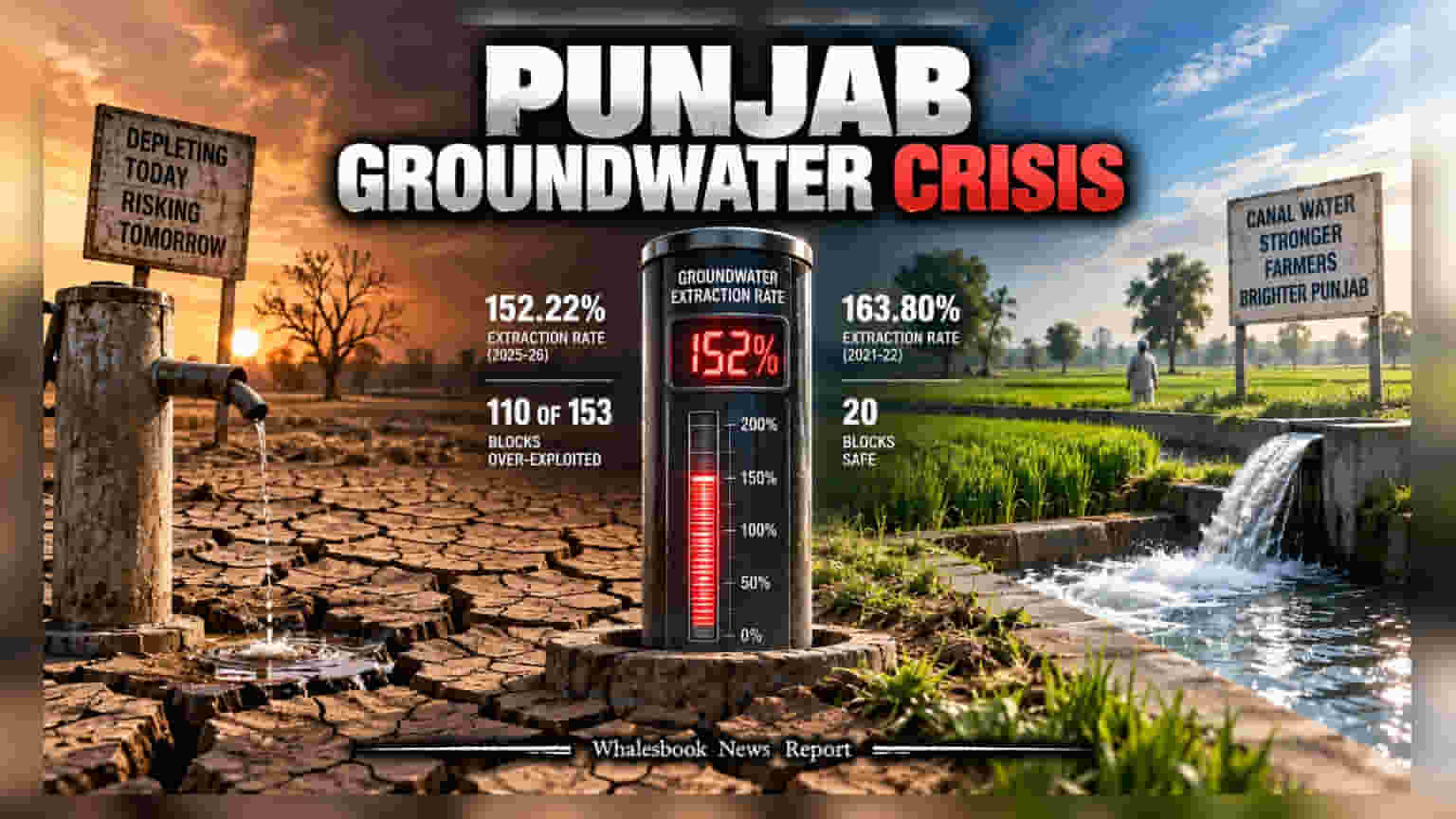
Punjab has reduced its groundwater extraction rate to 152.22% for the 2025-26 cycle, an improvement from 163.80% in 2021-22. While 110 blocks remain over-exploited, the state is expanding canal-based irrigation to reduce tube well dependence. This policy shift aims to secure agricultural stability, which is critical for the regional economy and companies linked to the local farming value chain.
Punjab's water management situation shows signs of slow improvement, although the state continues to face significant ecological stress. According to the latest assessment for the 2025-26 cycle, the state's groundwater extraction rate stands at 152.22 percent. This is a notable shift from the 163.80 percent extraction rate recorded in 2021-22, indicating that recent policy interventions and localized efforts are beginning to have a measurable impact on water consumption patterns.
Agricultural Demand and Block Status
The strain on groundwater remains heavily concentrated in the agricultural sector, which consumed 24.95 billion cubic metres (bcm) out of the 26.32 bcm total extracted during the recent cycle. The Central Ground Water Board data highlights that 110 of the 153 assessed blocks are currently classified as over-exploited. While this number is an improvement from the 117 blocks in the same category a few years ago, the figure remains high. Only 20 blocks have been categorized as safe, underscoring the depth of the water scarcity challenge facing the state.
Shift to Canal-Based Irrigation
To address this persistent imbalance, the state government is prioritizing a structural shift toward canal-based irrigation. The objective is to decouple the region's crop cycle from a heavy reliance on tube well water, which has been the primary driver of rapid depletion. By delivering surface water to tail-end agricultural zones, the government aims to reduce the stress on underground aquifers. Analysts observe that areas where surface water infrastructure has already been bolstered show slower rates of depletion, providing a potential roadmap for broader state-wide implementation.
Economic and Operational Context
The reliance on water-intensive paddy-wheat monoculture has historically kept the extraction-to-recharge ratio at unsustainable levels. For investors and businesses operating within the agri-input and processing sectors, the state's success in managing this water crisis is a critical monitorable. Effective implementation of canal irrigation and the success of crop diversification programs could stabilize the long-term operational environment for agribusinesses in the region. Conversely, persistent water stress poses a structural risk to agricultural productivity and local supply chains.
Future Monitorables
The sustainability of these improvements will depend largely on the government's ability to execute infrastructure projects and the speed at which farmers adopt less water-intensive crops. Investors tracking the region should pay close attention to budget allocations for water infrastructure and updates on crop diversification progress. The ongoing transition from groundwater to surface water remains an essential factor for the long-term economic and agricultural health of Punjab, with the upcoming quarterly and annual progress reports serving as key indicators of execution success.